
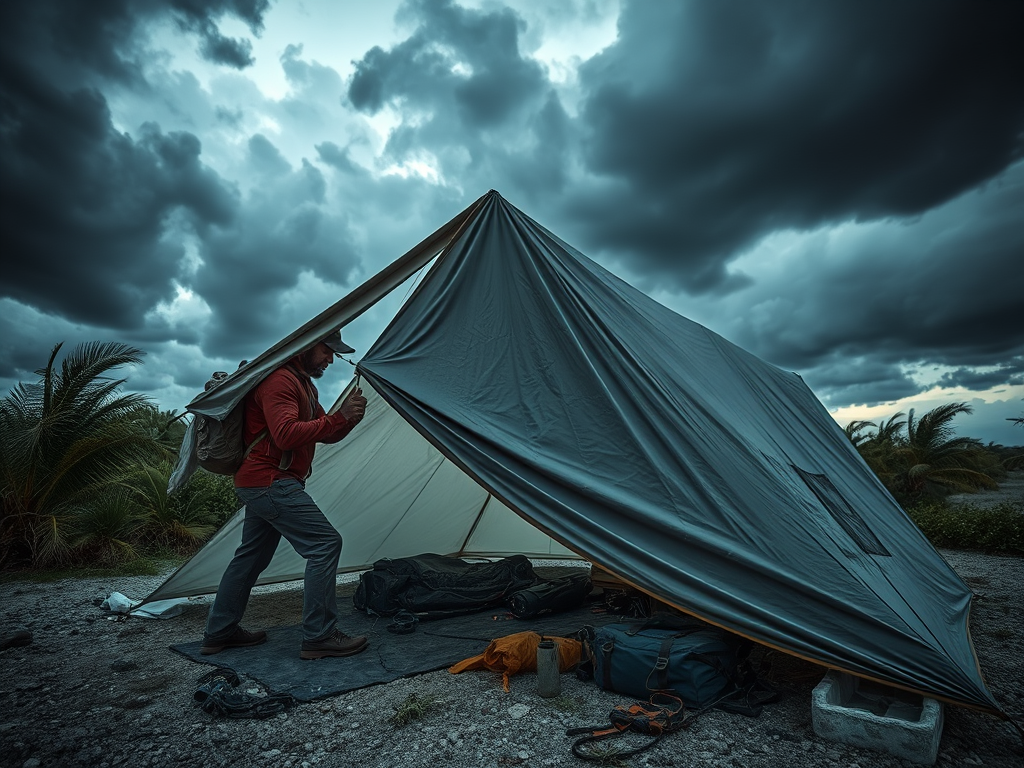
Survive, Adapt, and Keep Moving When the Storm Hits
Florida adventuring doesn’t stop just because hurricane season starts. For overlanders, paddlers, and bushcrafters, it shouldn’t—but it does mean your trip plan, gear loadout, and mindset need a serious upgrade.
This post covers how I prepare for hurricanes during backcountry travel, whether I’m deep in the scrub with a tarp, guiding a group on kayaks, or living out of a rig.
⏱️ The 3-Phase Hurricane Prep Mindset
1. 🧭 Before the Trip – Plan Like You Expect a Storm
- Check NOAA’s 7-day outlook + National Hurricane Center cone
- Download offline maps (GAIA, Windy, RadarScope)
- Identify storm-safe zones in your planned area (ridges, hammocks, high ground)
- Share your route with 2 trusted contacts (include when you’ll exit)
Pro Tip: Print a simple storm decision matrix:
“If wind exceeds ___, I move to ___.”
2. 🏕️ During the Trip – Stay Mobile, Stay Dry, Stay Smart
- Choose shelter sites with natural drainage (avoid low ground!)
- Build weather-proof shelters with airflow
- Filter and store 2–3 days’ water ahead of time
- Keep your vehicle or boat ready to move—never unpack everything
- Listen to AM/FM weather band (or satellite alerts)
Pro Tip: Don’t wait to see the first lightning bolt. Florida squalls escalate in under 15 minutes.
3. 🧰 If the Storm Hits – Hunker Down with Confidence
- Anchor all shelters: ground stakes + deadman anchors + trees
- Create a dry zone for sleep gear + food
- Keep fire-starting gear and clothing in a drybag
- Avoid open water and tall lone trees
- Cook small, hot meals—fuel morale, conserve energy
Pro Tip: Tarp shelters with a plow-point configuration and low wind profile offer excellent storm resistance.
📦 Jeff’s Hurricane Season Loadout
🛠️ Shelter & Tools
- 10×10 silnylon tarp w/ pre-rigged guy lines
- Compact saw + titanium stakes + paracord
- Stormproof matches + Esbit stove + alcohol backup
- Compact weather radio (Sangean or Midland)
🥫 Food & Water
- Vacuum-sealed ready meals
- 3L gravity filter + Sawyer Squeeze backup
- Electrolyte tablets + hydration salts
- High-calorie bars (ProBar, Greenbelly, Datrex)
📍 Navigation & Comms
- Gaia GPS offline maps + paper backup
- Compass + drybag for critical documents
- SPOT or Garmin InReach mini with emergency contacts
- Whistle, signal mirror, and 2 headlamps
🌿 Hurricane-Proof Shelter Setups
🏕️ Tarp + Ground Cloth (Plow Point or Flying V)
Fast to pitch, low profile, sheds wind well.
🚙 Vehicle-Based Setup
Keep everything stowable in under 3 minutes. Use tailgate as a hard cover.
🪵 Improvised Debris Shelter
If all else fails: ridgepole + dense pine fronds = solid insulation.
🌀 Florida-Specific Hazards to Watch
- Sudden Flooding: Even 1–2 inches of rain/hour can swamp lowlands
- Wind-Downed Trees: Don’t camp near dead limbs or leaners
- Wildlife: Snakes and gators seek higher ground too
- Humidity: Protect electronics and fire-starting gear from condensation
💡 Pro Tips from the Field
- Drybag Redundancy: Always double-bag sleep system and food
- Stash a 1-Day Bug-Out Kit: Grab-and-go in case you have to evacuate
- Never Assume Cell Signal Will Work – Prep offline or analog backups
🗺️ Bonus: My Hurricane Retreat Zones (Florida Edition)
- Ocala Ridge Scrub
- Kissimmee High Hammocks
- Gulf Coastal Uplands (post-storm only)
- Look for upland pine, avoid coastal hammock zones after landfall
💬 Final Thoughts
Hurricanes aren’t a reason to cancel your adventure—
They’re a reason to prepare like your life depends on it.
(Because it does.)
📢 Call to Action
Want my Hurricane-Proof Field Checklist and real-time shelter site planner?
DM “STORMKIT” on Instagram @FloridaOATS or visit liquidrhythmkayaking.com

