
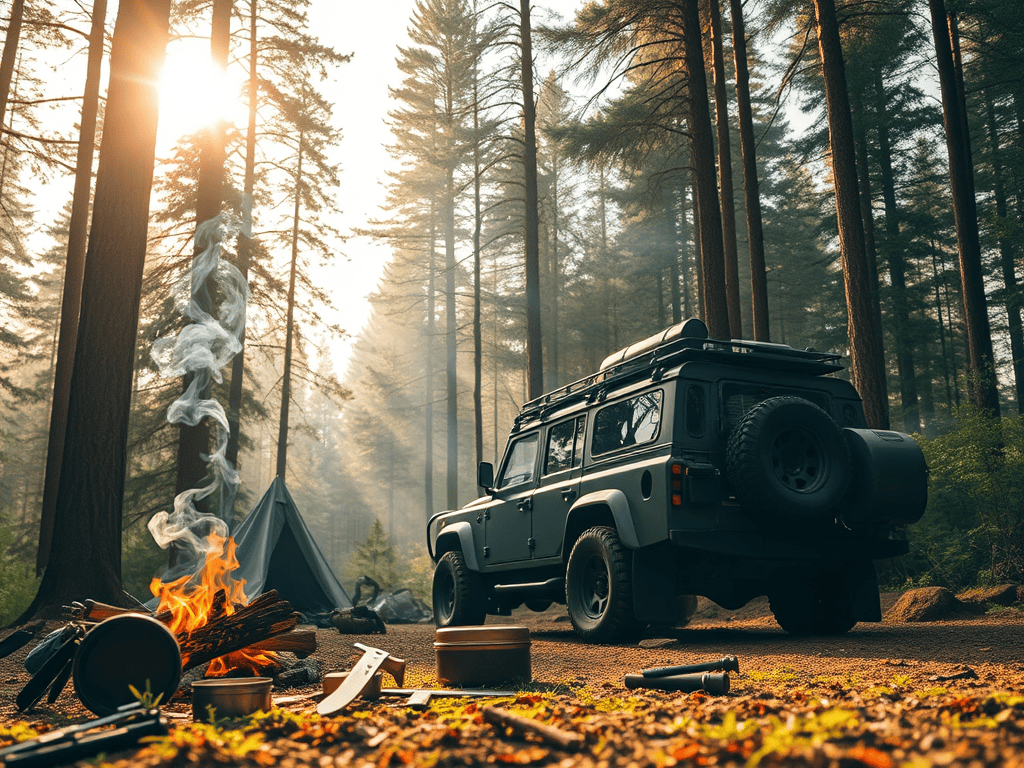
The vehicle carries the load. Judgment carries the responsibility.
When the road ends, the work of paying attention continues. There is weather to consider, a place to sleep, water to account for, and supper to prepare. The people traveling with us have entrusted some part of their comfort and safety to the decisions we make.
That is the useful meeting place between overland travel and bushcraft. A vehicle can carry provisions and equipment. Practiced outdoor skills help us use them, recognize their limits, and avoid turning a manageable inconvenience into an emergency.
I value old skills because they carry the experience of people who had reasons to learn them. That inheritance deserves care. A traditional method still has to answer to the conditions, the rules of the place, and the people beside us.
Reviewed and revised October 21, 2026. This is a reflection on preparedness and stewardship, not a vehicle recovery, survival, or wilderness medicine course.
What the two traditions share
Overlanding commonly describes travel by vehicle in which the journey, camping, and relative independence are central. It need not cross a border or seek the roughest road. Bushcraft includes skills such as tool use, firecraft, navigation, and understanding materials and landscapes. Neither term establishes competence on its own.
Their shared value is preparation: knowing what the journey requires, practicing before departure, and carrying provisions rather than assuming the landscape will supply them. Their shared temptation is to mistake independence for immunity from consequences.
As a kayak instructor, Wilderness First Responder (WFR), certified Wilderness First Aid (WFA) instructor, and expedition cook, I bring the same question to these subjects: what does this decision mean for the people who are relying on me?
Plan the way out before settling in
Check access, closures, road conditions, fuel range, weather, daylight, and alternatives before departure. A route shown on a screen may be closed, unsuitable, or on land where travel is not permitted. The National Park Service’s backcountry driving guidance for Joshua Tree illustrates why current route information and designated roads matter. Check the actual manager’s requirements wherever you travel.
A capable vehicle does not make an uncertain crossing or damaged road acceptable. Turn around when the route exceeds the vehicle, driver, or conditions. Vehicle recovery needs appropriate training, rated equipment, and a safe scene. A folding saw is not a substitute for that preparation.
Leave an itinerary with a responsible contact, including expected return, check in arrangements, and what to do if you are overdue. Select communication equipment for the route and learn its limits. Carry usable navigation backups and practice with them. An emergency device belongs alongside a plan, not in place of one.
Florida weather decides what shelter is suitable
A hurricane forecast calls for early decisions about changing or cancelling travel and reaching suitable shelter. Follow National Weather Service guidance and current local emergency instructions. Leave promptly when ordered to evacuate, with enough margin to avoid being caught on the road as conditions deteriorate.
A rooftop tent, tarp, hammock, or ordinary camping tent is not suitable hurricane shelter. Extra tie downs and a second shelter do not change that. The earlier version’s image of heading into remote country before a hurricane was poor guidance. Preparedness includes leaving the campsite behind.
Lightning requires a different shelter decision too. NWS explains that tents offer no lightning protection. Plan access to a substantial enclosed building or a fully enclosed vehicle with a hard metal roof and windows closed. A rooftop tent is not that vehicle enclosure. Do not confuse a dry sleeping arrangement with protection from a thunderstorm.
For ordinary camp selection and equipment limits, read Shelter Setups That Blend Speed and Safety. For household preparation and evacuation, use the Florida hurricane preparedness guide and its official resources.
Carry the pantry and account for the water
Food is as important as the love of family gathered around the campfire. Feeding companions means packing enough suitable food, checking allergies, protecting supplies, and having a meal that needs no cooking when conditions change.
Do not depend on a successful catch or a plant harvest to complete the menu. Real Meal Plans for Travel Beyond the Grocery Store sets out a sample menu and the limits of cold storage. Florida Foraging: Learn the Plants, Respect the Place explains why identification, preparation, permission, and contamination must come before gathering.
Carry safe water, allow for cooking and cleaning, and identify dependable resupply. Match treatment to the source. CDC recommends boiling to kill germs, or filtering and then disinfecting when boiling is not possible. An ordinary backpacking filter does not remove salt from seawater or make chemically contaminated storm water safe. Carrying a filter is not the same as having a water plan.
Equipment and skills belong together
Choose equipment for the actual journey, inspect it, and practice using it before departure. Shelter, insulation, rain protection, lighting, navigation, first aid supplies, food, and water all need to work together. A wool blanket can provide insulation; it is not a waterproof tarp.
Traditional skills can improve resourcefulness, but dependable modern equipment is more than a bonus. A person can know how to make a fire and still need suitable insulation, a permitted stove, or a safe place to leave the weather.
Keep first aid preparation within your training. Supplies do not create diagnostic or treatment authority. The Wilderness First Aid reading guide connects the corrected articles with their learning purpose and limits. Read, then practice through an appropriate course.
Leave room for the place to remain itself
Bushcraft is not automatically gentle on the land. Cutting poles, stripping bark, digging shelters, collecting plants, and building fires can damage a campsite. Leave No Trace provides a framework for considering those effects before acting. Skill includes recognizing when a technique belongs in a permitted teaching area rather than at tonight’s campsite.
Travel on routes where your activity is allowed. Use suitable existing campsites and protect vegetation and tree bark. Bring shelter components rather than cutting living material for convenience. Pack out rubbish and arrange sanitation according to destination requirements. Leave plants, artifacts, and natural features in place unless a specific lawful activity permits otherwise.
Before lighting a fire, check current restrictions and whether the site can support it. Leave No Trace’s campfire guidance addresses both permission and ecological effects. A fire stand does not cancel a ban, and a stove is permitted only when the applicable restriction allows it. Sometimes the responsible demonstration of firecraft is choosing not to make a fire.
The measure of a good journey
I want useful skills to survive because someone took the trouble to learn them and pass them on. I also want the next family to find a campsite worth visiting.
The measure is not how little equipment we carried or how difficult we made the journey. It is whether we cared for our companions, respected the place, and kept enough judgment in reserve to change our plans.
There is satisfaction in knowing how to stay. There is wisdom in knowing when to leave.
Jeffrey John Fabiszewski
FloridaOATS
Documentation and further reading
Primary sources checked October 21, 2026. Site rules and emergency instructions vary by location and can change. Follow current land manager guidance and the instructions for your equipment.
National Park Service: Drive 4×4 Roads, Joshua Tree
National Weather Service: Actions When a Hurricane Threatens
National Weather Service: Outdoor Lightning Safety
CDC: Water Treatment When Hiking, Camping, or Traveling
Leave No Trace: The Seven Principles
Leave No Trace: Minimize Campfire Impacts
Wilderness First Aid teaching: Jeff Fabiszewski teaches Wilderness First Aid as a member of the Greater Tampa Bay Area Council Wilderness First Aid teaching team. Billy McCracken serves as Course Director. Jeff’s WFA teaching role is distinct from his Wilderness First Responder qualification and does not establish authorization to teach or certify WFR courses. Jeff and Billy are developing Wilderness First Aid for Kayakers as a proposed program, with a goal of launching within the next year. Enrollment is not open and no launch date is confirmed. The proposal is separate from existing council courses; council sponsorship or approval is not claimed. See the official council WFA event listing for that event’s registration and requirements.


Leave a Reply