
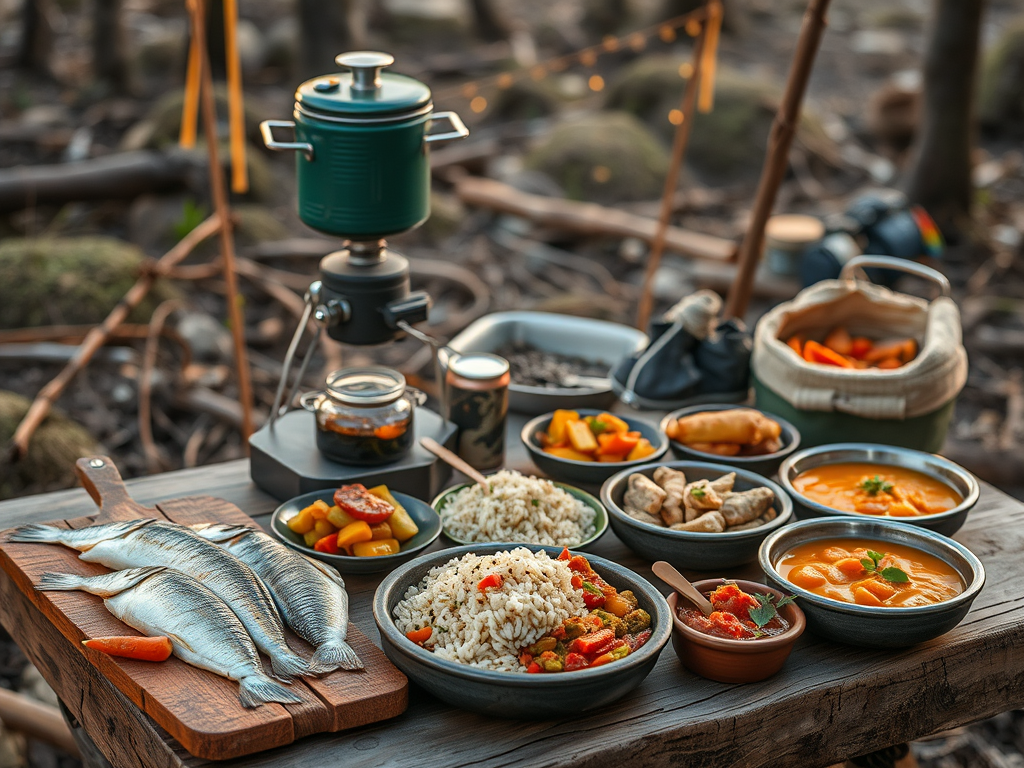
A good supper begins with the decisions made before leaving home.
Food belongs near the center of an expedition. It gives us something to look forward to after the boats are landed and the camp chores are finished. A familiar seasoning can bring a little of home to a distant shoreline.
But feeding companions means accepting responsibility for them. The cook has to think about storage, water, fuel, allergies, and what happens when the day refuses to follow the itinerary. Supper should comfort the group, not send it looking for medical care.
Reviewed and revised October 25, 2026. Correction: the earlier version wrongly suggested that vacuum sealed stews remain safe when cold storage fails. They do not. Vacuum packaging alone does not make cooked food shelf stable.
Choose the storage plan before the recipes
Build the menu around the conditions you can maintain. USDA explains that smoking, cooking, curing, or vacuum packing does not by itself eliminate a perishable food’s need for refrigeration. A sealed bag of homemade stew still needs safe cold storage. Commercial food specifically processed and labeled for storage without refrigeration is a different product.
Keep perishable food at 40°F or below. Use enough ice or another dependable cooling system and check with a thermometer. USDA’s outdoor food safety guidance applies on the water as well as on land. A kayak hatch may feel cooler than the deck, but that feeling does not establish safe storage.
Under USDA’s time and temperature guidance, discard perishables left without safe temperature control for more than two hours, or one hour when the surrounding temperature is above 90°F. Count time during preparation and serving as well as travel. If the storage history is uncertain, discard the food. Smell and taste cannot establish safety.
Read each package. Some smoked fish, sausages, cheeses, and prepared meals require refrigeration even before opening. Follow directions after opening too. Choose portions the group can finish at that meal when refrigeration is unavailable.
A seven day menu without dependence on refrigeration
This is an illustrative seven day menu, not a record of a tested expedition or a complete nutrition prescription. Scale the portions and snacks to every person, check label calories, and count cooking water and fuel. Do not treat the table alone as proof of a complete household reserve. Every packaged protein and bean product below must be labeled for storage without refrigeration while unopened. Keep packaging intact, protect supplies from heat and water, and follow cooking and storage directions.
| Day | Breakfast | Lunch | Dinner |
|---|---|---|---|
| 1 | Hot oats, dried mango, and nuts | Sardines from an unopened shelf stable tin, tortillas, and a mustard packet | Quick cooking lentils with dried onion, paprika, marjoram, and instant potatoes |
| 2 | Crackers, nut butter, and dried fruit | Shelf stable bean pouch, tortillas, and an individual olive oil packet | Couscous with canned chickpeas and dried vegetables |
| 3 | Hot oats with raisins and cinnamon | Trail mix, crackers, and a labeled shelf stable meat or bean portion | Instant rice with a shelf stable chicken or bean pouch and curry spices |
| 4 | Crackers, nut butter, and dried fruit | Tuna from a shelf stable pouch, tortillas, and an individual condiment packet | Quick cooking grits with canned beans and dried tomato |
| 5 | Hot oats with dried fruit and seeds | An unopened shelf stable bean portion, crackers, and nuts | Noodle soup with dried vegetables and a shelf stable protein portion |
| 6 | Crackers, nut butter, and an individual fruit cup | Shelf stable canned chickpeas, tortillas, and a condiment packet | Instant potatoes with a shelf stable chicken or bean portion and dried herbs |
| 7 | Hot oats with raisins and cinnamon | Shelf stable tuna or bean pouch, crackers, and dried fruit | Instant rice with canned beans, canned vegetables, and paprika |
Adjust portions and snacks for the people, work, duration, and conditions. Check allergies and dietary needs before shopping, particularly for nuts, sesame, fish, wheat, and dairy. Substitute suitable foods rather than expecting someone to make do. The lentils and seasonings can carry a little Polish kitchen comfort without requiring a refrigerated pot of stew.
Prepare oats hot rather than leaving a wet mixture overnight in Florida heat. Cook rice, beans, grains, and dried ingredients as directed. Without reliable refrigeration, cook only what the group will eat and do not save a pot of leftovers for tomorrow’s lunch. Reheating is not a remedy for unsafe storage.
Pack a meal that does not need a flame
The table includes meals that need no cooking. Carry an additional ready to eat reserve suited to credible delays and the route. Keep it separate enough that it does not disappear into the first afternoon’s snacking. Include familiar foods people will actually eat when tired.
Check water and fuel requirements at home. A meal that takes a long simmer may be economical in the kitchen and expensive in a small fuel bottle. Test portions, cooking times, and equipment before committing to a remote trip.
A stove is not automatically permitted during a fire restriction. Read the current land manager’s order for the location and appliance. A fire stand does not create an exemption. If cooking is prohibited or conditions are unsuitable, use the meal that needs no flame or change the plan.
Use portable camp stoves outdoors according to their manufacturers’ instructions, away from shelters and combustible materials. Do not cook inside a tent, enclosed vehicle, or other enclosed sleeping space. CDC warns that fuel burning equipment can produce carbon monoxide. Bad weather is a reason to reconsider supper arrangements, not bring the burner indoors.
Water and clean hands are ingredients
Budget safe water for drinking, cooking, and cleaning, with a reserve and a realistic resupply plan. CDC’s backcountry water guidance recommends boiling to kill germs, or filtering and then disinfecting when boiling is not possible. Match treatment to the source and follow product directions. An ordinary backpacking filter does not desalinate seawater or make chemically contaminated storm water safe.
Wash hands before preparing food and after toileting. Keep raw ingredients, dirty utensils, and toilet equipment away from ready to eat food. Carry soap, a handwashing arrangement, clean utensils, and a way to contain rubbish. Follow destination requirements for food storage, wildlife protection, washing, and waste disposal.
Meals and drinking water belong in the heat plan, but extra salt and an electrolyte tablet do not make unsafe exertion safe. Make room for shade, rest, changing the schedule, and stopping when someone is unwell. Individual medical or dietary restrictions need individual planning.
Fishing and foraging are additions, not the pantry
Pack enough food without counting on a catch or a plant harvest. The earlier menu depended too casually on wild greens and berries. Correct identification, the edible part, preparation, permission, and contamination all matter. See Florida Foraging: Learn the Plants, Respect the Place before treating a landscape as a grocery aisle.
Palmetto hearts are not a casual menu ingredient. Harvest can destroy the plant. A familiar looking leaf is not permission to eat, and cooking is not a universal way to remove plant toxins. Use purchased ingredients for the base menu. Any lawful catch also needs appropriate handling and current local consumption advice.
Storm preparation changes the journey
This menu is for ordinary travel planning, not a reason to remain outdoors as a hurricane approaches. Follow evacuation instructions and leave time to reach suitable shelter. Keep a separate household and evacuation food plan. The Florida hurricane preparedness guide covers those decisions and official resources.
What the cook carries
Useful equipment begins with a suitable stove when permitted, enough fuel, a compatible pot, utensils, a can opener if needed, protected food containers, handwashing supplies, and rubbish storage. Add thermometers and dependable cooling if carrying perishables. The right collection depends on the menu and group, not the length of a gear list.
I want food to be as important as the love of family gathered around the campfire. That calls for more than a clever recipe. It calls for noticing who is hungry, who cannot eat an ingredient, and whether the food has been cared for properly.
The best provision is often modest: a dependable meal, a familiar flavor, and enough judgment to change supper when conditions change. There is no shame in crackers when the alternative is a questionable stew.
Jeffrey John Fabiszewski
FloridaOATS
Documentation and further reading
Sources checked October 25, 2026. Follow current product labels, destination restrictions, and official emergency instructions.
- USDA: Food Safety While Hiking, Camping & Boating
- USDA: Mail Order Food Safety
- USDA: Keep Food Safe! Food Safety Basics
- CDC: Water Treatment Options When Hiking, Camping, or Traveling
- CDC: Carbon Monoxide Poisoning Basics
Several complete days without cooking
Set aside several full days of breakfasts, lunches, suppers, and snacks that require neither cooking nor refrigeration. Choose labeled shelf stable proteins, ready to eat beans, crackers or tortillas, nut or seed butter where suitable, fruit portions, and other foods the household actually eats. Check all allergies. Use individual portions where an opened container would otherwise need refrigeration.
Count seven days of food for each person, not seven bags of unspecified servings. Record package quantity, servings, energy, cooking water, and cooking time. Add comfort foods without letting them displace the main meals. Build toward fourteen days and then thirty gradually if budget and space allow; those longer pantry targets are my recommendation for disruption, not a Florida requirement.
Store at least one gallon of safe water per person per day as a planning baseline. Seven days for three people means 21 gallons. Add water for pets and additional needs such as heat, illness, food preparation, and washing. Do not assume the baseline covers every task. Use food grade containers, label storage dates, and follow CDC storage and rotation guidance. Do not store the entire reserve where flooding could contaminate it.
A backpacking filter is not a universal storm water treatment system. Ordinary filters do not desalinate seawater and may not remove viruses. Boiling, disinfecting, and ordinary filtration cannot make water contaminated with fuel or toxic chemicals safe. Use another safe source. Follow CDC emergency water guidance and the exact local advisory; a boil water notice and a do not use notice require different actions.
Practice one safe evening
Try a planned pantry supper, battery lighting, radio reception, paper contacts, handwashing setup, and packing the departure bag. Keep refrigeration and essential medical equipment operating. Do not shut off utilities or interrupt medical care as a drill. Measure water, fuel, and battery use under safe conditions, record what failed, and replace consumed supplies.
Give every household member a task suited to their ability. Check the plan before hurricane season, after using supplies, and whenever medicines, household members, or destinations change. A comfortable chair and a confident expression do not count as inventory.
Keep learning: the Florida preparedness reading guide
Start with the household plan, then work through the practical skills. These companion articles connect FloridaOATS and Liquid Rhythm Kayaking.
- Household planning, evacuation, sanitation, and lessons from COVID
- Seven day quantities and a practical household equipment check
- Packing for evacuation and vehicle travel
- First aid supplies, prescriptions, and household illness
- Weather information, lighting, and backup power
- Safe meals when the lights go out
- First aid when help is delayed
- Assessing hazards after the storm
- The limits of flame lanterns
- Using the MSR Dragonfly safely
- Fire blankets, extinguishers, and escape
- The original Hurricane Calm plan, revised
- The responsibility behind staying calm
- The FloridaOATS hurricane archive introduction

