
Preparing the household, changing the trip, and caring for the people who depend on us.
Consolidated and reviewed October 25, 2026. This is the main FloridaOATS hurricane preparedness guide, bringing together the useful themes from Are You Ready for Hurricanes? and Hurricane Calm Survival Plan. Earlier camping shelter and retreat location claims have been corrected. This is planning guidance, not a current storm forecast.
Living in Florida means learning to make plans with the weather in mind. We can enjoy the outdoors during hurricane season. We also need to recognize when an approaching storm calls for cancellation, early departure, or evacuation.
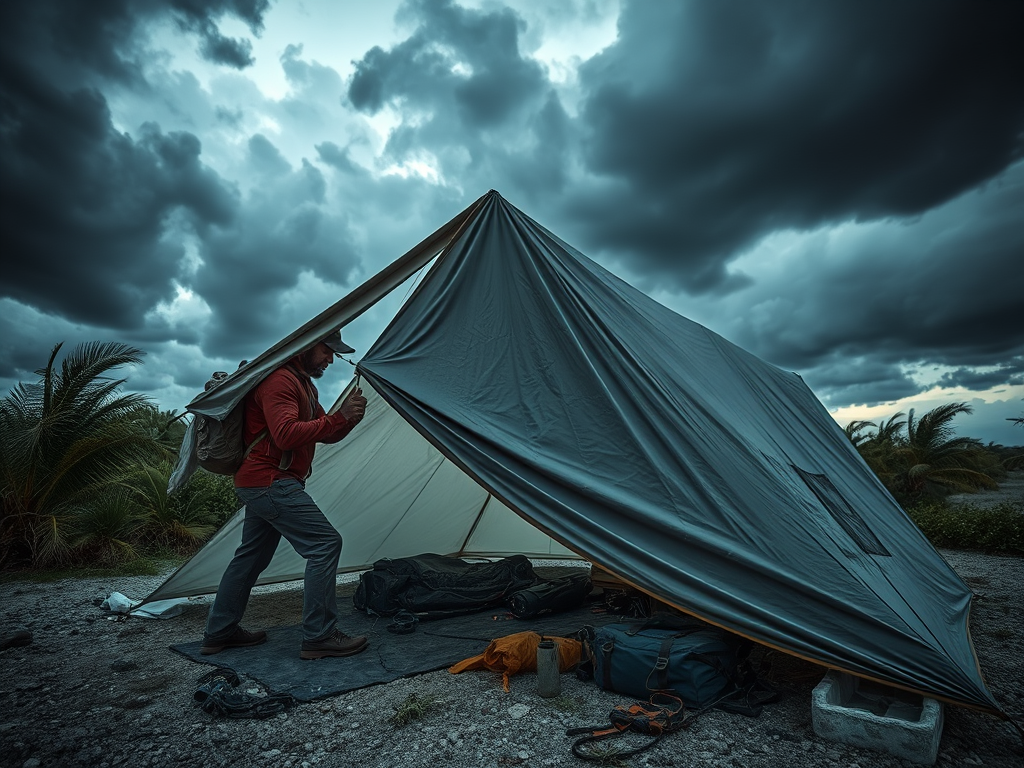
My earlier version gave too much confidence to equipment and backcountry shelter. A well pitched tarp is useful camping equipment. It is not a place to plan on riding out a hurricane.
Outdoor experience should help us recognize when to leave. The people traveling beside us deserve that judgment.
Prepare the household before the forecast becomes urgent
Outdoor skills can help with cooking, lighting, and living through an interruption. A household disaster plan also has to address the building, medical needs, transport, sanitation, and people who cannot manage alone. A familiar camping kit is a useful contribution, not the whole plan.
Use the Florida disaster supply checklist to build at least seven days of essentials. Its water baseline is one gallon per person per day; allow for additional needs in heat, illness, and individual circumstances. Include food, medicines, hygiene supplies, lighting, batteries, charging equipment, cash, and important records. Plan separately for pets and anyone with dietary or medical requirements.
Confirm medicine storage and refill arrangements with the pharmacist or clinician. If someone depends on powered medical equipment or needs evacuation assistance, arrange support before an event. Keep essential documents and contact information accessible and protected from water.
Count seven days before calling the kit ready
Florida recommends at least seven days of essentials. Count supplies for the actual people who may be staying with you. A seven day reserve does not mean remaining in an unsafe home for seven days.
| Requirement | Write down and check |
|---|---|
| Water | People × seven days × at least one gallon daily, plus additional needs and pets. Record the quantity, location, and rotation date. |
| Food | Seven daily menus per person, including snacks and dietary needs. Count portions and calories from labels. Include several full days requiring no cooking or refrigeration. |
| Cooking | Water per recipe, measured fuel use, safe outdoor location, compatible cookware, can opener, and a menu for days when cooking is unsafe. |
| Lighting and communications | Hours of use, spare batteries, usable battery capacity, radio reception, cables, paper contacts, and an outside area contact. |
| Medicines and medical equipment | Refill quantities, storage temperatures, supplies, battery runtime, transport, and a destination with dependable power. |
| Sanitation | Soap, handwashing water, toilet supplies, waste bags, diapers, menstrual products, and a disposal plan. |
| Evacuation and dependents | Zone, destination, route, transport, documents, money, pet carriers, and arrangements for anyone needing assistance. |
Store at least one gallon of safe water per person per day as a planning baseline. Seven days for three people means 21 gallons. Add water for pets and additional needs such as heat, illness, food preparation, and washing. Do not assume the baseline covers every task. Use food grade containers, label storage dates, and follow CDC storage and rotation guidance. Do not store the entire reserve where flooding could contaminate it.
A backpacking filter is not a universal storm water treatment system. Ordinary filters do not desalinate seawater and may not remove viruses. Boiling, disinfecting, and ordinary filtration cannot make water contaminated with fuel or toxic chemicals safe. Use another safe source. Follow CDC emergency water guidance and the exact local advisory; a boil water notice and a do not use notice require different actions.
A three person household needs 63 individual main meal portions over seven days if planning three meals daily, plus appropriate snacks. Portion size and energy needs vary. A package labeled two servings is not automatically supper for two hungry adults. Count what the family will actually eat.
Why a week of supplies is only the beginning
Seven days is the starting reserve, not a restoration promise. Plan how to obtain safe supplies or reach suitable accommodation if essential services remain unavailable.
Florida’s hurricane history gives that advice weight. In an account by FPL executive Manny Miranda, Hurricane Andrew affected nearly 1.4 million FPL customers in 1992, and the restoration and rebuilding effort lasted 35 days. This supports about five weeks of restoration work; it does not establish that every affected household waited that long.
FPL’s restoration history records 18 days for Hurricane Wilma in 2005. After Hurricane Michael in 2018, Florida Public Utilities reported 95% of customers capable of receiving service restored on October 31, three weeks after landfall; its November updates still acknowledged customers without electricity.
These are records from particular utilities, with different service areas and restoration measures. They are not average household outage lengths or a prediction for the next storm. Customer accounts are not a count of individual people, and a utility may restore its network before a damaged house can safely be reconnected.
My practical recommendation is to establish the complete seven day baseline, then gradually extend ordinary food and consumables toward fourteen days and, where practical, thirty. Those longer pantry targets are my recommendations, separate from Florida’s seven day baseline. Keep safe resupply, transport, and suitable accommodation in the same plan. A stocked pantry buys time. It does not make an unsafe house habitable.
For the next practical step, use the household equipment check, the backup power guide, and the evacuation bag plan.
When the tap or toilet stops working
Pack soap, a handwashing station, toilet paper, sturdy waste bags, and a designated emergency toilet arrangement. Keep toilet equipment separate from food and drinking water. Follow Pinellas County’s hurricane guide and utility instructions for sewer outages and waste disposal. Do not keep flushing when officials say the sewer system is unavailable. Do not dump waste into drains, floodwater, or the yard. Never mix bleach with ammonia, acids, or other cleaners.
Hand sanitizer is a useful backup, but clean hands and a workable toilet plan need more thought than adding another bottle to a shopping basket. Count supplies for children, older adults, and anyone needing toileting assistance.
Know when the house is too hot or medically unsuitable
Choose a destination with dependable cooling and transport before the outage. Check on older adults, infants, people with chronic illness, and anyone unable to recognize or communicate distress. Rest, shade, drinking water, and cooling measures help, but a fan or damp cloth is not a guarantee against heat illness. Follow CDC heat guidance; fans can be inadequate or harmful in very hot conditions. Confusion, collapse, or suspected heat stroke requires emergency help and prompt cooling.
Florida’s disaster checklist calls for a two week minimum medication supply. Arrange refills with the pharmacist or clinician, subject to legal, insurance, and prescription limits. Follow each medicine’s storage instructions. Plan safe cooling for medicines that require it, glucose monitoring supplies where needed, and backup power or relocation for medical devices. Never ration essential treatment to make a kit last longer.
What the COVID lockdowns should teach the household
The pandemic brought a different kind of disruption into the same kitchen. Power and running water could remain available while illness, isolation, missed work, and uneven supplies made ordinary errands difficult. Hurricane planning must still allow for early evacuation. An illness plan must allow people to reduce contact and receive care.
My recommendation is to build in stages: establish seven days of essentials first, grow ordinary food and household consumables toward fourteen days, and expand toward thirty days when budget and space permit. The longer pantry targets are my recommendations, not a new Florida requirement or a prediction of another lockdown. Buy a little extra of what you use, date it, and eat the oldest stock first.
- Keep soap, tissues, a thermometer, suitable current testing supplies, and well fitting masks or respirators appropriate to the wearer. Check expiration dates and instructions.
- Arrange a place for an ill person to rest apart from others when feasible. Improve indoor air with ventilation or suitable filtration when weather, outdoor air, power, and safety permit. Do not open a home to hurricane winds for ventilation.
- Maintain current healthcare contacts, pharmacy delivery options, and a way to obtain groceries without exposing other people. People at increased risk should discuss a prompt treatment plan with their clinician.
- Choose a backup caregiver and consider what happens if the usual driver or cook becomes ill. Keep instructions for medicines, meals, pets, and essential household tasks on paper.
- Plan for essential bills, interrupted earnings, work and school access, and a modest emergency fund where possible. Keep account access and important records protected.
- Include books, games, familiar foods, and regular check ins with relatives or neighbors. Maintain a small sharing reserve if affordable rather than buying supplies that will spoil unused.
Use current CDC respiratory illness prevention guidance, including recommended immunizations, hygiene, cleaner air, staying away from others when ill, and additional precautions suited to the situation. Stored supplies support care; they do not replace medical attention.
Practice one safe evening
Try a planned pantry supper, battery lighting, radio reception, paper contacts, handwashing setup, and packing the departure bag. Keep refrigeration and essential medical equipment operating. Do not shut off utilities or interrupt medical care as a drill. Measure water, fuel, and battery use under safe conditions, record what failed, and replace consumed supplies.
Give every household member a task suited to their ability. Check the plan before hurricane season, after using supplies, and whenever medicines, household members, or destinations change. A comfortable chair and a confident expression do not count as inventory.
Know where the family will go
Find your evacuation zone and assess your home using Florida emergency planning resources and your county emergency management office. An evacuation zone concerns storm surge risk; it is not a complete assessment of a building’s safety or every type of flooding.
For Pinellas County readers, use the county’s Find Your Evacuation Zone service. Confirm current orders and routes. The county’s shelter information identifies openings; a shelter shown on an old map may not be open. Arrange for accessibility, medical needs, and pets rather than assuming every destination provides the same services.
Choose a suitable destination and leave enough time to reach it. Secure loose outdoor equipment and prepare the home only while it remains safe to do so. Property can wait when completing a task would delay necessary evacuation.
Calm helps when it leads to action
My older writing put too much weight on calmness as the thing that keeps a person alive. Calm can help us listen, think, and act. It cannot replace timely evacuation, suitable shelter, medication, safe water, or medical care.
Talk through responsibilities before the storm. Who checks on a relative? Who brings the medicines? Who contacts the person expecting us? Write down the answers. Check on neighbors when it is safe, and coordinate assistance rather than entering floodwater or hazardous buildings.
A book, a familiar game, or something good to eat can steady a family during a long wait. Those comforts matter most when the practical arrangements are already in place.
Before leaving home
Check the National Hurricane Center, your local National Weather Service forecast, and the emergency information for the counties and land managers along your route. Look beyond conditions at the launch. Consider the return journey, road access, campground closures, and the time needed to reach appropriate shelter.
The forecast cone concerns the storm center’s possible track. It does not mark the boundary of dangerous weather. Wind, flooding, and other impacts can occur outside it. The NHC explanation of forecast graphics describes the products to use together, including wind arrival information.
A forecast for landfall is not a departure deadline. Conditions can make travel unsafe beforehand. Build time for packing, a slower group, traffic, and an unavailable exit. If your plan depends on everything going exactly right, change it.
Identify where you will go, how you will get there, and what would make you leave earlier. Confirm actual access and current instructions. A place that looks high on a map is not automatically a safe refuge.
Decide while choices remain
Cancel or postpone when a tropical weather threat could compromise your route, your return, or the time required to reach shelter. You do not need to wait for an evacuation order to decide that a recreational trip is unsuitable.
If already traveling, review updates through a communication method that works in your location. A downloaded map is useful for navigation; it is not a live warning service. Know the limits of your phone, radio, or satellite device.
Follow closures and official evacuation instructions promptly. National Weather Service hurricane guidance emphasizes acting on local instructions and leaving when ordered. Do not wait to see how strong the storm feels from camp.
Tell your trusted contact when you change the route or return plan, when communication is available. Account for every participant and the needs of children, pets, and anyone requiring medication, transport assistance, or accessible shelter.
Camping shelter and hurricane shelter have different jobs
Tarps, hammocks, rooftop tents, awnings, and debris shelters do not provide reliable protection from hurricane winds, flying debris, falling trees, or storm surge. Raising a sleeping platform above the ground does not resolve flood risk.
Use an appropriate substantial building or officially designated shelter suitable for the hazards and local instructions. Verify that a public shelter is open and appropriate for your needs. Do not assume a campground building or a location named in an old article is available or safe.
When sheltering in an appropriate building outside evacuation and flood danger, follow official directions about an interior space away from windows. A vehicle can assist an early departure; do not plan to use a tailgate or roadside camp as hurricane shelter.
I have removed the earlier list of supposed retreat zones. No general Florida habitat or region can be certified safe without considering the particular storm, flooding, access, structures, and official instructions.
If the opportunity to leave safely has narrowed
Do not start a dangerous crossing or drive into hazardous conditions merely to keep the original plan moving. Seek current instructions from local emergency services. Call for emergency help if you are in immediate danger, and give your location, group size, hazards, and available communication.
If evacuation is temporarily unsafe or delayed, continue monitoring conditions, account for the group, and follow rescue or emergency management instructions. A backup camping shelter may help with ordinary exposure while assistance is arranged. It does not make the location suitable for a hurricane.
A brief calm as the eye passes is not the end of the storm. Remain sheltered until authorities advise that conditions permit movement.
Safe water requires more than a filter
Carry drinking water from a safe source and protect it from contamination. Plan for drinking, food preparation, medicines, and hygiene, with reserves appropriate to the people and likely delays.
The CDC emergency water guidance explains that portable filters have limits. Do not assume a backpacking filter makes floodwater safe. Boiling and disinfecting do not make water containing fuel or toxic chemicals safe. Use bottled water or another safe source if chemical contamination is suspected.
For microbial hazards, follow public health advice and the instructions for your treatment method. Clear appearance and a familiar source do not establish safety after a storm.
Pack for departure and disruption
Florida’s Plan and Prepare resources recommend an individualized disaster supply kit with at least seven days of essentials. A small day bag is not the same as that reserve. The state supply checklist provides a documented starting point for your own needs.
For travel, keep essential medicines, first aid supplies, drinking water, food, lighting, charging equipment, identification, and contact information accessible. Protect critical papers and electronics from water. Include supplies for the actual people traveling, rather than copying a branded equipment list.
Plan fuel and transport before departure. Check whether your destination accepts pets, supports accessibility needs, or requires special arrangements. Keep a paper copy of important information in case your phone fails.
Supper can wait for safe conditions
A good meal can steady a tired group. I believe that firmly. The meal still has to wait when cooking would interfere with evacuation or expose people to danger.
Carry food that can be eaten without cooking. Vacuum packaging alone does not establish that a meal can be stored without refrigeration; follow its storage instructions.
Fuel burning equipment adds fire and carbon monoxide hazards. CDC guidance warns against using portable camping stoves inside homes, tents, or campers. Follow equipment instructions, and never improvise an enclosed cooking area to escape the weather.
Keep food safe when the power fails
Keep refrigerator and freezer doors closed. USDA guidance gives approximately four hours of cold storage in an unopened refrigerator and approximately 48 hours in a full freezer, or 24 hours in a half full freezer, with the door closed. These are planning estimates, not permission to judge food by smell or taste.
Use appliance thermometers and the FoodSafety.gov discard chart to decide what to keep. Different foods have different requirements. Do not taste food to test its safety. Follow public health advice for food exposed to floodwater.
Power and fuel need their own safety plan
Operate portable generators outdoors at least 20 feet from doors, windows, and vents, following manufacturer instructions. Use battery powered or battery backup carbon monoxide alarms. CDC power outage guidance warns that generators and fuel burning equipment can produce deadly carbon monoxide. Never run a generator in a home or garage, even with openings raised.
Use battery lighting instead of introducing open flames. Keep fuel storage and electrical connections consistent with equipment instructions and local requirements. If you cannot operate equipment safely in the weather, do not improvise an enclosed location.
A cook stove or grill must not become an indoor kitchen. Plan meals that can be eaten without heat, and resume outdoor cooking only when conditions and the equipment’s operating requirements allow it.
Returning is another decision
Wait for land managers and local authorities to permit access. An improving sky does not tell you whether roads, launches, drinking water, trees, or campsites are safe. Do not drive through floodwater or enter a closed area to inspect your equipment.
Give recovery work and emergency access priority over recreation. Sometimes the best outdoor contribution is staying out of the way until help is needed and you can provide it responsibly.
The judgment worth passing on
There is satisfaction in making a shelter, reading a chart, and preparing supper outdoors. There should be equal satisfaction in recognizing that today is the wrong day.
The old outdoor lesson is to pay attention, whether the next decision concerns a kayak crossing or the family at home. A storm does not care how long we waited for the weekend or how neatly the equipment fits in the boat.
I want family, friends, and students to remember the shared meal and the pleasure of being together. Bringing everyone home gives us the chance to gather again.
For the human decisions behind changing a plan, read Wilderness Safety Skills. For equipment and medical preparation, see Jeff’s Favorite First Aid Essentials.
Jeffrey John Fabiszewski
FloridaOATS
Official planning resources
References reviewed October 25, 2026. Use current advisories, local emergency instructions, and destination closures for actual travel decisions. No checklist guarantees safety.
- National Hurricane Center: current tropical weather information
- National Hurricane Center: understanding forecast graphics
- National Weather Service: actions when a hurricane threatens
- Florida Division of Emergency Management: Plan and Prepare
- Florida disaster supply checklist
- CDC: making water safe in an emergency
- CDC: protecting yourself during a power outage
- Pinellas County: evacuation zone lookup
- Pinellas County: current emergency shelter information
- USDA: keeping food safe during a power failure
- FoodSafety.gov: food safety during a power outage
Keep learning: the Florida preparedness reading guide
Start with the household plan, then work through the practical skills. These companion articles connect FloridaOATS and Liquid Rhythm Kayaking.
- Seven day quantities and a practical household equipment check
- Packing for evacuation and vehicle travel
- First aid supplies, prescriptions, and household illness
- Weather information, lighting, and backup power
- Safe meals when the lights go out
- A seven day pantry menu and food storage
- First aid when help is delayed
- Assessing hazards after the storm
- The limits of flame lanterns
- Using the MSR Dragonfly safely
- Fire blankets, extinguishers, and escape
- The original Hurricane Calm plan, revised
- The responsibility behind staying calm
- The FloridaOATS hurricane archive introduction

