
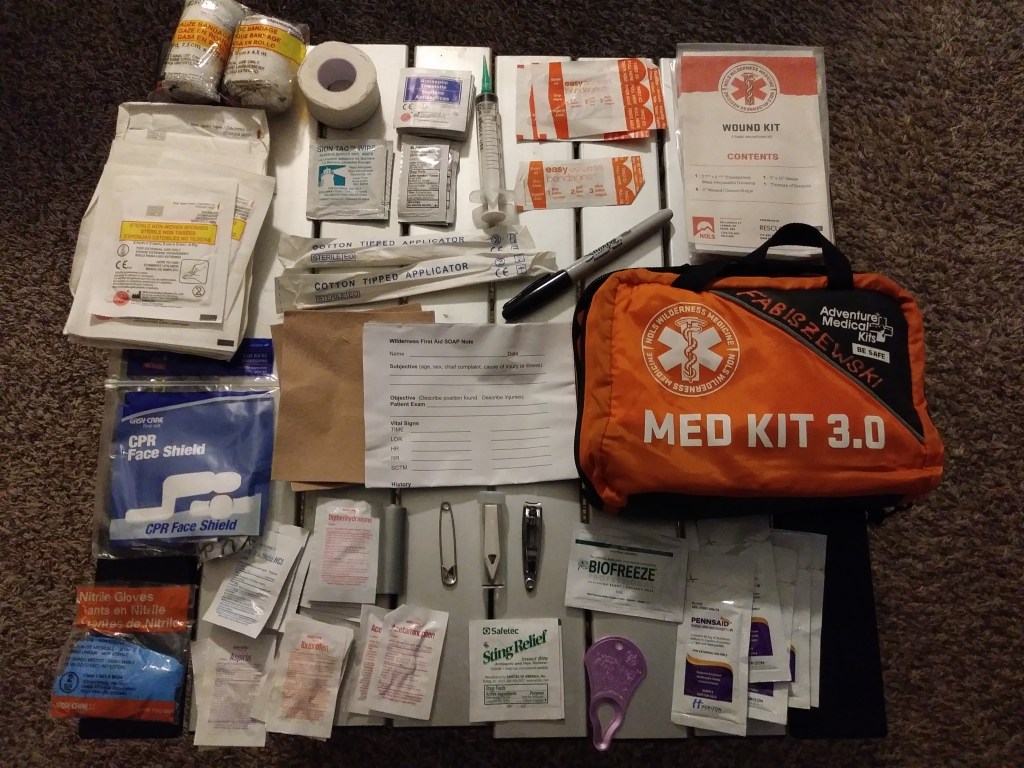
The best first aid is prevention. The second best is training. The third best is the basic essentials that I always carry.
Reviewed October 21, 2026. A starting point for Wilderness First Aid students. Medication strengths below identify inventory, not doses.
When someone comes along on the water, on a trail, or around a campfire, we accept a responsibility to look after one another. A kit is one part of honoring that trust.
Who is coming? What conditions will we meet? How long might professional care take to reach us? Those answers should shape the contents.
The foundation
My original list included gloves, a trauma pad, an irrigation syringe, wound supplies, medicines, sting relief, and a tick remover. For readers building a kit, these are useful starting points, alongside the Red Cross kit recommendations:
- Several pairs of nitrile gloves and hand cleaning supplies.
- Adhesive bandages, sterile gauze, an absorbent trauma dressing, roller gauze, and medical tape.
- An elastic wrap, triangular bandage, and appropriate blister supplies.
- A needleless irrigation syringe and access to water safe to drink.
- Small scissors and fine tipped tweezers or a suitable tick removal tool.
- Labeled medications, personal emergency medicines, and their directions.
- A breathing barrier appropriate to CPR training, a reference, pencil, and patient note paper.
- Waterproof packaging and bags for used supplies.
Adjust quantities for the group and delay to care. Keep lighting, communication, and protection from the weather available too. Bring the kit to class if permitted and practice with it.
The syringe and wound supplies
My syringe holds 30 mL, or 30 cc. That is its capacity, not the total rinse a wound needs. After controlling bleeding and assessing an ordinary open skin wound, irrigation helps remove loose contamination. The Wilderness Medical Society wound care summary recommends potable water; do not routinely add antiseptic chemicals. Seawater and untreated creek water are unsuitable.
Learn technique in class. Do not blindly probe wounds, remove embedded objects, or use a pressurized stream on an injured eye. Closure strips are not a general answer to deep, dirty, puncture, bite, or possibly infected wounds.
Benzoin helps compatible adhesives stick to intact surrounding skin; it does not belong inside a cut. Follow product instructions and check sensitivities. My revised Skin ’tastic Thinking: First Aid explains wound protection, infection concerns, and why some earlier advice needed correction.
Medications have different jobs
Keep labels, directions, and warnings. Check allergies, interactions, medical conditions, expiration dates, and storage requirements. Children need appropriate age and weight guidance. WFA certification does not provide unrestricted authority to administer medication.
- Acetaminophen, 500 mg: A possible pain or fever option. Follow labeling and check other medicines for the same ingredient.
- Ibuprofen, 200 mg: A pain relief option with different restrictions. It is not suitable for everyone.
- Diphenhydramine, 25 mg: May relieve some mild allergy symptoms. Its label warns of marked drowsiness, which matters for paddling, walking, and driving. Discuss suitable choices with a pharmacist.
- Loperamide, 2 mg: Does not replace fluid losses or medical assessment. Its label prohibits use with bloody or black stool and calls for medical advice before use with fever.
- Aspirin, 325 mg: Learn its limited role in suspected heart attack through training. Call emergency services and follow training or dispatcher guidance, including contraindications. A two tablet packet is not a dose. See Red Cross guidance.
Antihistamines do not replace epinephrine for anaphylaxis. Use epinephrine promptly according to training and the person’s emergency plan, activate emergency help, and arrange urgent evacuation. Do not wait for an antihistamine to work. Improvement does not cancel medical evaluation. The Red Cross explains this distinction.
Before departure, discuss access to prescribed emergency medicines with participants who need them. Use topical ointments and sting products only as labeled; they do not replace cleaning or assessment.
Adapt to the activity
These are planning recommendations, rather than a historical inventory of everything I carry.
- Day hiking: Blister care, suitable dressings, personal medicines, water, and emergency shelter. Leave a route and return plan.
- Several days: More consumable supplies, oral rehydration packets mixed as directed, and provision for repeated care and waste. Consider a splint appropriate to training.
- On the water: Waterproof and accessible supplies, dry clothing, shelter, suitable communication, and safe landings. See Wilderness First Aid for Kayakers.
- Mountain biking: Dressings for bleeding and abrasions, limb support, and a way out for someone unable to ride. Bleeding control training should inform equipment choices.
- Rock climbing: Supplies, insulation, and communication suited to the route. WFA does not teach technical rope rescue.
- Automobile: Additional dressings, gloves, blankets, and suitable emergency equipment. Vehicle heat may exceed medication storage limits.
- Home: Household wound supplies, a thermometer, medicines, and contacts. Account for children, accessibility, and prescribed emergency treatments.
Keep it ready and know when to leave
Inspect before departure and after wet trips. Replace used, expired, or damaged contents. Keep dressings clean and dry, preserve medicine instructions, and make sure a companion can find and open the kit.
Uncontrolled bleeding, breathing difficulty, altered mental status, suspected anaphylaxis, or suspected heart attack demands urgent action and emergency help. A significant wound or loss of safe function may also end the outing.
Record what happened, actual findings, care, response, and times. Reassess. If evacuation is delayed or unsafe, continue care, communicate, and revise the plan. Walking or paddling out is not automatically the safest choice.
Experience should make packing more deliberate. Supplies give our hands something useful to work with. Practice helps us use them. Judgment tells us when we need more help.
We plan enough food for the people gathered around the fire. Give their care the same thought.
Continue with the Wilderness First Aid Reading Guide. Sources are linked beside the guidance they support. Follow current labels and course protocols.


Leave a Reply