
GEAR I USE · BY JEFFREY FABISZEWSKI
The Tools Behind
Supper and Shelter.
Good food. A dry camp. Tools that earn their place.
My camp kitchen begins with the people around supper. These are the tools I choose for cooking, sleeping, and looking after a camp. Some have traveled with me for years. Keep what already works for you, and build from there.
About the shopping links: As an Amazon Associate I earn from qualifying purchases. Links marked “paid link” are affiliate links.
Find what you need for camp.
Books and Mentors
Utensils and camp light · Hammock camp · Before lighting the stove · A practical lesson · Subscribe
Start with the tools I know best.
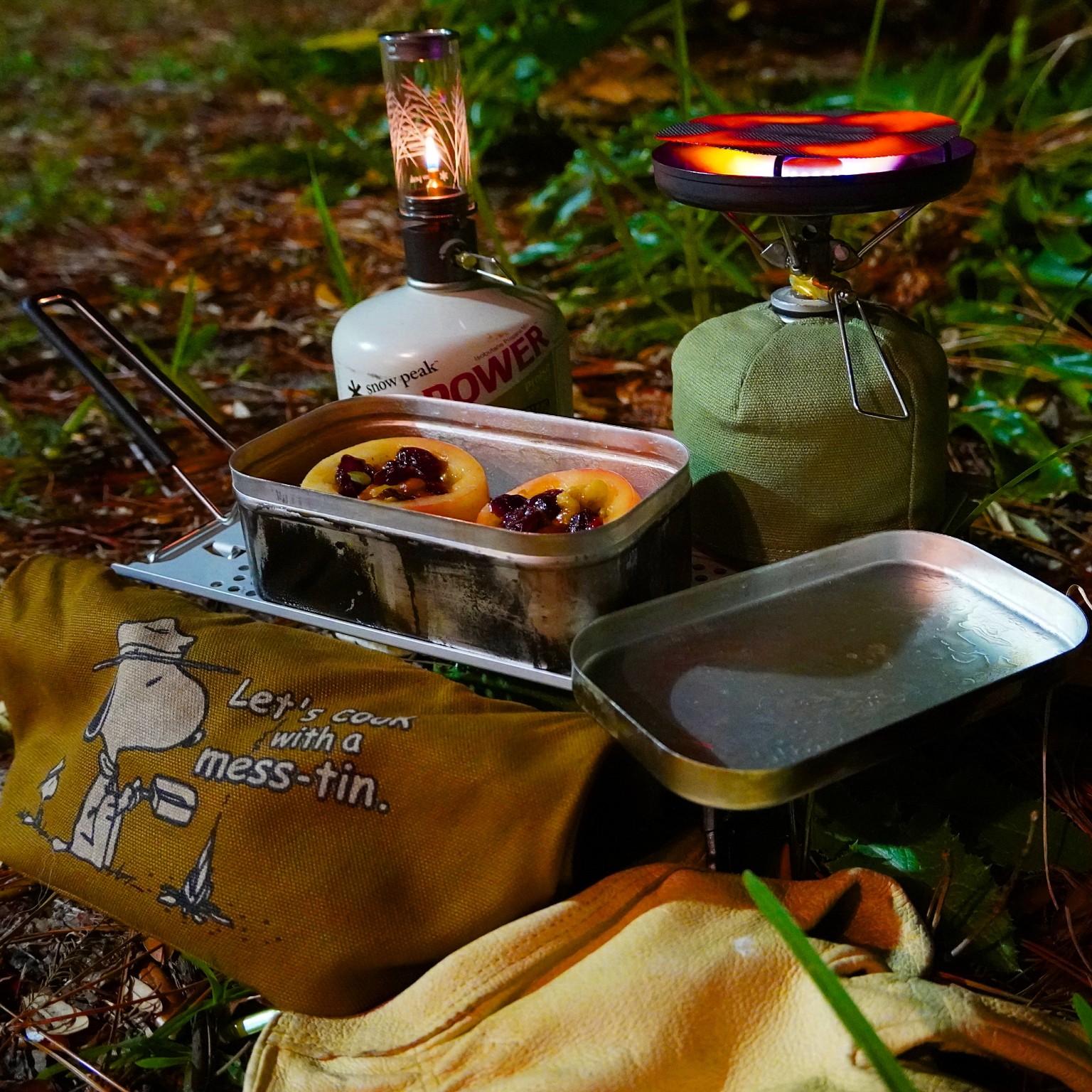
Trangia Mess Tin 210
The pot behind my baked apples, camp suppers, and one memorable egg brick.
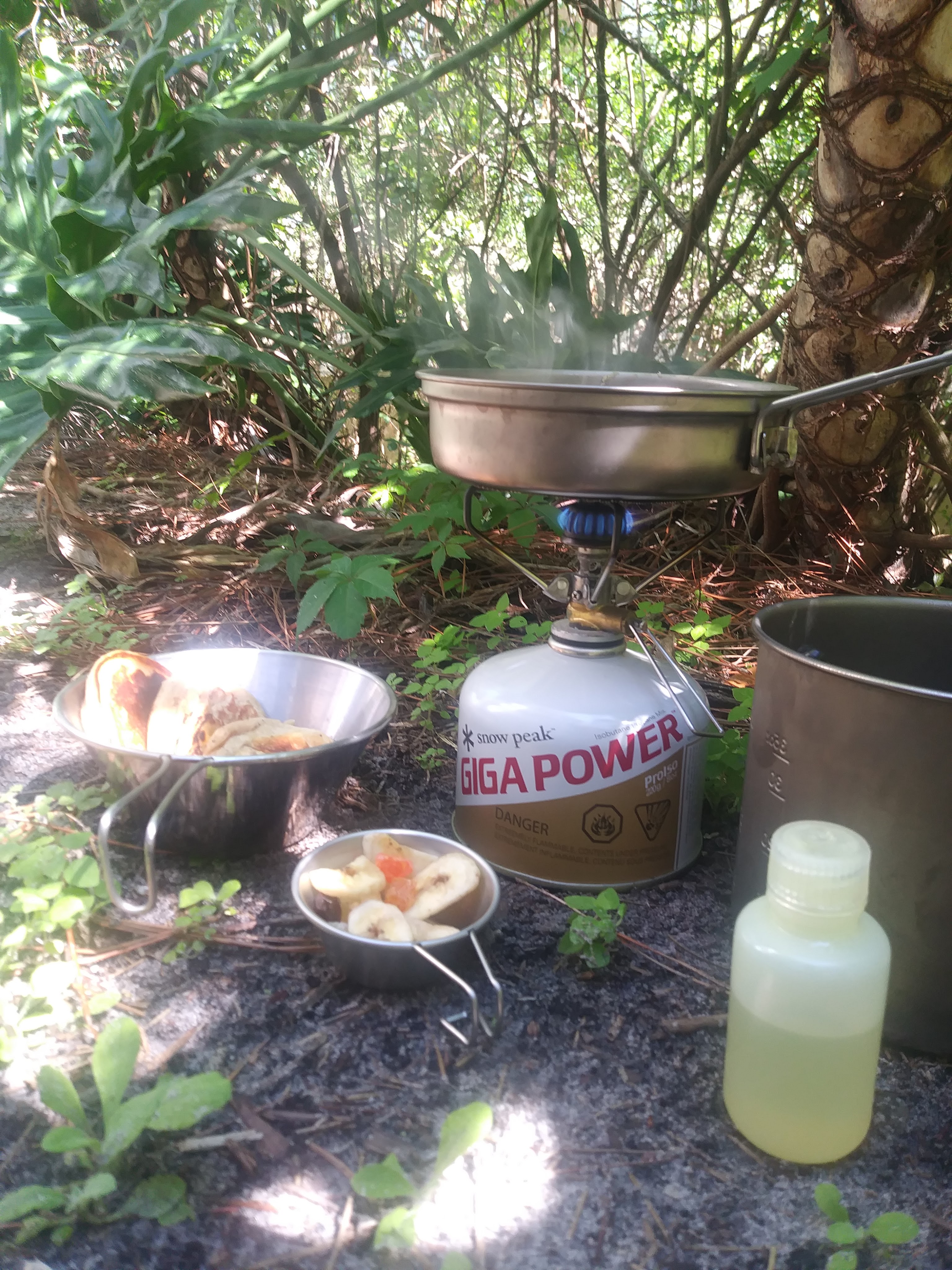
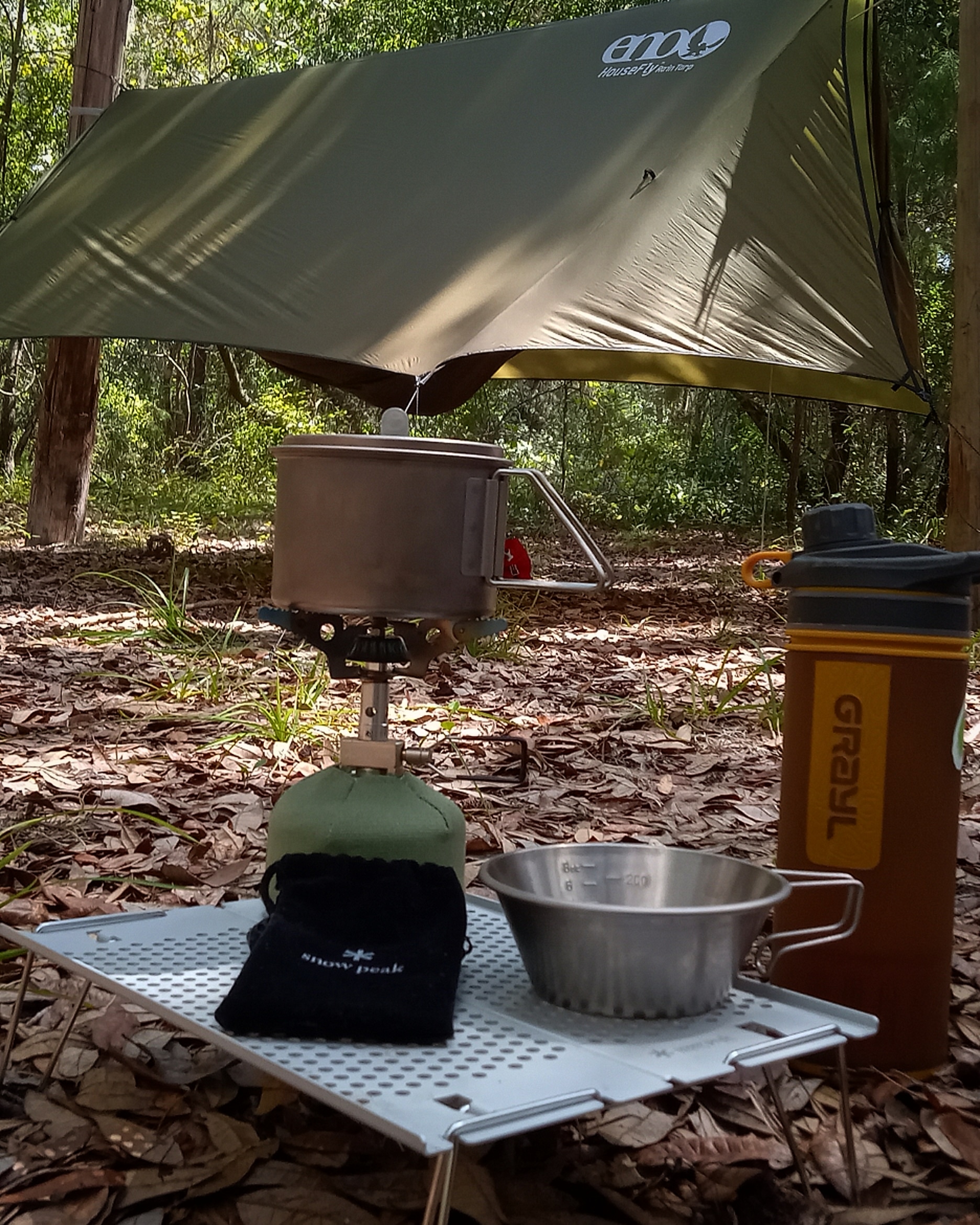
Snow Peak GigaPower stove
My compact gas stove, with the operating guide linked below.
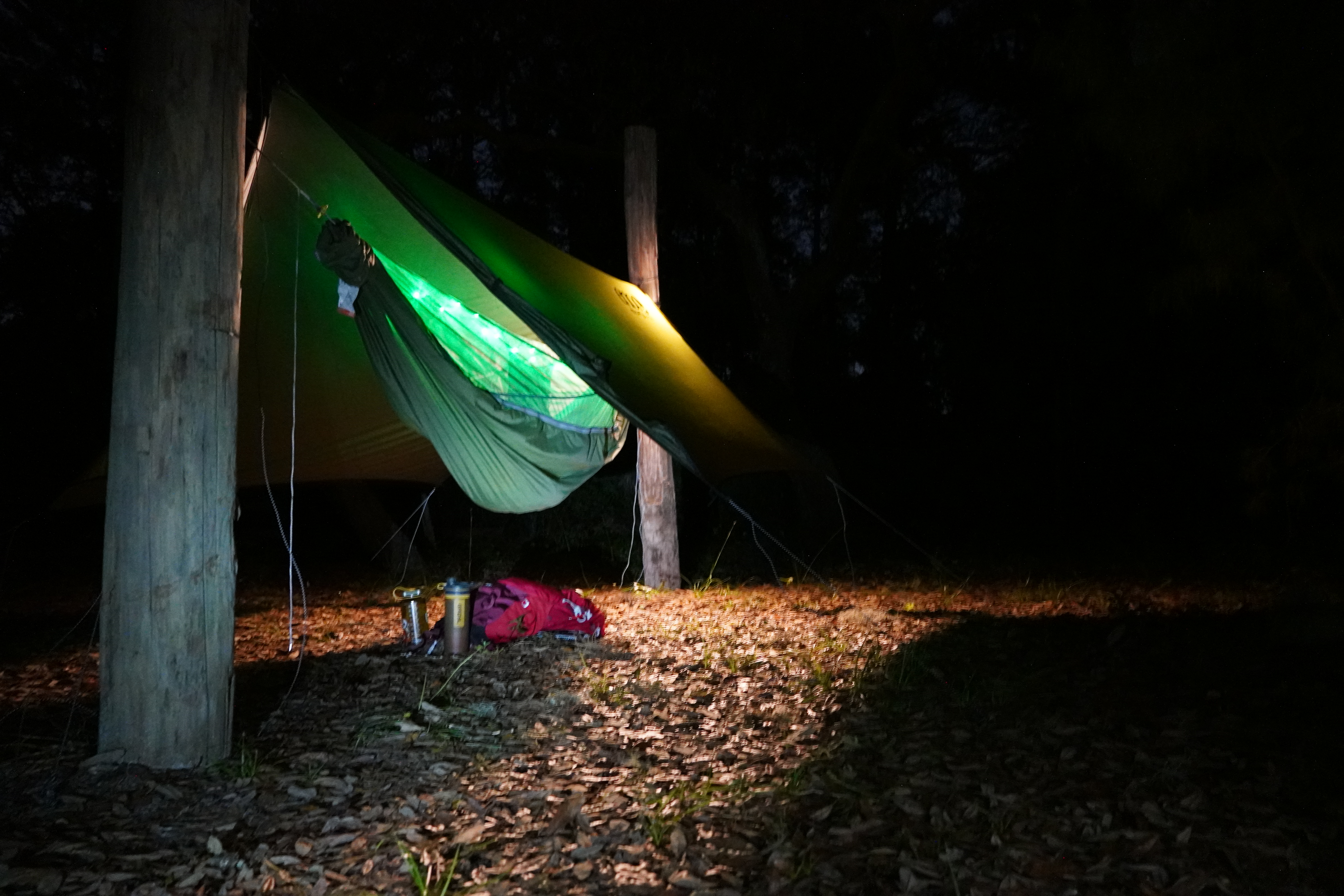
ENO JungleNest hammock and HouseFly tarp
My Florida hammock camp, with rain cover and insect protection planned together.
Read ENO JungleNest hammock and HouseFly tarp: use and lessons
Yoshikawa SJ1681 Hot Sand Maker
A hot sandwich is a good beginning for a small camp kitchen.
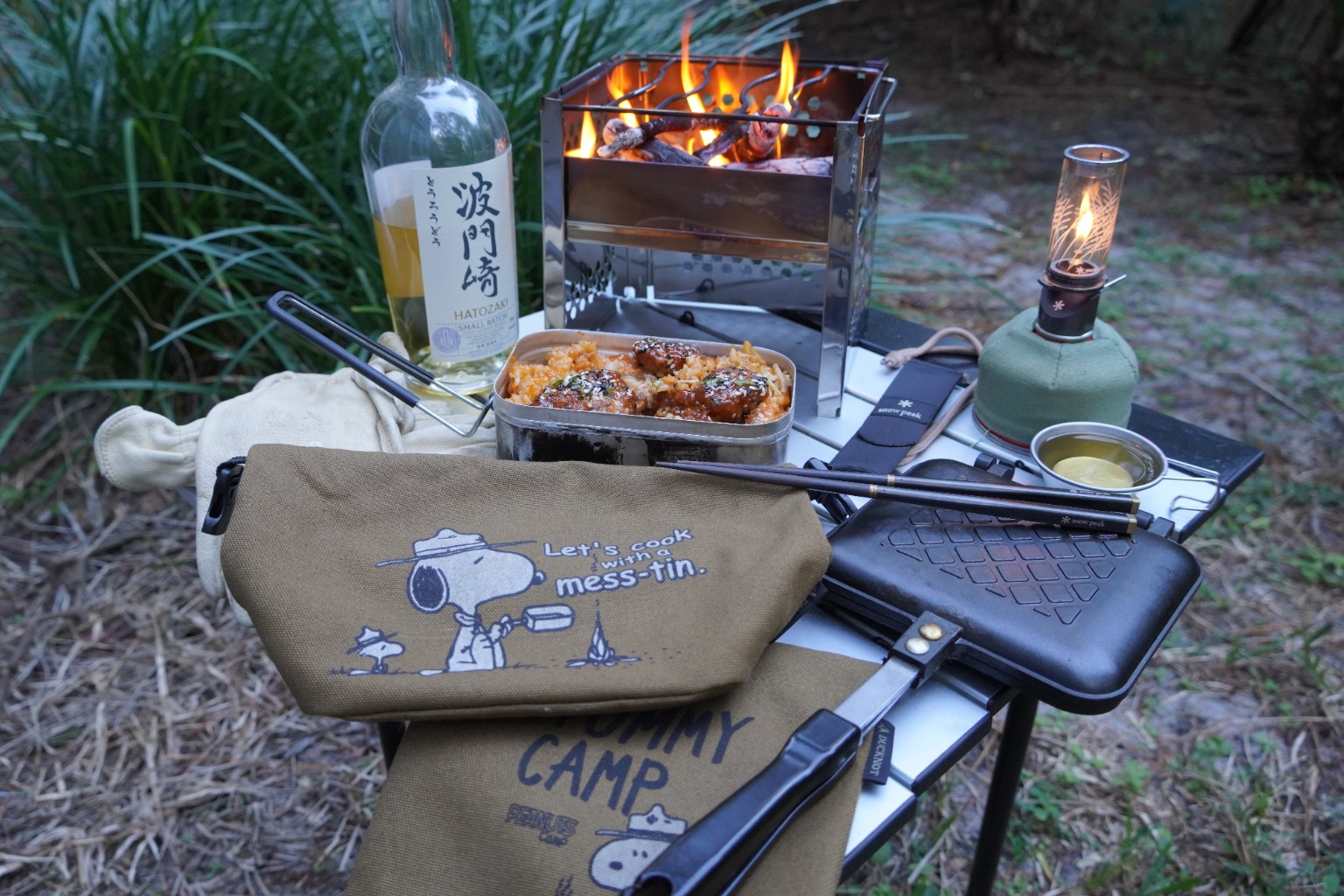
Snow Peak Mini Flame
A little evening light. My article identifies the edition I own.
Before buying: Match the model, size, and included accessories to your trip. Older equipment in my photographs may differ from today’s listing. Entries identify my own equipment, family equipment, or recommendations for consideration.
Cookware and a place to work
Begin with the meal and the number of people eating. The pot should serve supper, not determine it.
My favorite sandwich makers for a gas camp stove
My favorites are the CHUMS CH62-1180 Double Hot Sandwich Cooker (paid link) and the Yoshikawa SJ1681 Hot Sand Maker (paid link). Check the cookware size and compatibility against the instructions for your exact stove before using either cooker.
How I choose between my sandwich cookers
My Yoshikawa SJ1681 works as a double skillet for one serving, from kielbasa and sauerkraut on rye to fish tacos and gnocchi. For two servings I choose the CHUMS. Cheese has not stuck in my use, and warm residue wipes away easily. Proper cleaning still matters after handling raw food.
Read my sandwich cooker story, ownership notes, and seafood cooking checks. View the Yoshikawa SJ1681 Hot Sand Maker on Amazon (paid link).
My CHUMS ownership notes
My CHUMS cooks two servings: apple and cheddar toasties, S’mores pockets, Spam with egg and cheese, and more. The raised divider and mascot designs suit some meals. When I want a smooth interior, I take the Yoshikawa. Mine closes without the gap I observe on the Yoshikawa.
Read my sandwich cooker story and full CHUMS ownership notes. View the CHUMS CH62 1180 Double Hot Sandwich Cooker on Amazon (paid link).
Snow Peak Trek 900 Titanium
I own and use
One of the two Trek sets in my kitchen. I choose the pot after deciding what supper needs. Titanium calls for attention over concentrated heat.
View Trek 900 details and buying options at Snow Peak.
Snow Peak Trek 1400 Titanium
I own and use
I also own the larger Trek 1400. The choice begins with portions and enough room to stir. A light pot does not make frying effortless.
Trangia 210 Small Mess Tin, Silver
I own and use
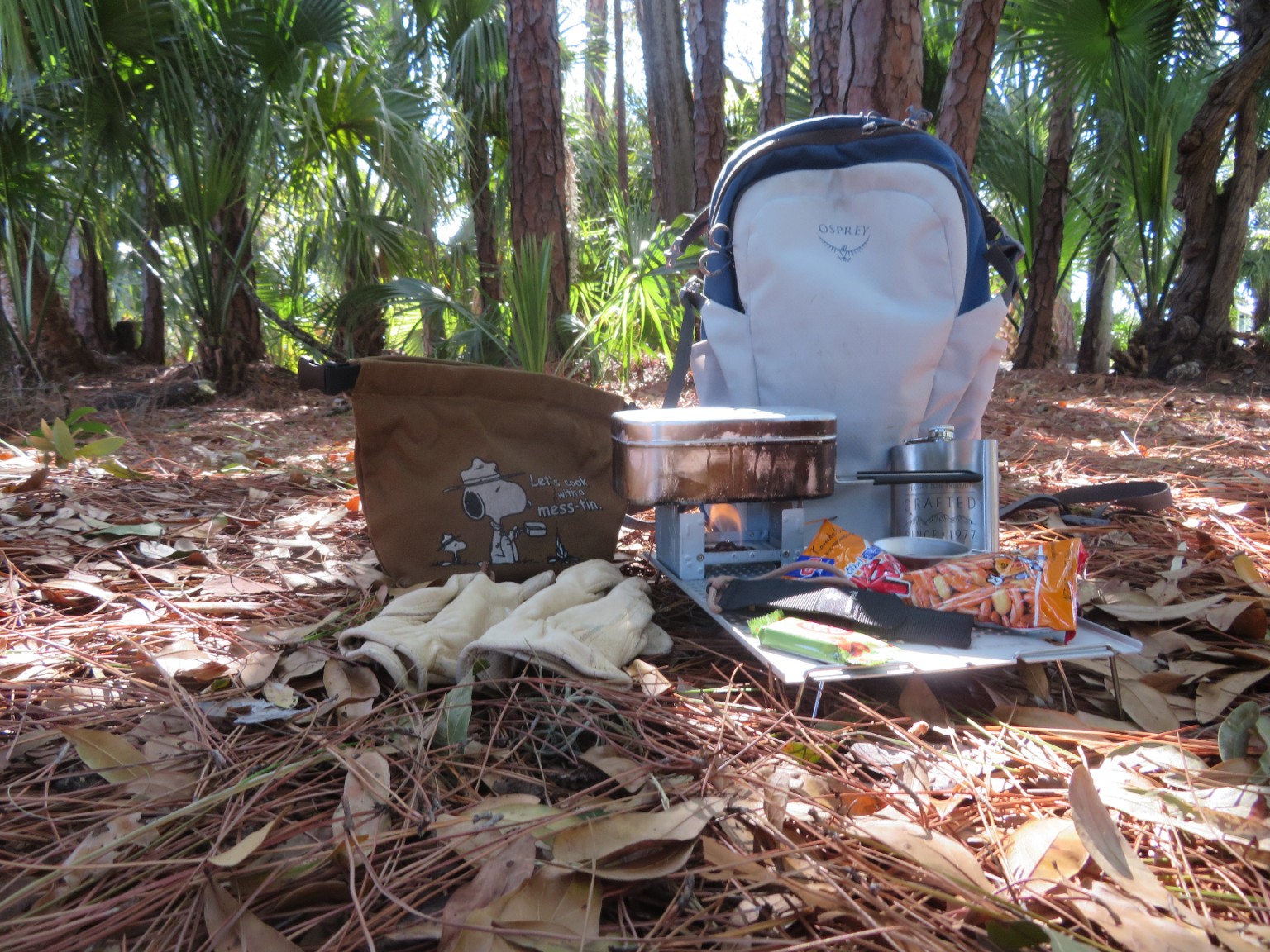
My small 210 cooks far more than noodles: baked apples, shishito peppers and eggs, cobbler, corn on the cob, and Mexican street corn are part of its work in my kitchen. I have used it over wood coals, gas, alcohol, and Esbit tablets. Its strength comes with a lesson: a little heat goes a long way. My overcooked omelet became an egg brick. This is cookware for an attentive cook. Read my Trangia 210 ownership review and heat lesson. View the Trangia 210 Small Mess Tin on Amazon (paid link). See it in my camp kitchen: See my related Instagram post.
Snow Peak Mini Solo cookset
I own and use
I use the Mini Solo for a compact kitchen. The meal still needs room to stir. A smaller pot earns nothing if supper spills over the rim.
Snow Peak titanium backpacker’s cup
I own and use
A separate cup earns its place when the pot is still busy with supper. Choose eating vessels for the meal, not for a matching collection.
View the titanium backpacker’s cup at Snow Peak.
Snow Peak Trek titanium plate
I own and use
A plate gives a sandwich or a meal somewhere to sit. If I am eating straight from a bowl or pot, I can leave it home.
Snow Peak double wall titanium mug, 450 ml
I own and use
This is my insulated drinking mug. It is for coffee after the water is heated. Never put a double wall mug over a stove or fire.
Snow Peak Ozen Solo Table
I own and use
I take this small table backpacking and to island beaches on kayak trips. It gives the kitchen a place to work. Set it on stable ground and follow the table and stove instructions.
Continue with the Liquid Rhythm paddling equipment guide for packing and the journey by water.
Follow @floridaoats on Instagram for more from my camp kitchen and Florida waterways.
Stoves: choose for the meal
Snow Peak GigaPower, manual ignition
I own and use
My GigaPower has manual ignition. I carry a way to light it and practice with the actual pot and meal before a trip. The automatic ignition model is a different purchase.
Snow Peak LiteMax Titanium Stove
I own and use
I also use the LiteMax for backpacking. Saving weight is useful, but the burner still has to support the pot and cook supper on a stable site.
MSR DragonFly
I own and use
The DragonFly was my first stove, and I still use it for backpacking and kayak expeditions. It asks more of the cook than a canister connection: learn the fuel system, priming, and maintenance.
Utensils and camp light
Snow Peak titanium spork
I own and use
A compact option for the eating kit. Choose a utensil that reaches the bottom of your pot. An ordinary spoon from home may already do the job.
Snow Peak Wabuki chopsticks
I own and use
These collapsible chopsticks are a favorite for noodles and many of my camp meals. I still pack an appropriate utensil for soup. Keep utensils used for raw ingredients separate from those used for eating.
View the 8 inch Wabuki chopsticks on Amazon (paid link)
The pair in my kit is the same pair listed in our November 12, 2009 expedition record. After at least 17 years of documented use, I have no problems to report. my Wabuki ownership review · the original equipment list.
Snow Peak Mini Flame lantern
I own and use
My Nocturne 2021 Mini Flame adds a little light to the evening. It does not replace a headlamp for cooking, walking, or emergencies. Use this flame lantern outdoors with its required clearances.
Snow Peak GigaPower lantern
I own and use
I also use a GigaPower lantern. Flame lighting means fuel and careful handling; dependable battery lighting stays in the kit.
Chopsticks: articles, recipes, and expedition records
Chopsticks: the complete reading list across both websites
This list connects the published mentions found in a search of both websites on November 15, 2026, including recipes, ownership notes, and historical expedition records. Search Liquid Rhythm or Florida OATS for subsequent additions. The Liquid Rhythm Chopsticks archive and Florida OATS Chopsticks archive collect tagged articles on each site; the equipment pages are included below.
Liquid Rhythm Kayaking
Snow Peak Wabuki Chopsticks Review: Why I Pack Them
Gear I Use: Kayak Camping, Expedition Cooking, and Florida Waterways
🥢Trailside Zen: A Snow Peak Gear Review from the Palmettos
🍜🔥 Japanese-Inspired Backcountry Lunch
🔥🍗 Backcountry Bang Bang Chicken & Rice
🔥Backcountry Chef Essentials: Cooking Over Fire with Precision and Purpose
#5 Expedition Planning: Jeff and Seans’ Gear.
Florida OATS
🍜 A Hot Lunch Among the Palmettos
Gear I Use: The Camp Kitchen, Family Camping, and Florida Outdoors
My Florida hammock camp
Florida gives a hammock camper shade and moving air, along with insects determined to attend supper. I recommend the ENO JungleNest and HouseFly for ordinary Florida camping where hammocks are permitted and suitable trees are available. Shelter choice still begins with the campsite and forecast.
ENO JungleNest hammock
I own and use
I use this hammock as part of my Florida camp. Its built in bug net keeps insects out of the sleeping space. It still needs rain cover, suspension, and suitable insulation underneath.
ENO HouseFly rain tarp
I own and use
My HouseFly adds rain coverage, including closing end panels. I practice the pitch and check coverage over the hammock ends. It is camping shelter, not a place to ride out a hurricane.
ENO Guardian bug net
I own and use
I began using a Guardian more than two decades ago. It is a separate net for a compatible hammock. The JungleNest already has a net, so you do not need to buy both for that setup.
ENO FieldDay blanket
Recommended for consideration
A blanket is an option for camp comfort. A warm layer over you does not replace insulation beneath a hammock on a cool or windy night.
Choose healthy trees, check overhead hazards, follow land manager rules, and use suitable tree protection and suspension according to the instructions. Some Florida islands have no legal or suitable hammock site, so confirm the arrangement before launching. Read ENO’s setup and safety instructions and compatibility guidance before combining components.
Don’t forget the hammock straps
Standalone ENO SingleNest, DoubleNest, and JungleNest hammocks do not include suspension straps. Purchase the appropriate straps separately unless your selected package is a hammock and straps bundle. Check the package contents before ordering.
Atlas Hammock Straps for SingleNest and DoubleNest
Pair these hammocks with ENO Atlas Hammock Straps (paid link).
Helios Ultralight Hammock Straps for JungleNest
For the JungleNest’s toggle suspension, choose ENO Helios Ultralight Hammock Straps (paid link). Follow ENO’s setup instructions for the complete suspension system.
Shelter, sleep, and a seat in camp
A good night begins with the shelter and the insulation underneath you. Here are our family choices alongside other equipment worth comparing.
NEMO Dagger backpacking tent
Recommended for consideration
A tent to compare when you want a shelter you can carry. Choose the capacity for the people and equipment that will actually sleep inside.
NEMO Dragonfly backpacking tent
Used in our family
My son’s favorite for his Scouting adventures. In our setup it also takes the Helinox Lite Cot described below. Confirm dimensions for your exact tent and cot.
NEMO Riff Down Sleeping Bag
I own and use
The Riff is one of my sleeping bags. Choose its fit and comfort rating for the overnight forecast, with a suitable pad underneath.
NEMO Coda Down Mummy Sleeping Bag
Recommended for consideration
A mummy bag option to compare with the Riff. Choose the shape and warmth you need rather than buying by the name alone.
View NEMO Coda Down Mummy Sleeping Bag on Amazon (paid link)
NEMO Moonlite reclining chair
Recommended for consideration
A seat for evenings when there is room in the load. Shelter and a suitable sleep system earn their space before a chair does.
NEMO Fillo Elite Camping Pillow
Recommended for consideration
A small comfort for the sleeping kit. Decide whether it improves your night enough to earn the space.
NEMO Tensor Trail sleeping pad, Regular
Recommended for consideration
Choose the pad for insulation as well as comfort. The bag above you cannot do the pad’s job underneath.
View NEMO Tensor Trail sleeping pad, Regular on Amazon (paid link)
NEMO mountaineering sleeping pad, Citron
Recommended for consideration
Confirm this listing’s exact model and insulation rating. The color alone does not tell you which pad you are buying.
View NEMO mountaineering sleeping pad, Citron on Amazon (paid link)
NEMO insulated hybrid sleeping pad
Recommended for consideration
Another pad option to compare for warmth, comfort, and packed space. Choose one suitable system rather than collecting overlapping solutions.
View NEMO insulated hybrid sleeping pad on Amazon (paid link)
Helinox Lite Cot
I own and use
The Lite Cot fits inside the NEMO Dragonfly in my setup. That is a useful pairing, but tent generations and capacities differ. Check floor space and usable headroom for yours.
Two accessories to check separately: the Switchback short pad (paid link) and the Vortex pump sack (paid link). The pad must suit your insulation and length needs; the sack must fit your valve.
Water treatment and storage
MSR MiniWorks EX Microfilter
I own and use
I use this filter as part of my backpacking, river kayaking, and preparedness equipment. A filter is one part of a water plan. It does not desalinate seawater or reliably remove viruses and chemical contamination. Hurricane floodwater is not an appropriate source to make safe with this filter. View MSR MiniWorks EX Microfilter on Amazon (paid link).
MSR DromLite and other MSR water reservoirs
I own and use
I have carried MSR water reservoirs for more than two decades. I plan drinking, cooking, cleaning, and reserve water before launching. This DromLite listing is the 6 liter size.
View MSR DromLite and other MSR water reservoirs on Amazon (paid link)
Sawyer Squeeze
Recommended for consideration
An option for a freshwater treatment system. Choose for the source and its hazards, keep the clean side clean, protect the filter from freezing as instructed, and carry a backup.
GRAYL GeoPress and the limits of hurricane water treatment
GRAYL GeoPress purifier bottle
I am adding the GRAYL GeoPress (paid link) to this recommended equipment list. GRAYL describes protection against bacteria, protozoa, and viruses, plus reduction of certain chemicals and metals. That is broader treatment than a typical backpacking microfilter provides, but it is not permission to drink from any source. This entry is a recommendation, not a claim of a personal field test.
The manufacturer’s precautions specify freshwater and advise against salty or brackish sources. Its cartridge is not intended for industrial disasters, severe metal contamination, or toxic algae. Florida’s tannin rich waters also deserve attention: GRAYL warns against high tannin concentrations. Choose another source when those limits apply, and follow the current cartridge instructions.
Hurricane floodwater is a different problem. Sewage, fuel, pesticides, and salt can mix in floodwater. Do not treat the GeoPress, MiniWorks, or Squeeze as a way to make that mixture drinkable. None desalinate seawater. CDC’s emergency water guidance explains why boiling or disinfecting cannot make fuel or toxic chemicals safe. Start with stored potable water and a confirmed safe resupply. Follow your utility and health department’s advisory.
CDC’s emergency water guidance explains that boiling and disinfecting do not make water containing fuel or toxic chemicals safe. Clear appearance and an acceptable smell do not prove safety. Begin hurricane planning with stored potable water and a way to obtain more from a confirmed safe supply. Follow the local water utility and health department’s advisory, including any instruction not to drink or use the water. A filter belongs in the plan; it cannot replace a safe source.
For the broader household plan, read Prepared at Home. Stronger Together.
Packing and Florida insects
Osprey Ultralight Dry Sacks, 3, 6, and 12 liters
I own and use
These are the sizes I use. Several smaller bags make a kayak load easier to organize. Lightweight dry sacks are not a guarantee against prolonged immersion; give critical equipment additional protection.
View Osprey Ultralight Dry Sacks, 3, 6, and 12 liters on Amazon (paid link)
Osprey Atmos backpack
Recommended for consideration
Try it with a realistic load. Fit and torso sizing matter more than carrying the same pack as somebody else.
Sawyer permethrin clothing treatment
Recommended for consideration
For clothing and gear, not skin. Follow the label, treat before the trip, and let items dry fully. Keep wet treatment away from cats and waterways.
View Sawyer permethrin clothing treatment on Amazon (paid link)
Sawyer picaridin repellent
Recommended for consideration
The skin repellent on my list. Use it with clothing, netting, and sensible campsite choices. Follow the label for application and age limits.
A book before the launch
Florida’s Fabulous Canoe and Kayak Trail Guide
This is one of my recommended Florida paddling books. A guidebook helps develop ideas and place a trip in context. Confirm current access, closures, launch rules, weather, water levels, tides, and campsite arrangements separately. A printed route is a starting point for planning. View Florida’s Fabulous Canoe and Kayak Trail Guide on Amazon (paid link).
Hey, I’d Eat This at Home! by Michael Gray
Michael Gray and I have been friends for more than two decades. He has shared a great deal of advice with me and has been a generous mentor. I am glad to point readers toward his cookbook, Hey, I’d Eat This at Home! Good food belongs in camp, and so does gratitude for the people who have helped us along the way. Find Michael Gray’s cookbook on Amazon, Kindle edition (paid link).
Nigel Foster: mentorship, books, and the original account
Nigel Foster: Learn from the paddlers who helped shape the craft
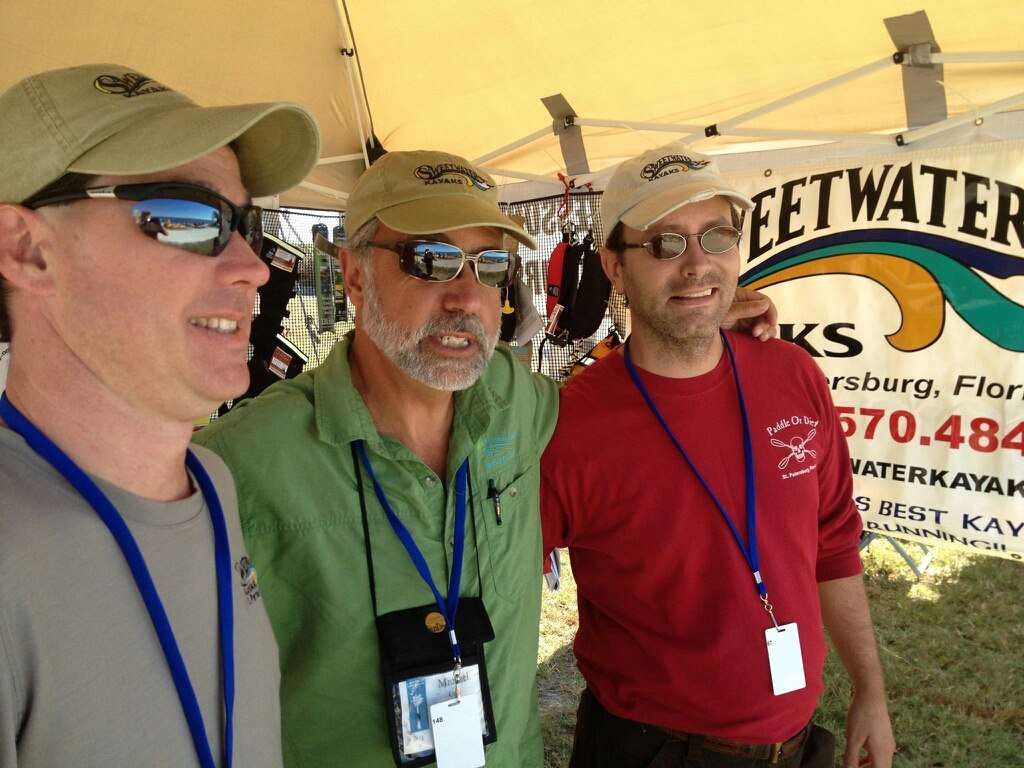
Nigel Foster is a mentor whose advice I value. In 2011, while we were canoeing on the Suwannee River, he shared advice that has stayed with me. At the time, I was an instructor at Sweetwater Kayaks in St. Petersburg, Florida. The owner, Russell Farrow, and Nigel had been friends for decades. Read my account of that journey in Escape to Tip a Canoe on the Suwannee River.
I want my students to know the paddlers whose teaching, exploration, and writing helped shape kayaking. Nigel’s work deserves a place in that reading. If you have not had the opportunity to take a class with him, his books offer another way to build your knowledge and deepen your understanding of paddling. Read thoughtfully, bring questions to your next lesson, and practice new skills in suitable conditions with appropriate instruction.
Start with The Art of Kayaking for Nigel’s approach to paddling technique and understanding the boat. Read Nigel’s introduction to the book. Then Explore Nigel Foster’s books on his Amazon author page (paid link).
Derek C. Hutchinson: books and the lesson I took
Derek C. Hutchinson: Books that helped build my foundation
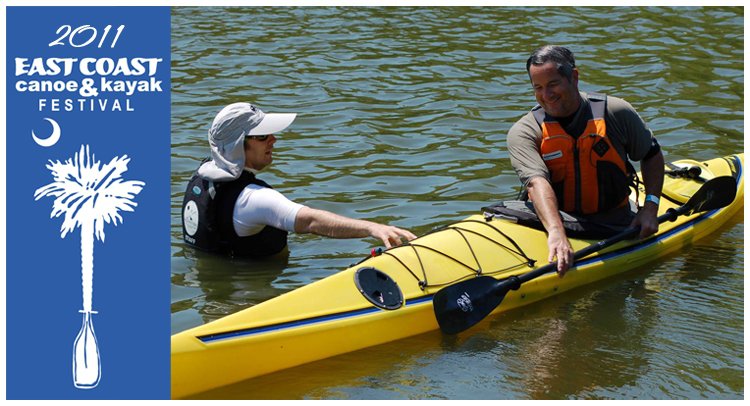
I took one class with Derek C. Hutchinson, at the 2010 East Coast Canoe and Kayak Festival. Before that weekend, I had read every one of his books. His writing had already become part of the foundation of my paddling knowledge; meeting him as a student gave those lessons another dimension.
Many newer students I have taught have never heard his name. I want to help change that. Often called a father of modern sea kayaking, Derek influenced the recreational craft through his expeditions, boat designs, books, memorable talks, and bracing instruction. That description recognizes his contribution to modern sea kayaking, whose roots reach far back into Indigenous Arctic cultures. He died on October 10, 2012, aged 79.
What stayed with me from his class was how carefully he watched. Teaching from a chair on the bank, he used a few chosen words to help us notice what was happening in our kayaks and discover the movement ourselves. I describe that lesson in guided discovery in Every Roll Begins With a Failed Brace.
I encourage my students to explore his books and learn about the man behind them. Reading offers access to lessons that helped shape my own understanding. Bring that knowledge to practical instruction, test it thoughtfully in appropriate conditions, and keep learning.
Start with Basic Book of Sea Kayaking for an introduction, then The Complete Book of Sea Kayaking for a broader reference. The 2018 edition of the latter was updated by Wayne Horodowich. Books support instruction and practice in suitable conditions. See the publisher’s descriptions of Basic Book and The Complete Book. Explore Derek C. Hutchinson’s books on his Amazon author page (paid link).
What I teach before we light the stove
Read the instructions for the exact stove, fuel, cookware, and accessories. Use outdoor camp stoves and flame lanterns outdoors, with the required clearances. Never bring them into a tent or enclosed vehicle. Do not improvise an enclosing windscreen around a fuel canister or assume an accessory is compatible because it fits.
Emergency preparation includes stored safe drinking water and food that needs no cooking. A hot meal is not a reason to remain outside in dangerous storm conditions. Follow evacuation directions. Keep raw food separate from eating utensils and follow food storage guidance; a dry bag does not refrigerate food.
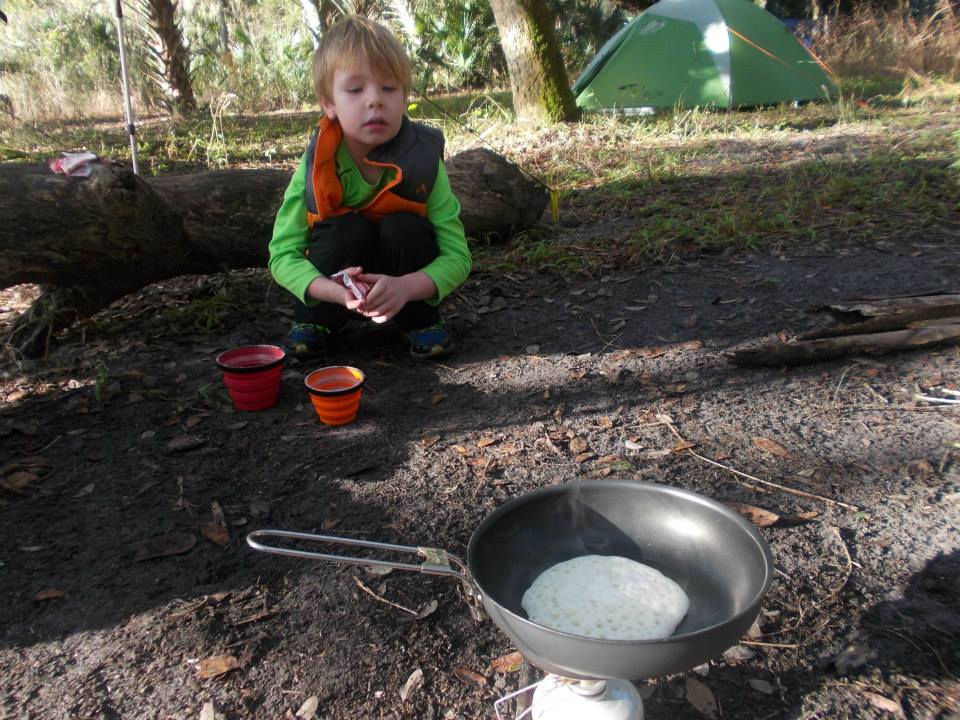
Plan supper before you pack the kitchen.
Before packing, make one planned camp meal at home using the cookware you intend to take. Count the portions, check whether stirring needs more room, and note which utensils you actually use. Let everything cool, then pack the complete kitchen. If the meal does not fit the pot at home, the campsite will not improve its manners.
Continue with my Trangia mess tin article and use the cookware section above to compare the rest of the kitchen.
Keep learning.
Read Real Meal Plans for Travel Beyond the Grocery Store and Camping Stove Tricks. They explain the planning and equipment limits behind a useful camp kitchen. For practical instruction, visit Liquid Rhythm Kayaking.
Prepared at Home. Stronger Together. · Paddling and expedition equipment
Manufacturer references and review notes
Sources and review
Manufacturer guidance: Snow Peak on double wall titanium; MSR MiniWorks EX product guidance; Sawyer clothing treatment instructions. Read the current manual and label for the exact product you own.
Layout and page connections updated November 16, 2026. Ownership notes and product guidance remain specific to the models described. Confirm current manufacturer instructions before use.
Keep a place at the camp kitchen
Subscribe by email for new Florida OATS posts, including practical camp cooking, outdoor skills, and lessons to share with your family or Scout group.
Ask me to demonstrate the kitchen
For a paddling club, symposium, or regatta shore program, ask about a camp cooking demonstration. We begin with the audience, menu, and equipment rather than a shopping list.

