
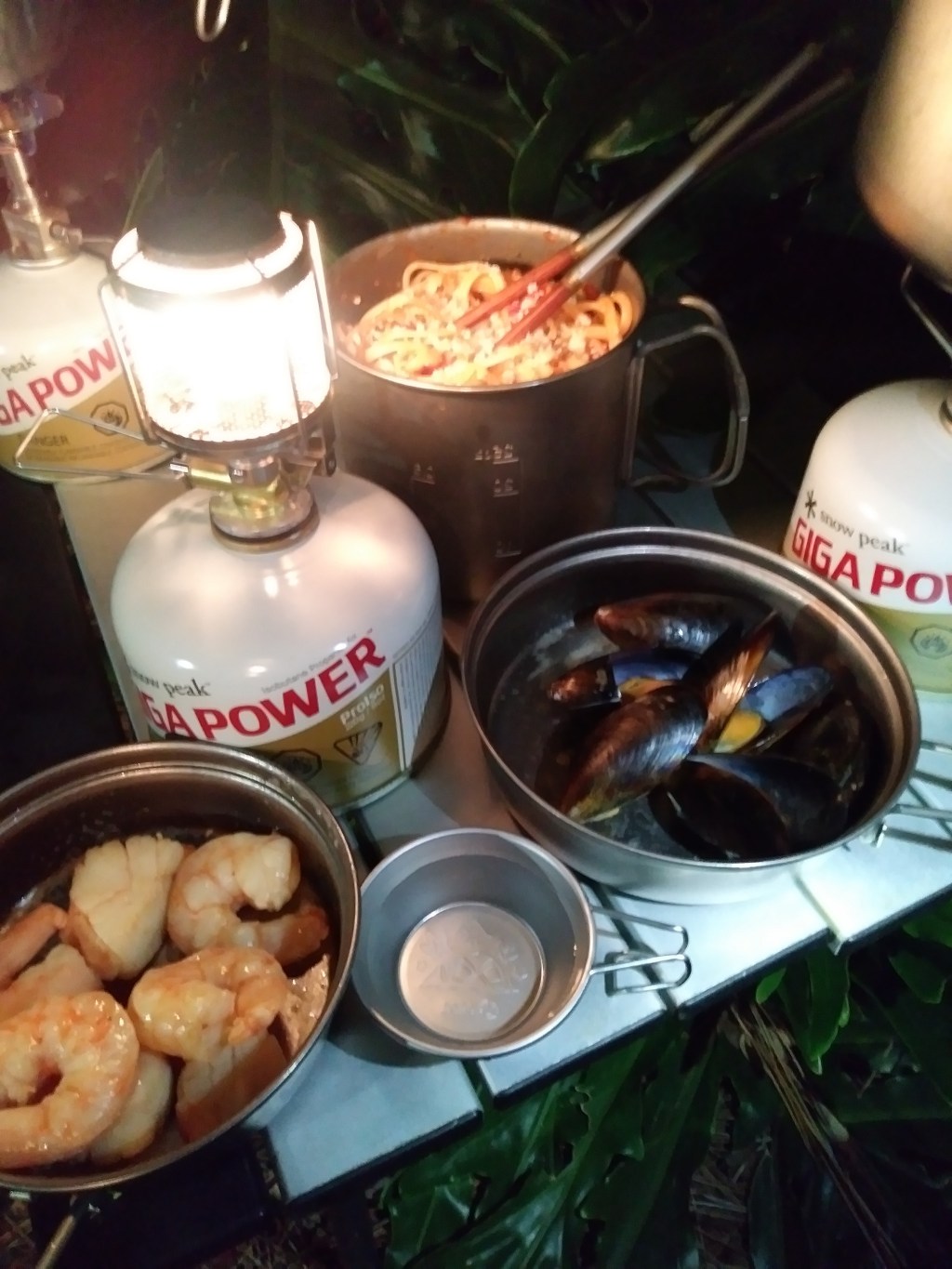
Some people eat to live and others live to eat. On backcountry journeys and kayak expeditions, I have sometimes eaten simply to get enough energy for the next day. It did the job. It did not give us much to look forward to at supper.
I enjoy cooking actual meals outdoors. That can include dried ingredients and convenient provisions, but I want the meal to taste like someone cared about it. Food is as important as the love of family gathered around the campfire.
A small stove can do more than boil water. The useful question is how to cook well within the limits of the burner, cookware, fuel, and place. An accessory is worth understanding before it becomes a recommendation.
Reviewed and revised October 21, 2026. The earlier laboratory gauze recommendation and unsupported wood stove emissions claims have been withdrawn. The burner net discussed below is a cooking accessory, with compatibility limits that must be checked.
The wire mesh I use
I use a wire mesh accessory purchased from Japan. The listing images supplied for this update identify it as a CRAFTSMAN TOKYO burner net, also called a burner pad. This is a more useful identification than calling every screen a Bunsen burner gauze.
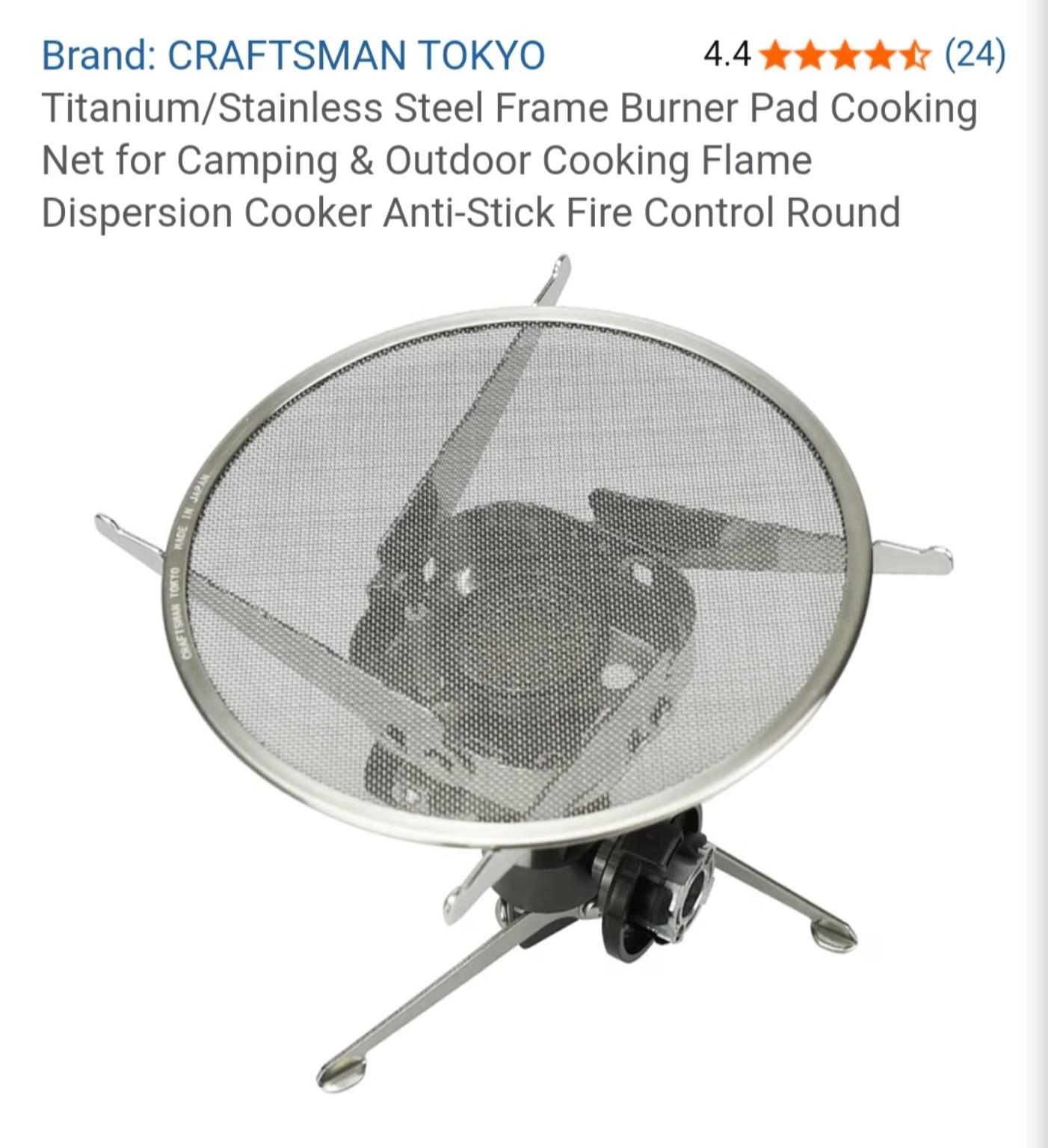
Japanese search terms include バーナーパッド and バーナーパット, both used for burner pads, and バーナーネット, burner net. The CRAFTSMAN TOKYO brand site displays round pads and distinguishes stainless steel frames from titanium frames. A frame description does not establish the composition of the mesh itself.
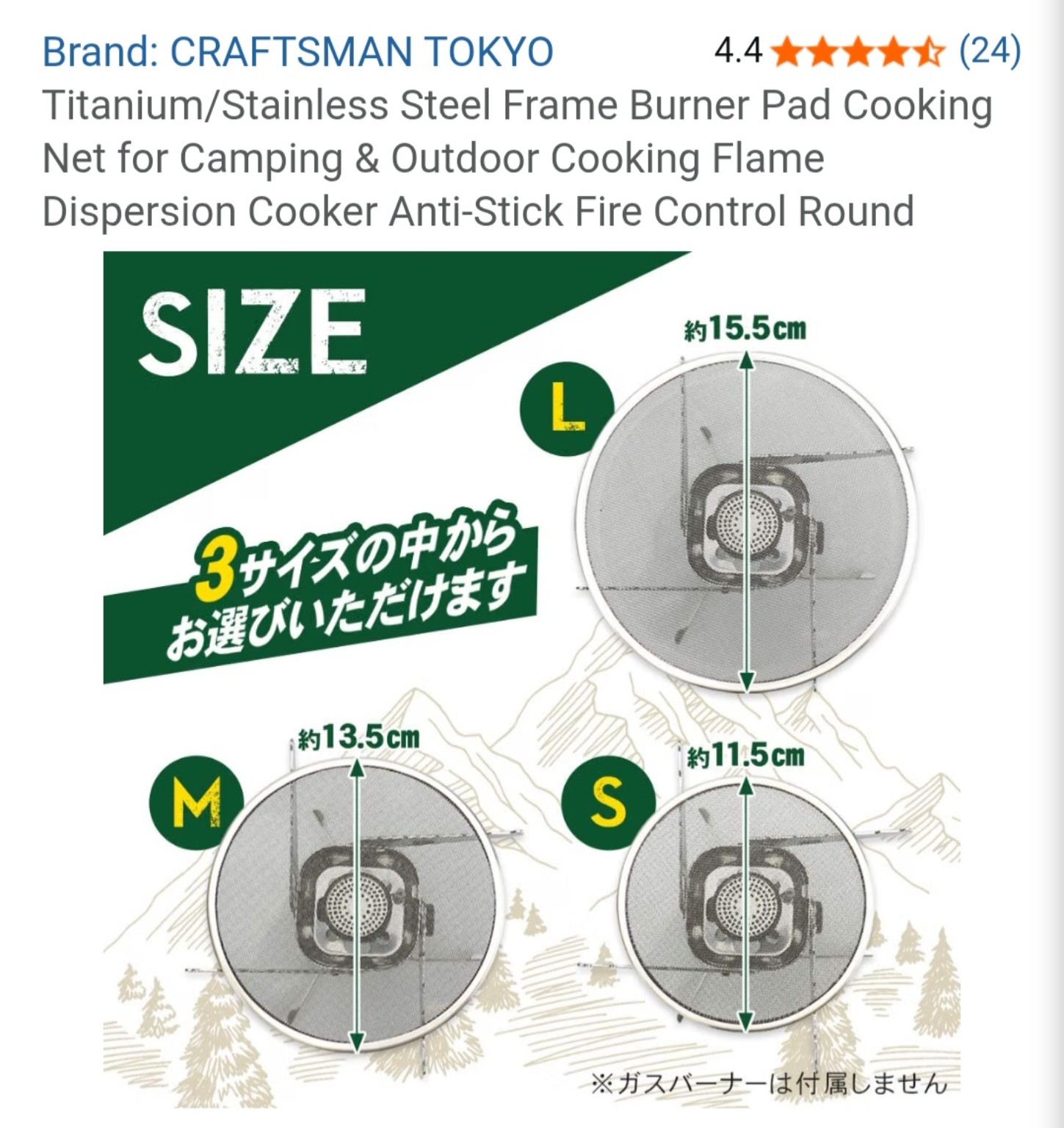
The supplied listing shows approximate diameters of 11.5, 13.5, and 15.5 centimeters. Those are advertised options, not a measurement of my particular pad. Neither the word titanium nor the phrase made in Japan establishes suitability for a given stove.
What a burner pad changes
The mesh heats above the flame and radiates heat toward the cookware. Manufacturers market these pads for gentler cooking and reducing concentrated heating. UNIFLAME’s Burner Pad II M uses special heat resistant steel mesh; CAMPINGMOON’s US-1312 mini roaster has a removable mesh section also marketed for use as a burner pad.
That can be relevant to rice, sauces, and other food that scorches over a concentrated flame. It does not guarantee even cooking, prevent every burned supper, or turn the pan into a nonstick pan. Nor does it prove faster cooking or fuel savings.
The distinction matters: a diffuser changes how heat reaches the cookware. It can also change how heat reaches the stove and fuel supply.
The warning belongs beside the benefit
UNIFLAME explicitly warns that downward radiant heat can damage equipment, directs users to use low heat, and prohibits its pad on alcohol burners because of incomplete combustion. Those are instructions for UNIFLAME’s product, not permission to use every other pad at low heat.
I have not established manufacturer approval for the CRAFTSMAN TOKYO pad with my particular MSR DragonFly or Snow Peak GigaPower. My use is personal experience, not a compatibility test. A seller’s photograph of a pad on a burner does not settle that question.
Before using an accessory, check the exact stove model, pad instructions, cookware limits, and manufacturer guidance together. If compatibility remains unclear, ask the manufacturers and leave the pad out until it is resolved. A remote fuel bottle or hose does not automatically make a combination safe.
Do not improvise a heat shield or tightly surround a canister stove with a windscreen to compensate for an uncertain setup. Follow the stove’s own instructions. Touching a fuel container is not a reliable way to certify safe operating temperature. Allow the stove, cookware, and pad to cool before handling or packing.
What the Japanese coverage adds
Japanese camping publications discuss these accessories as practical cooking tools. CAMP HACK’s field report on the UNIFLAME pad describes cooking uses and acknowledges radiant heat concerns. BE-PAL’s CAMPINGMOON mini roaster report describes a related mesh accessory. These are camping reports, not universal compatibility approvals or laboratory safety studies.
For the vehicle camping side of the question, Honda Japan’s car camping guidance addresses site permission and outdoor use of camping combustion equipment. Japanese vehicle camping, often described as 車中泊, is relevant reading alongside overland travel, but the terms are not exact equivalents. None of that makes cooking inside a vehicle appropriate for an outdoor only stove.
The useful lesson from these sources is to read the caution as carefully as the cooking promise. A familiar accessory in another camping culture still has to suit the equipment in front of us.
The stoves in the original article
My original article featured the MSR DragonFly liquid fuel stove, Snow Peak GigaPower canister stove, and a folding titanium wood stove identified as the Y6722. Their photographs and place in my cooking history are worth retaining. Old specifications should not be presented as if they describe every model sold today.
For the DragonFly, use MSR’s official maintenance guidance and linked instructions for inspection, servicing, fuel requirements, and operation. Good flame control begins with a properly functioning stove, not an added screen.
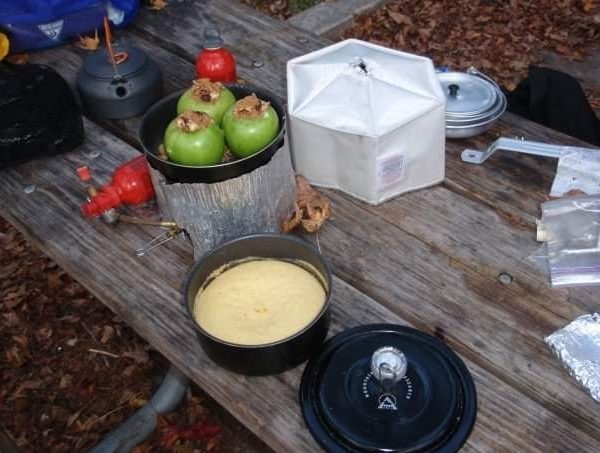
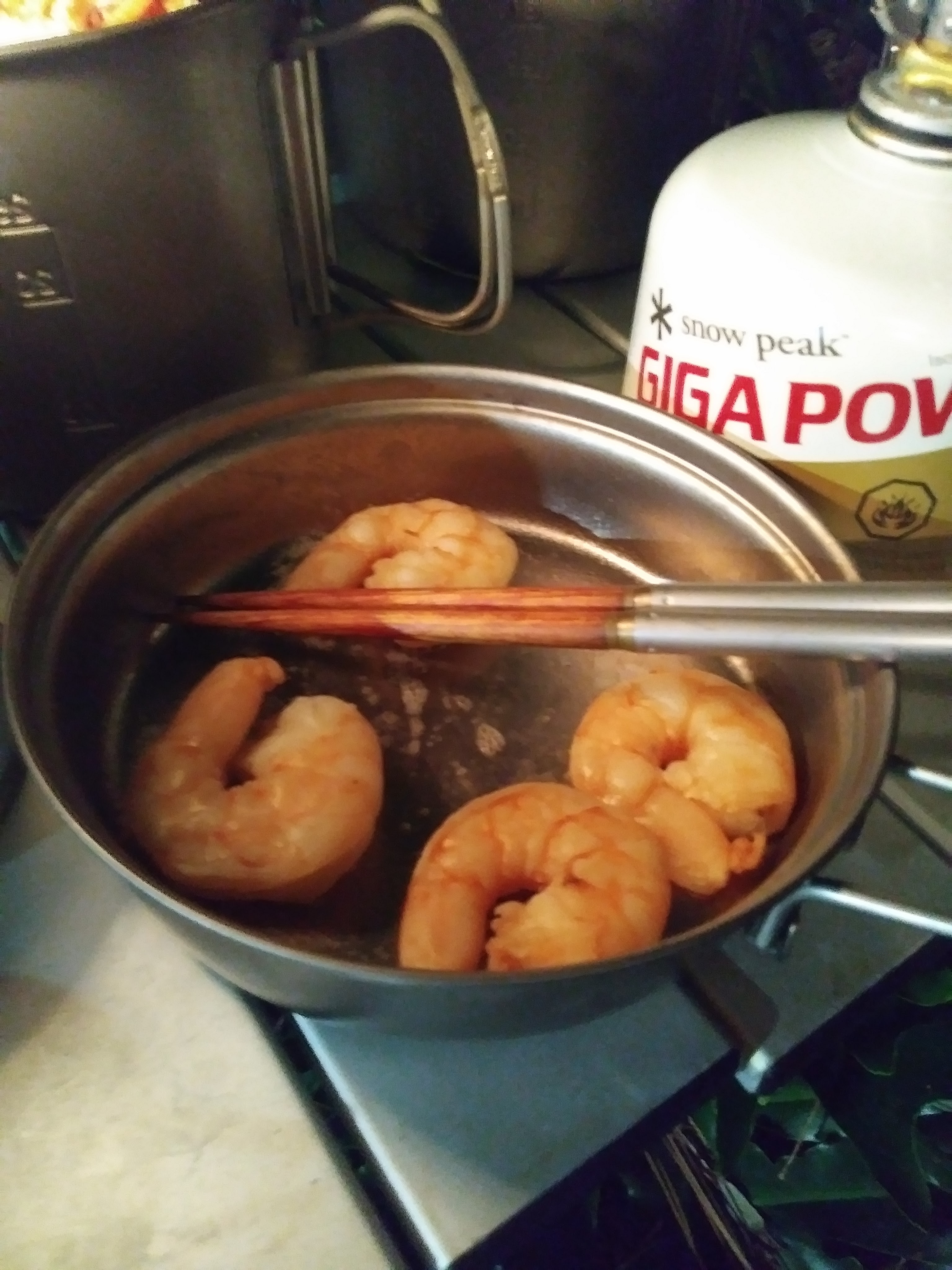
Snow Peak’s current GigaPower GS-100R2 product page and model instructions are primary references for that model, not a substitute for the instructions supplied with an older stove. Snow Peak specifies outdoor use and warns against use indoors, in vehicles, or in tents.
The old wood stove quotation claimed no chemical emissions and no carbon footprint. That was wrong. EPA’s archived Burn Wise guidance explains that wood smoke contains gases, fine particles, and toxic pollutants. A small titanium firebox does not make combustion emission free. I also have no basis for claiming that this particular stove has zero climate impact.
Check local fire restrictions and fuel collection rules. A wood stove is not an automatic exemption from a fire ban. A manufactured fuel stove is permitted only when the applicable order allows it. Carry a meal that needs no cooking when conditions require that choice.
The supper matters more than the trick
Use outdoor camping stoves outside, on a suitable stable surface, with the clearances and cookware specified by the manufacturer. Keep people, loose clothing, and combustible materials clear. Never leave a hot or burning stove unattended. CDC warns that fuel burning equipment can produce carbon monoxide. Opening a tent flap or vehicle window is not permission to use an outdoor stove inside.
Safe food storage, clean hands, and suitable water matter as much as flame control. See Real Meal Plans for Travel Beyond the Grocery Store for the provisioning decisions behind the meal.
I like an ingenious piece of equipment. I also like supper served without a scorched pot or an equipment failure. The better trick is often patience: a suitable stove, a sensible recipe, and enough attention left over for the people waiting to eat.
Jeffrey John Fabiszewski
FloridaOATS
Sources and product references
Sources checked October 21, 2026. Product pages establish what their makers describe and warn about; they do not certify combinations from other brands. Translations and explanations here are summaries. Follow the original instructions for the exact product.
CRAFTSMAN TOKYO: Brand site and sales links
UNIFLAME: Burner Pad II M, materials and warnings
CAMPINGMOON: US-1312 mini roaster and burner pad
MSR: Stove maintenance and linked operating manuals
Snow Peak Japan: GigaPower GS-100R2
Snow Peak: GS-100R2 instructions
Honda Japan: Vehicle camping manners and precautions
CDC: Carbon Monoxide Poisoning Basics
EPA: Wood Smoke and Your Health, archived program
Additional Japanese editorial reading: CAMP HACK’s UNIFLAME field report and BE-PAL’s CAMPINGMOON report. These are secondary sources, distinct from the manufacturer documentation above.
For readers comparing the stove itself, the MSR DragonFly listing on Amazon (paid link) is a place to check the current package. The DragonFly was my first stove. Buying it does not establish compatibility with the burner pad described above; check the separate instructions before combining equipment. As an Amazon Associate I earn from qualifying purchases.
My equipment guide: Read Gear I Use for my recommended stoves, cookware, water equipment, and camping gear, including the limits to understand before buying.


Leave a Reply