
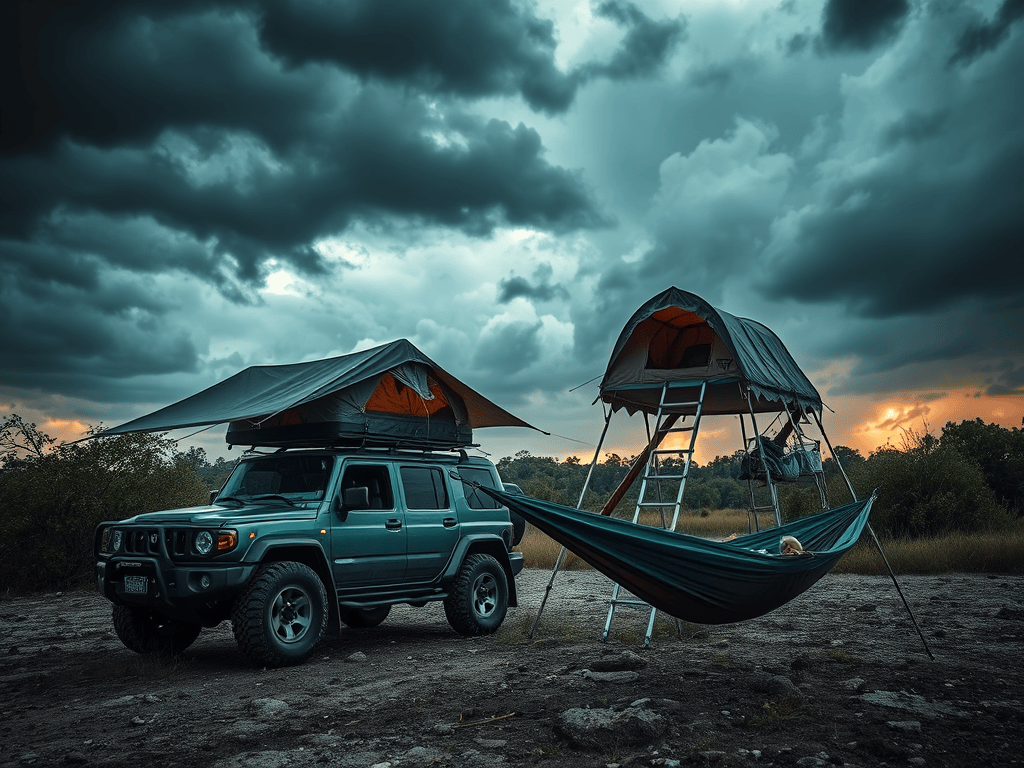
A good shelter begins with choosing where to stop, what the weather permits, and when to leave.
Revised October 21, 2026. This revision corrects earlier claims about flooding, storm resistance, fire clearance, and heat illness. The shelter options below are general considerations, not a verified inventory of my equipment.
Making camp is one of the pleasures of outdoor travel. The boats are ashore, the sleeping gear is unpacked, and someone begins thinking about supper. A little preparation gives the people gathered there a place to rest.
Speed helps when rain arrives. Judgment matters before the first stake goes into the ground.
A shelter can reduce exposure to ordinary rain, sun, insects, and cold within the limits of its design. It cannot make an unsuitable campsite safe. Nor does a quick setup establish that the equipment will withstand severe weather.
Choose the place before the pitch
Check current forecasts, alerts, closures, camping rules, and the group’s capabilities before departure. At the site, look for drainage paths, flood exposure, unstable ground, falling limbs, damaged trees, overhead hazards, and a usable exit. On the coast, account for tides as well as forecast weather.
A dry patch is not proof that water cannot reach it. A hammock or rooftop tent lifts a person above the ground but does not remove flood, storm surge, falling tree, or access hazards.
Choose established campsites and durable surfaces where permitted. Leave No Trace guidance emphasizes finding suitable sites rather than altering them. Follow destination rules, including designated coastal campsites. Do not dig drainage trenches, cut vegetation, or level the ground to force a site to work.
A tarp
A tarp can provide shade or rain cover when its size, fabric, pitch, anchors, and weather limits suit the trip. It also leaves decisions about insects, ground moisture, insulation, and wind driven rain.
Practice the complete setup, including packing it away. Use attachment points, stakes, lines, and knots suitable for the equipment and conditions. Inspect fabric, seams, and lines. Follow manufacturer guidance rather than assuming that one knot or pitch suits every system.
The earlier advice to use tensioners that release automatically in gusts was too broad. An uncontrolled release may remove protection or create another hazard. Use a designed system as instructed, and leave before conditions exceed its capabilities.
A hammock
A hammock can be comfortable where sound, suitable trees and local rules allow it. Inspect both supports and the surroundings, use appropriate tree protecting suspension, and follow equipment instructions. Check the ground below and keep a fall from suspension failure in mind.
Rain cover, insect protection, and insulation are separate requirements. Being off the ground does not prevent chilling or guarantee a dry night. Wet surroundings still affect access and the ability to leave.
A tent, rooftop tent, or vehicle awning
Choose equipment for the conditions and follow its mounting, anchoring, loading, and use instructions. A rooftop tent requires a compatible vehicle and rack system, secure installation, and safe access. Ladder orientation is not governed by one universal downwind rule.
A vehicle awning is not automatically a safe cooking enclosure. Neither an elevated platform nor a parked vehicle makes a flood exposed location suitable for camp. Keep a workable departure plan and allow time to stow equipment before hazardous weather arrives.
There is no dependable universal setup time. Practice with the people and equipment actually going on the trip.
Improvised shelters
Traditional shelter skills can be worth studying. A debris shelter is not a reliably quick solution to dangerous weather, and gathering materials may cause substantial damage.
Practice only where permitted and under suitable instruction. Carry planned emergency protection instead of assuming that useful materials, time, energy, and safe supports will be available when needed. A shelter exercise should not leave the next visitor with damaged vegetation or an abandoned structure.
Lightning and hurricanes require a different plan
Tents, tarps, hammocks, and open shelters do not provide safe lightning protection. National Weather Service guidance calls for a substantial building or an enclosed vehicle with a metal roof and windows closed when thunder is heard. Remain sheltered for at least 30 minutes after the last thunder. Plan access before storms develop; there is no safe outdoor location during a nearby thunderstorm.
If caught without safe shelter, follow the weather service’s last resort risk reduction advice. It reduces risk rather than making outdoor shelter safe.
Camping systems are not hurricane shelters. Follow evacuation instructions, closures, and local emergency guidance. The National Weather Service hurricane resource emphasizes timely action. Do not plan to ride out a hurricane beneath a low tarp or in a debris shelter.
My revised Hurricane Season and Outdoor Travel: Knowing When to Leave explains early departure and appropriate refuge.
Keep fire and shelter separate
The earlier fixed clearance of six to ten feet was not a dependable general safety rule. Wind, sparks, fuel, fabric, overhead vegetation, and equipment instructions all matter.
Keep open fires away from tents, tarps, awnings, and sleeping systems. Use a permitted fire site only when restrictions and conditions allow it. Follow local requirements and equipment instructions; if you cannot provide safe separation and supervision, do not light the fire.
Never operate a portable camping stove inside a tent or camper. CDC guidance identifies carbon monoxide hazards in enclosed and partially enclosed spaces. Do not enclose a cooking area to escape rain. Carry food that needs no cooking when conditions make stove use unsafe.
Shade helps prevent illness. Heatstroke needs emergency care.
Provide airflow and shade, plan rest and drinking water, and watch the people in the group. A hot enclosed shelter may worsen exposure. The earlier phrase about ventilating, elevating, and insulating was not adequate heatstroke guidance.
Confusion, slurred speech, collapse, or other altered mental status in a heat exposed person should raise concern for heatstroke. The person may still be sweating. CDC guidance calls for emergency medical help and rapid cooling.
Activate emergency help and begin cooling immediately. Move the person to a cooler shaded place when safe, remove excess clothing, and cool rapidly using available methods such as cold water immersion when feasible and safe, or wetting the skin and circulating air. Protect the airway, stay with the person, and follow your training and dispatcher instructions. Do not force drinks into someone who is confused or cannot swallow safely.
If access is delayed, continue cooling and reassessment while arranging evacuation. Putting up a tarp is not the complete treatment.
Practice for the people who will use it
Before departure, rehearse setup, inspection, and packing. Match shelter, insulation, insect protection, ground protection, and repair supplies to the route and people. Keep sleeping equipment dry and tell companions where emergency protection is carried.
At camp, reassess conditions. Can everyone rest adequately? Is water entering? Are anchors moving? Can we still leave safely? Reposition, shorten the stay, or depart before a failing setup becomes an emergency.
A well chosen camp gives us room for the ordinary pleasures: dry clothing, a comfortable seat, food, and conversation. The care behind those comforts is part of our responsibility to one another.
Traditional skills deserve to be passed on with their limits intact. We are guests in the landscape. Knowing when to leave belongs among the skills.
Jeffrey John Fabiszewski
FloridaOATS
Documentation and further reading
Sources checked October 21, 2026. Follow current local restrictions, forecasts, emergency instructions, and the directions for your particular equipment. This article introduces decisions to practice, not a complete wilderness medicine or shelter construction course.


Leave a Reply