
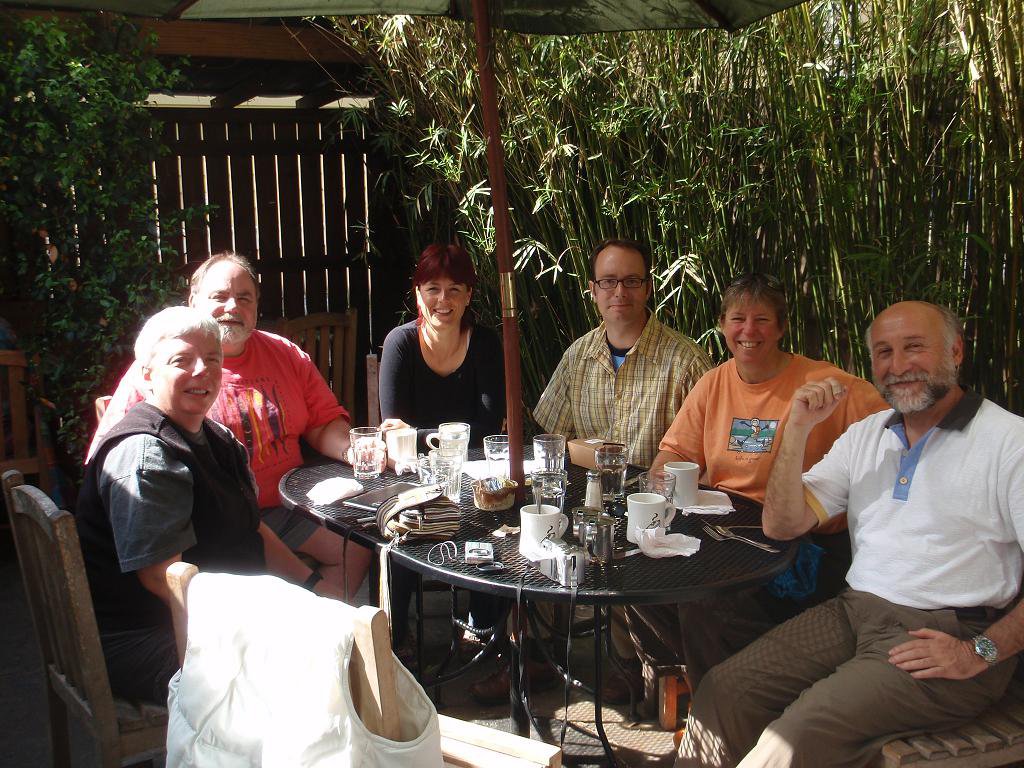
Preparedness begins in the kitchen, grows through knowledge, and finds its greatest purpose in service to others.
By Jeff Fabiszewski
There is something reassuring about the sound of water coming to a boil, the smell of coffee in the morning, and the sight of a pot of food being prepared for family and friends.
It matters little whether that pot sits over a campfire along the Suwannee River, on a small expedition stove beside a sea kayak, or on a propane stove outside a Florida home following a hurricane.
A warm meal has a remarkable ability to restore a sense of normalcy when the world around us has become anything but normal.
Throughout my years in Scouting, wilderness education, expedition kayaking, and backcountry cooking, I have come to appreciate that preparedness is not simply about surviving difficult circumstances. It is about maintaining our dignity, caring for our families, and having the ability to help those around us.
There is a reason the Scout motto consists of two simple words. Be Prepared. Those words carry no expiration date.
In this guide
Preparedness Is Not Panic · Begin With Water · The Prepared Pantry · When the Refrigerator Stops Working · Never Underestimate a Cup of Coffee · Learn to Cook Without Electricity · Food Is More Than Calories · Rediscovering Florida’s Natural Pantry · Why I Am Writing a Cookbook · Prepare for More Than Yourself · Begin This Weekend · The Be Prepared Challenge · Household Emergency Water Planning Table · Continue Learning · Research and Factual References
Preparedness Is Not Panic
Somewhere along the way, preparedness became associated with underground bunkers, expensive equipment, and elaborate predictions about the end of civilization.
Our grandparents would probably find much of this rather amusing.
A well stocked pantry, the ability to mend clothing, knowledge of seasonal foods, and the habit of helping one’s neighbors were once ordinary expectations of adulthood.
They did not necessarily call it prepping. They called it housekeeping, good judgment, and being a decent neighbor.
Living in Florida provides enough practical reasons to prepare without inventing new ones. Hurricanes, electrical outages, flooding, interrupted water service, temporary shortages, and even the unexpected loss of a household income can remind us how dependent we have become upon systems beyond our immediate control.
Preparedness need not be driven by fear. It can be a quiet and deliberate act of responsibility.
Begin With Water
Before purchasing another piece of outdoor equipment or another case of emergency food, consider how much drinking water your household actually has available.
The Centers for Disease Control and Prevention recommends storing at least one gallon of water per person per day for a minimum of three days, with a two week supply encouraged when practical.
Here in Florida, our heat, humidity, pets, and outdoor activities may increase those requirements.
Portable water filters, handheld pump filters, gravity filters, and personal drinking straws can be useful additions to our equipment. I have long appreciated the value of dependable water treatment equipment during extended paddling expeditions.
Many ordinary camping filters do not reliably remove viruses, dissolved chemicals, or salt. Boiling does not remove salt or make chemically contaminated water safe. Following a hurricane, nearby water may be contaminated by sewage, fuel, agricultural runoff, or flood debris.
Store safe drinking water first. Learn appropriate water treatment methods second. Follow local public health guidance when water service is interrupted.
A filter is a tool, not a miracle.
Read the CDC guidance on emergency water storage and safe water treatment. Replace water you fill into storage containers every six months. Keep water away from fuel and chemicals.
The Prepared Pantry
One of the simplest ways to begin preparing is to open your kitchen cupboards and consider what you could cook if the grocery store closed tomorrow.
Could you comfortably feed your family for three days? A week? Two weeks?
Rather than purchasing unfamiliar emergency meals by the bucket, begin with ingredients you already know how to prepare.
| Pantry | Examples | Skill to practice |
|---|---|---|
| Grains | Rice, pasta, oats | Measure water and fuel |
| Legumes | Dry and canned beans, lentils, split peas | Soak and cook dry beans thoroughly |
| Proteins | Canned chicken, tuna, salmon | Make a balanced meal |
| Produce | Canned tomatoes, fruit, dried vegetables | Substitute ingredients |
| Baking | Flour, baking powder, powdered milk | Make simple breads |
| Flavor | Salt, sugar, honey, spices, oil, bouillon | Season familiar meals |
| Comfort | Instant coffee, tea, cocoa | Offer hospitality |
| Ready to eat | Crackers, nut butter, canned beans | Prepare a meal without heat |
| Long storage | Freeze dried meals, dehydrated foods | Budget safe water for rehydration |
For more guidance see UF IFAS food and water safety recommendations.
Consider food allergies, dietary requirements, infants, older family members, and pets.
Keep a manual can opener in the kitchen. An impressive collection of canned food becomes rather inconvenient when the only can opener requires electricity.
Learn to rotate your provisions through your regular meals. Date what you store, use the older supplies first, and replenish them gradually.
Your emergency pantry should be an extension of your everyday kitchen, not a museum of forgotten canned goods.
When the Refrigerator Stops Working
A storm is no time to gamble with supper. Keep appliance thermometers in your refrigerator and freezer, and resist the temptation to open the doors unnecessarily.
| Appliance or condition | Planning guidance |
|---|---|
| Closed refrigerator | About 4 hours without power |
| Full closed freezer | About 48 hours |
| Half full closed freezer | About 24 hours |
| Refrigerator target | 40°F or colder |
| Freezer target | 0°F or colder |
These are approximate limits, not guarantees. Discard refrigerated perishables held above 40°F for four hours or more. Discard perishables left at room temperature for two hours, or one hour above 90°F. Frozen food that still has ice crystals or measures 40°F or below can be cooked or refrozen. Never taste questionable food to test its safety. See the FDA guidance for power outages and floods.
Keep provisions above potential floodwater. Discard contaminated food and damaged cans. Consult UF IFAS hurricane food safety guidance before attempting to salvage any packaging. When in doubt, throw it out.
Never Underestimate a Cup of Coffee
Instant coffee deserves a place in the prepared pantry.
It requires little equipment, stores well when properly protected, and can provide a familiar comfort during unfamiliar circumstances.
Coffee also represents something more than caffeine. It is an invitation to sit down.
After a storm has passed and conditions are safe, imagine walking over to check on an elderly neighbor and offering a warm cup of coffee. That small gesture may be the beginning of a conversation that reveals someone needs medication, assistance removing debris, or simply reassurance that they have not been forgotten.
Hospitality is an often overlooked preparedness skill.
Learn to Cook Without Electricity
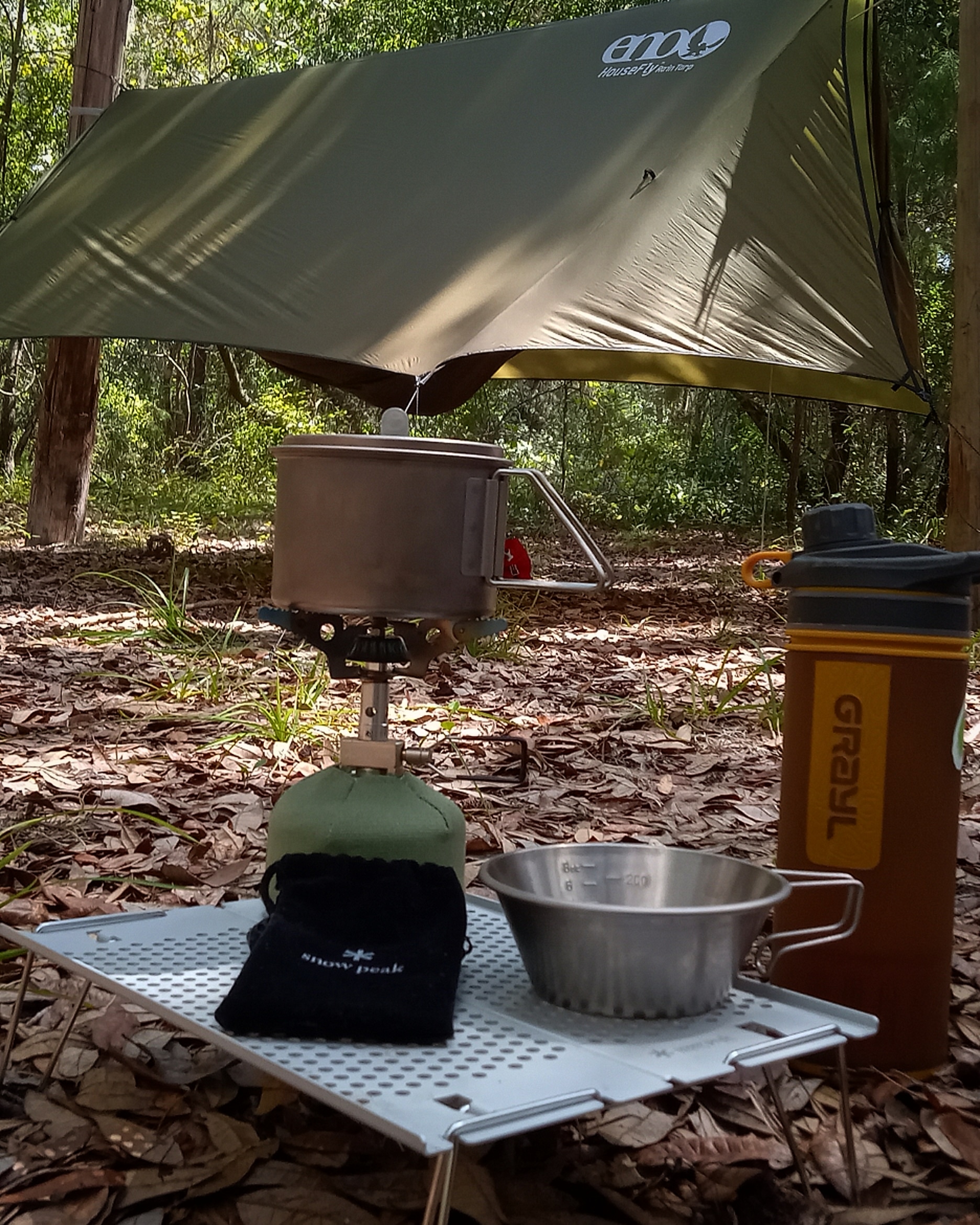
A considerable portion of my outdoor cooking takes place using equipment small enough to fit inside a kayak.
Over the years, I have prepared meals using my MSR Dragonfly, Snow Peak stoves and titanium cookware, Trangia mess tins, and traditional cooking arrangements over wood coals.
These experiences have taught me that good cooking depends more upon understanding ingredients, heat, timing, and equipment than upon having an elaborate kitchen.
A compatible propane camping stove and safely stored fuel can provide a practical alternative when household electricity is unavailable.
Keep the appropriate cookware, ignition supplies, and cooking utensils with your equipment. Follow the manufacturer’s requirements for fuel storage and stove operation.
Never operate an outdoor camping stove, charcoal grill, or similar outdoor cooking appliance inside a house, garage, tent, or other enclosed space. Carbon monoxide is an invisible and potentially fatal hazard. Cook outdoors in a safe location, away from doors, windows, and combustible materials.
Most importantly, practice before an emergency.
Prepare breakfast outside on a Saturday morning. Cook supper using only the ingredients in your pantry. Discover how much water and fuel your meals require.
The time to learn how to operate your stove is not when the lights have already gone out.
From my field notebook: My MSR Dragonfly has been with me since 1994. Equipment worth keeping is equipment worth maintaining. On extended Suwannee River expeditions, the water and fuel packed in my kayak have to serve the meals I intend to cook. The same arithmetic applies to the kitchen cabinet.
Food Is More Than Calories
There is a tendency in preparedness discussions to reduce food to calories, protein, carbohydrates, and shelf life. Those things matter, but they are not the entire story.
Food carries memory.
The meals we prepare remind us of our parents, grandparents, childhood homes, family traditions, and places we have traveled.
A pot of rice and beans can be transformed by a handful of familiar spices. Canned tomatoes and pasta can become a respectable family supper. Oats, powdered milk, honey, and dried fruit can make breakfast something worth looking forward to.
When water or fuel is limited, we can turn to canned beans, ready to eat foods, and meals that require less cooking.
A family gathered around a shared meal is doing more than meeting its nutritional requirements. It is maintaining a tradition of belonging.
That is as important around the campfire as it is around the kitchen table.
Rediscovering Florida’s Natural Pantry
Florida offers a remarkable variety of landscapes, waterways, agricultural traditions, edible plants, fish, and wildlife.
Long before modern supermarkets and refrigerated transportation, generations of people developed relationships with the seasonal abundance of this landscape.
Understanding what grows around us, what swims in our waters, and what our environment can sustainably provide is a worthwhile educational pursuit.
But reading about an edible plant does not automatically qualify someone to harvest it.
Learning to identify plants requires patience, reliable references, and guidance from knowledgeable people. Some edible plants have dangerous lookalikes. Even correctly identified foods may require specialized preparation.
Fishing and hunting likewise require knowledge of regulations, seasons, licenses, conservation, safe handling, and appropriate food preparation.
Neither hunting nor foraging should be considered a substitute for maintaining a dependable household food supply.
Following a storm, fishing waters and wild foods may also be affected by contamination, closures, or public health advisories.
We must remember that the natural world is not an unlimited grocery store. Responsible harvesting and conservation belong together.
Consult the Florida wildlife regulations and FWC fishing regulations and advisories before harvesting.
Why I Am Writing a Cookbook
One of the reasons I am developing my forthcoming cookbook is to preserve and share the knowledge that connects outdoor cooking, traditional food preparation, regional ingredients, and practical living.
I want to encourage people to become comfortable preparing food under a variety of circumstances, whether camping beside a Florida river, traveling on an extended kayaking expedition, or simply cooking at home during an interruption of everyday services.
A cookbook should not merely tell us what ingredients to place in a pot.
It should help us understand those ingredients, how to substitute them, how to manage limited resources, and how to share the resulting meal with others.
I want readers to discover that a small stove, modest cookware, familiar provisions, and a little knowledge can produce remarkably satisfying food.
As this project develops, I will continue sharing recipes, cooking techniques, equipment observations, and lessons from the field through FloridaOATS and Liquid Rhythm Kayaking.
There is much more to learn, and considerably more to cook.
From the pantry to the campfire: Try a simple supper of canned beans, canned tomatoes and rice, seasoned with your favorite herbs. Cook the rice according to its package, stir in the beans and tomatoes, and heat thoroughly. Measure the water and fuel you use. Return for more recipes and techniques as the cookbook develops.
Prepare for More Than Yourself
Consider the people living within walking distance of your home.
Do you know their names? Do you know which neighbors live alone, which households have young children, or who might need assistance following a hurricane? Do they know they can call upon you?
These relationships should be established long before an emergency. Respect people’s privacy, discuss their needs with their permission, and learn how you might reasonably help.
One neighbor may have practical mechanical skills. Another may have medical training. Someone else may be an excellent cook, a gardener, or a person who knows how to organize volunteers.
A community becomes resilient when these abilities are brought together.
Preparedness also means knowing when to evacuate, having transportation arrangements, maintaining access to essential medication, learning first aid, and following the guidance of emergency management officials.
No amount of food or equipment justifies remaining in an unsafe location when authorities advise evacuation.
I would encourage every household to establish a reasonable supply of necessities for its own family, and, when circumstances and finances permit, maintain a little extra to share.
An additional bag of rice. Another jar of coffee. A few cans of soup. An extra case of drinking water.
Small provisions can become meaningful acts of kindness.
Begin This Weekend
You do not need to spend hundreds of dollars or wait until hurricane season to become better prepared.
Purchase a few extra provisions during your next grocery trip. Check your drinking water supply. Inspect your camping stove. Prepare a meal without relying on household electricity.
Introduce yourself to a neighbor. Invite someone to share a meal.
Knowledge grows through practice, confidence grows through experience, and communities grow stronger through relationships.
I believe the greatest measure of preparedness is not how long we can remain isolated from everyone else. It is how well we can care for ourselves and still have something left to offer another person.
A full pantry is a good beginning. A generous heart makes it worthwhile.
Be Prepared. Be capable. Be a good neighbor.
The Be Prepared Challenge
Water and provisions
□ Store water for three days
Discuss the task, practice it, and write down the date you completed it.
□ Build a three day food supply
Review this task with your household and record your completion on paper.
□ Work toward fourteen days
Review this task with your household and record your completion on paper.
□ Include pet supplies
Review this task with your household and record your completion on paper.
□ Keep a manual can opener
Review this task with your household and record your completion on paper.
Cooking and equipment
□ Inspect outdoor cooking equipment
Review this task with your household and record your completion on paper.
□ Store compatible fuel safely
Review this task with your household and record your completion on paper.
□ Learn filter limitations
Review this task with your household and record your completion on paper.
□ Cook a meal without electricity
Review this task with your household and record your completion on paper.
□ Maintain first aid and medication supplies
Review this task with your household and record your completion on paper.
Knowledge and community
□ Learn evacuation routes
Review this task with your household and record your completion on paper.
□ Make a communication plan
Review this task with your household and record your completion on paper.
□ Learn first aid
Review this task with your household and record your completion on paper.
□ Meet a neighbor
Review this task with your household and record your completion on paper.
□ Agree on ways to help
Review this task with your household and record your completion on paper.
□ Keep extra provisions to share
Review this task with your household and record your completion on paper.
Household Emergency Water Planning Table
The CDC recommends at least one gallon per person daily. Allow additional water for hot climates and special needs.
Multiply household members by days for the minimum gallons. Expand your household size below. Multiply gallons by 8.34 for approximate water weight in pounds. Divide gallons by five and round up for the number of five gallon containers. For four people over fourteen days, plan at least 56 gallons, about 467 pounds, or twelve five gallon containers.
1 person
3 days: 3 gallons · 7 days: 7 gallons · 14 days: 14 gallons · 30 days: 30 gallons
2 people
3 days: 6 gallons · 7 days: 14 gallons · 14 days: 28 gallons · 30 days: 60 gallons
3 people
3 days: 9 gallons · 7 days: 21 gallons · 14 days: 42 gallons · 30 days: 90 gallons
4 people
3 days: 12 gallons · 7 days: 28 gallons · 14 days: 56 gallons · 30 days: 120 gallons
5 people
3 days: 15 gallons · 7 days: 35 gallons · 14 days: 70 gallons · 30 days: 150 gallons
6 people
3 days: 18 gallons · 7 days: 42 gallons · 14 days: 84 gallons · 30 days: 180 gallons
7 people
3 days: 21 gallons · 7 days: 49 gallons · 14 days: 98 gallons · 30 days: 210 gallons
8 people
3 days: 24 gallons · 7 days: 56 gallons · 14 days: 112 gallons · 30 days: 240 gallons
9 people
3 days: 27 gallons · 7 days: 63 gallons · 14 days: 126 gallons · 30 days: 270 gallons
10 people
3 days: 30 gallons · 7 days: 70 gallons · 14 days: 140 gallons · 30 days: 300 gallons
11 people
3 days: 33 gallons · 7 days: 77 gallons · 14 days: 154 gallons · 30 days: 330 gallons
12 people
3 days: 36 gallons · 7 days: 84 gallons · 14 days: 168 gallons · 30 days: 360 gallons
Add water for pets, heat and special needs.
Household Preparedness Worksheet
Print this table using your browser and fill it in together. Review it before hurricane season and whenever your household changes.
| Task | Person responsible | Target date | Completed |
|---|---|---|---|
| Water inventory | ________ | ________ | ________ |
| Pantry inventory | ________ | ________ | ________ |
| Practice an outdoor meal | ________ | ________ | ________ |
| Review food safety | ________ | ________ | ________ |
| Evacuation and communication | ________ | ________ | ________ |
| First aid and medications | ________ | ________ | ________ |
| Neighbor check in | ________ | ________ | ________ |
Continue Learning
Explore Prepared at Home: Stronger Together, my camp kitchen equipment guide, and Liquid Rhythm Kayaking. Subscribe and return regularly as I share recipes and develop my forthcoming cookbook. There will always be room for another person around my campfire.
Research and Factual References
FEMA: Are You Ready? An In Depth Guide to Citizen Preparedness
CDC: Creating an Emergency Water Supply
CDC: Making Water Safe in an Emergency
University of Florida IFAS: Food and Water Safety


Leave a Reply