
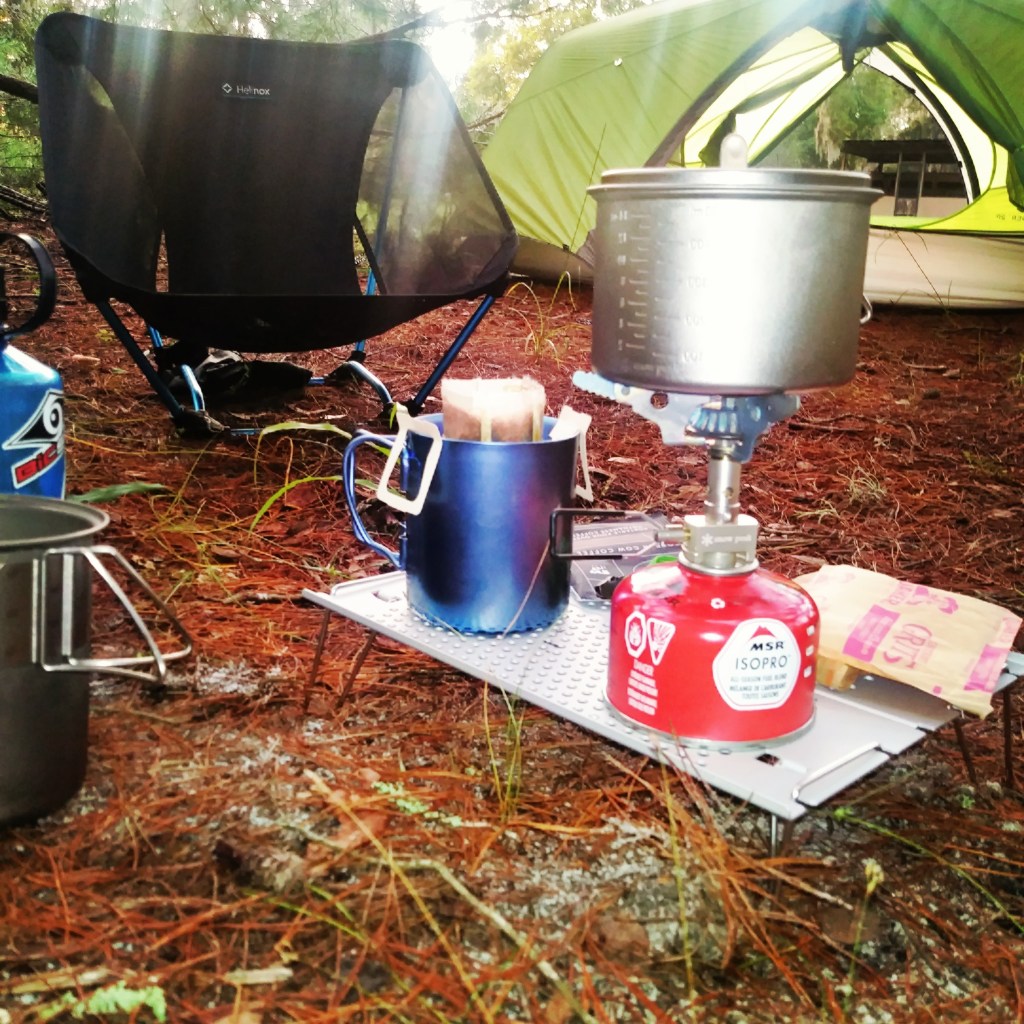
A good cup of coffee can make an ordinary morning worth remembering. I have had coffee beside the Suwannee, among the mangroves of Florida, and aboard a narrowboat on the waterways of England. Sometimes it was strong and black, made slowly while breakfast cooked. Sometimes it was instant, swallowed before a tide turned against us. I do not measure the quality of those mornings by the price of the coffee maker.
I measure them by who was sitting beside me. Coffee has always belonged to the same part of my life as food, family, and the small duties we do for one another. The cup is only the beginning of the story.
The First Cup Was Not Mine
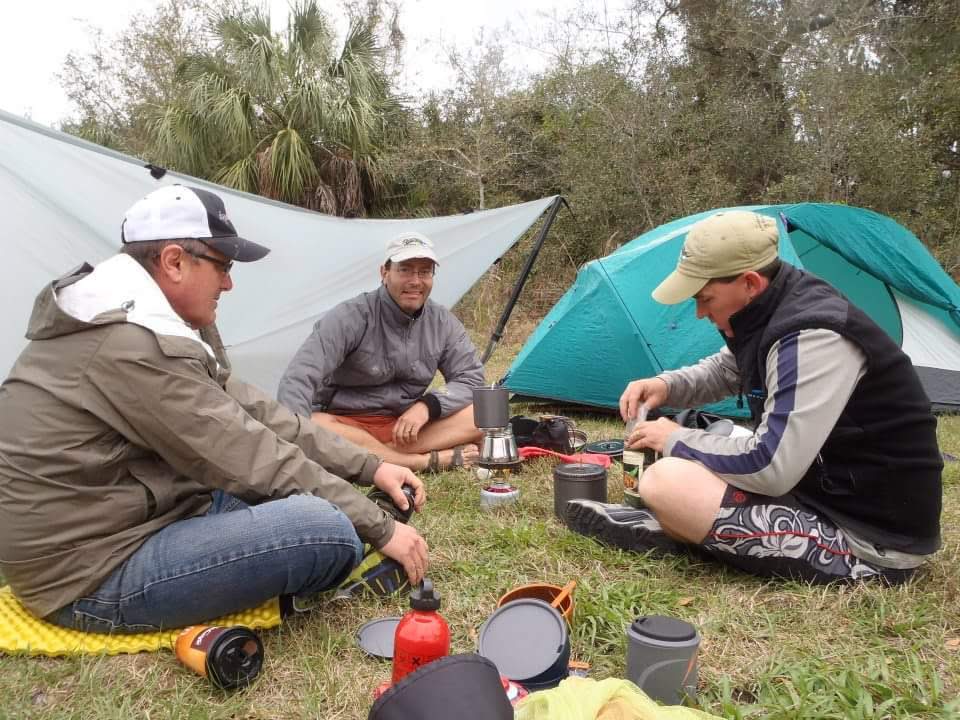
I grew up in Pennsylvania, where making coffee for the adults was one of those ordinary household responsibilities that never needed a grand explanation. By the time I was eleven, camping with Boy Scout Troop 1331 in McMurray, I already knew the routine. I made coffee for adults at camp before I cared to drink it myself. My family had taught me hospitality. Scouting simply gave me another table at which to practice it.
I did not become a coffee drinker until I was working summer staff at Camp Liberty at Heritage Reservation. Camp mornings begin early, and the day has a way of filling itself before breakfast is finished. A cup of coffee became part of the rhythm, though I have never believed a cup should be mistaken for a substitute for sleep.
Years later, my son was three when he helped my parents prepare their electric percolator. The water was already in the pot. He measured the grounds into the basket and put the lid in place. My parents handled the plug. Then he watched the little glass knob as clear water darkened into coffee. It was a small miracle performed on a kitchen counter. When they replaced that percolator with a Keurig a couple of years later, he was disappointed. The new machine was quicker. There was nothing left to watch.
The Old Pot and the Long Road to the Percolator
People brewed coffee in pots long before anyone thought of selling a special gadget for the job. Cowboy coffee, in its many variations, asks little more than clean water, ground coffee, a pot, and enough patience to let the grounds settle. In northern Europe, traditions such as Scandinavian kokkaffe have their own histories of brewing coffee in a pot. Similar equipment does not make the cultures identical, but it reminds me that a practical method can travel a very long way.
The percolator grew out of nineteenth century experimentation with circulating water through coffee. Hanson Goodrich patented a familiar arrangement in 1889. What I remember best is not the patent but the little glass knob on the lid, where the brew darkened as we watched. Leave the pot boiling too hard or too long and the coffee can become bitter. The ritual requires attention.
I own a GSI percolator, and I am fond of it when the weather turns cold and wet and we have room in the kayak for a shared pot. If the boats are staying ashore, somebody may bring out a deck of cards or spread charts across the tent floor. Coffee takes its time. So do we. It is not the most efficient morning imaginable, and I am grateful for that.
An Italian Invention and a Small Camp Espresso
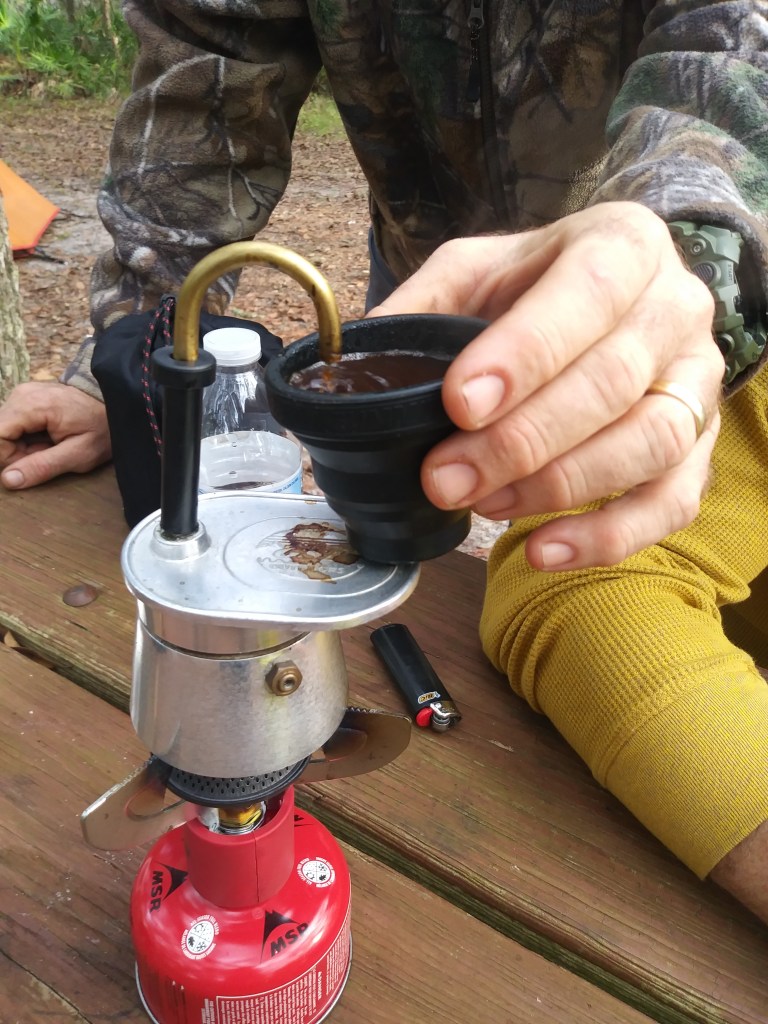
Coffee also has a history of ingenuity. Angelo Moriondo patented an early espresso machine in Italy in 1884, although the drink and the machines we recognize today developed through later improvements. I would not pretend that a little camp brewer is the same thing as the machine behind the counter in an Italian café. The pleasure, however, is easy to understand.
Sean Fitzgibbon owns a GSI Outdoors Mini Espresso Set. I have used this style of brewer, though I do not own Sean’s equipment. A small concentrated cup can be welcome after a meal, especially when nobody needs to rush off and load boats. I have learned that knowing whose equipment you borrowed is nearly as important as remembering to return it clean.
The French Press at Another Camp Table
Russell Farrow once loaned me a Snow Peak titanium French press for a Florida Keys expedition. I managed to make a mess of the coffee while Sean Fitzgibbon watched and laughed. I tell that story in Snow Peak Titanium French Press: A Borrowed Press and a Florida Keys Lesson. Here it is enough to say that coffee is not always the peaceful ritual we imagine, and a good friend seldom lets us forget the funny parts.
A Paper Filter and the Patience of a Household Inventor
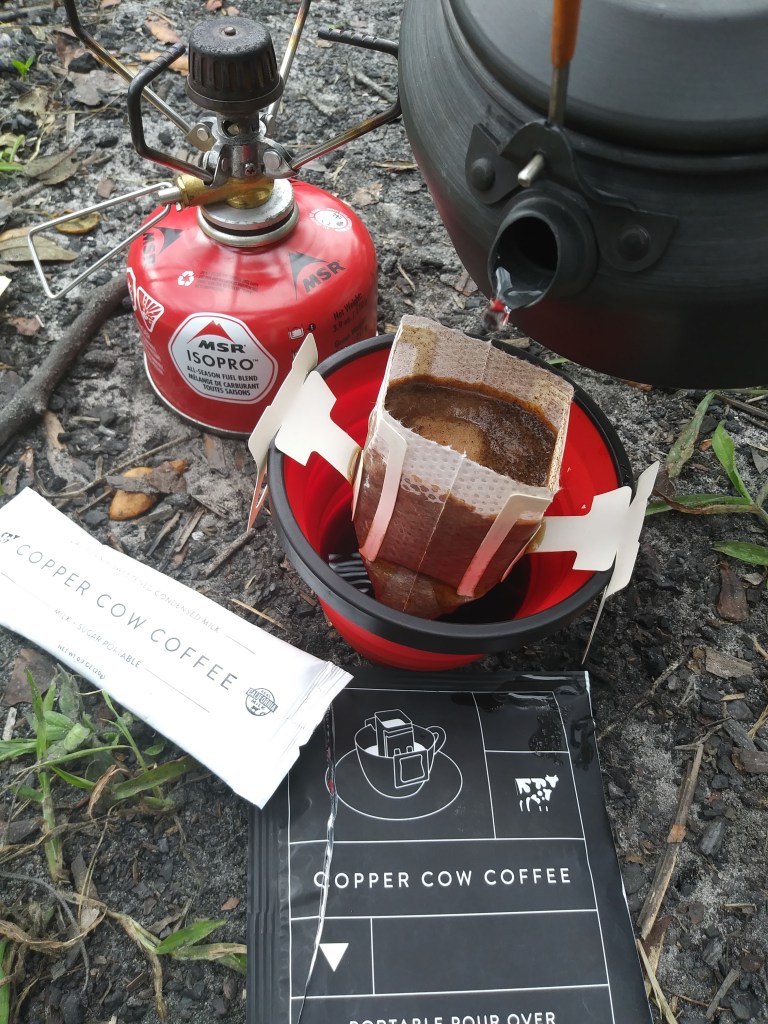
In 1908, Melitta Bentz of Dresden developed a paper coffee filter using a perforated brass vessel and blotting paper from her son’s schoolbook. She was trying to solve a familiar household irritation: grounds in the cup. I like that part of the history. The invention did not begin in a wilderness catalog or a laboratory. It began with somebody paying attention to the work of making coffee for a household.
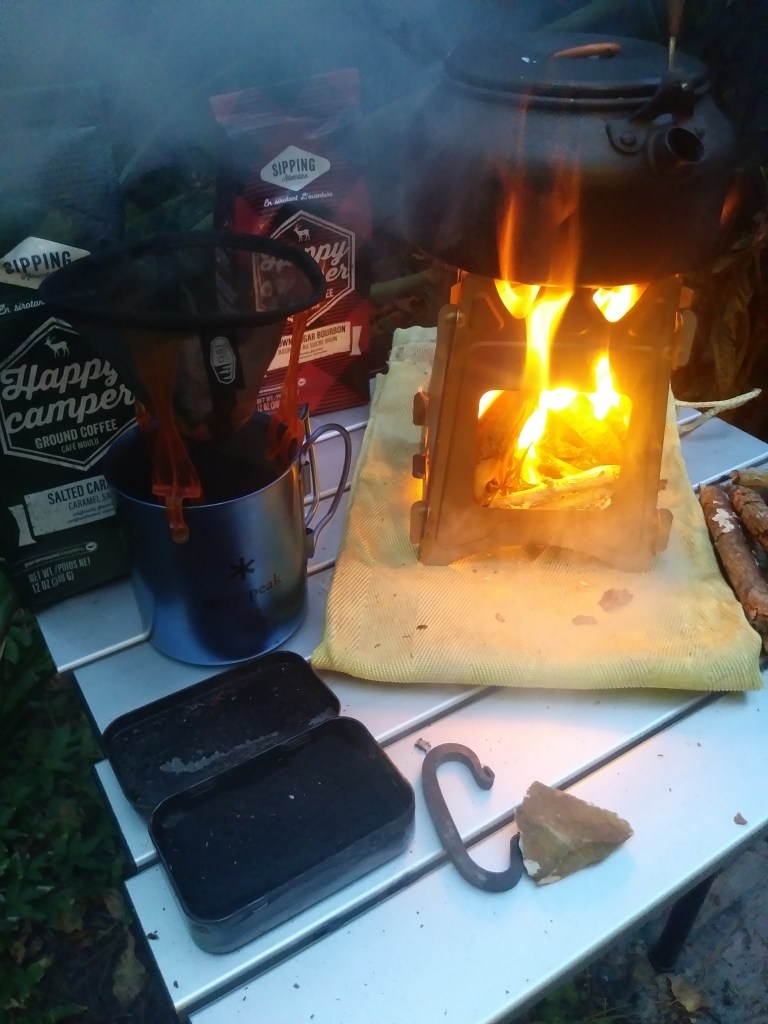
I have used my GSI Outdoors Ultralight Java Drip, and Russell has loaned me a Snow Peak titanium dripper and pour kettle. Pour over coffee gives me control over how I add the water and lets me make one cup without preparing a whole pot. It also taught me that a photograph can cost more than it is worth. One day after brewing, I moved my synthetic Java Drip too close to a collapsible wood burning stove while arranging an Instagram picture. The radiant heat melted little holes in it. The coffee was fine. The dripper was not. I suppose that is one way to learn not to let the camera run the campsite.
The Coffee That Gets Us Underway
Instant coffee has a place in my expedition kit. I prefer fresh beans when the morning allows it, often a dark roast brewed strong and served black. But when the tide is turning, the weather is coming, or freshwater must be conserved, instant coffee is a practical answer. It needs no press to wash and leaves no wet grounds. A single serving coffee bag can be useful, too, but its spent grounds and filter still have to be packed out.
I do not have a favorite coffee brand. I look for fresh beans when I can, and I have been known to buy a bag because I liked the artwork. There is no great culinary theory behind that. Sometimes the picture gets my attention, and the coffee gets a fair chance.
There Ought to Be Something to Eat
I have never thought the camp kitchen ends with the coffee pot. I like Dutch oven donuts dipped in strong black coffee. On other nights I may put cocoa mix and marshmallows into a mug, which is not the sort of thing a coffee purist would applaud. They are welcome to drink their own cup. The rest of us will be sitting near the fire.
For the food that belongs beside the mug, read my Dutch Oven Donuts story. For the quiet hour after supper, see Camp Lights: Leaving Room for the Night. For the practical equipment choices, read Campfire Coffee: A Field Guide to Good Sense and Better Brews. That guide and the French press story concern the gear and field lessons. This one is about what coffee carries from one generation to another.
I hope my son remembers the sound of the percolator as clearly as I remember making coffee for the adults when I was young. It would be a small thing to inherit, but small things are often what we carry longest. There should always be room for another cup at the table.
Historical reading: German Patent and Trade Mark Office on Melitta Bentz.


Leave a Reply