
A Sea Scout Journey Through England, Maritime Traditions, Gilwell Park, and a Little Unexpected Attention at Abbey Road
By Jeffrey John Fabiszewski
FloridaOATS | October 2026
Some souvenirs end up on a shelf, collecting dust and waiting for someone to ask where they came from.
Others become part of our everyday lives.
In July 2025, while traveling through England with American Sea Scouts, I purchased a traditional Breton style mariner’s cap during our visit to Portsmouth Historic Dockyard.
I had admired this particular style of hat for years. Its association with European sailors, fishermen, and coastal communities appealed to me. Having spent much of my life teaching sea kayaking, leading wilderness expeditions, and studying traditional outdoor skills, I appreciated the cap’s connection to maritime history.
I was not looking for a costume or something to wear on special occasions. I wanted a traditional cap that I could wear as part of my everyday life.
At Portsmouth, surrounded by centuries of naval history, I finally found one. A little piece of history I could wear.
What I did not anticipate was that the cap would soon acquire another connection to my life.
At Gilwell Park, the historic home of Scout leader training, I discovered a small Scouting pin in the gift shop. I purchased it and attached it to the front of my new cap.
Now the hat represented two traditions that have shaped much of my life: the sea and Scouting.
Later that same day, while visiting Abbey Road in London, a woman working in the gift shop noticed my cap and began flirting with me.
She thought I was wearing it because of John Lennon. I had purchased it thinking about sailors, fishermen, and the Royal Navy. She was thinking about the Beatles.
I suppose there are worse misunderstandings. But I am getting ahead of myself.
An American Sea Scout Adventure Through England
Our July 2025 expedition was an opportunity to experience England from a perspective that most visitors never encounter.
Rather than simply traveling between destinations by automobile or train, we explored Britain’s historic inland waterways aboard two traditional narrowboats, the Alvechurch Swan and Little Tern.
Over the course of our adventure, we traveled approximately 179 miles and negotiated 90 locks.
These canals were once the commercial highways of the Industrial Revolution. Before modern roads and railways transformed transportation, narrowboats carried coal, raw materials, manufactured goods, and other necessities between Britain’s industrial communities.
For our American Sea Scouts, the journey offered a different kind of seamanship.
There were no ocean swells to negotiate or breaking surf to read.
Instead, there were narrow channels, bridges, locks, and the steady work of moving vessels through waterways built generations before we were born.
Every lock required cooperation.
Every passage demanded attention.
And every day offered another opportunity to understand how waterways helped shape a nation.
We also visited some of England’s most significant historical landmarks.
Among them was Portsmouth Historic Dockyard.
For someone with a lifelong interest in maritime history, it was one of the highlights of the expedition.
Portsmouth: Where Maritime History Comes Alive
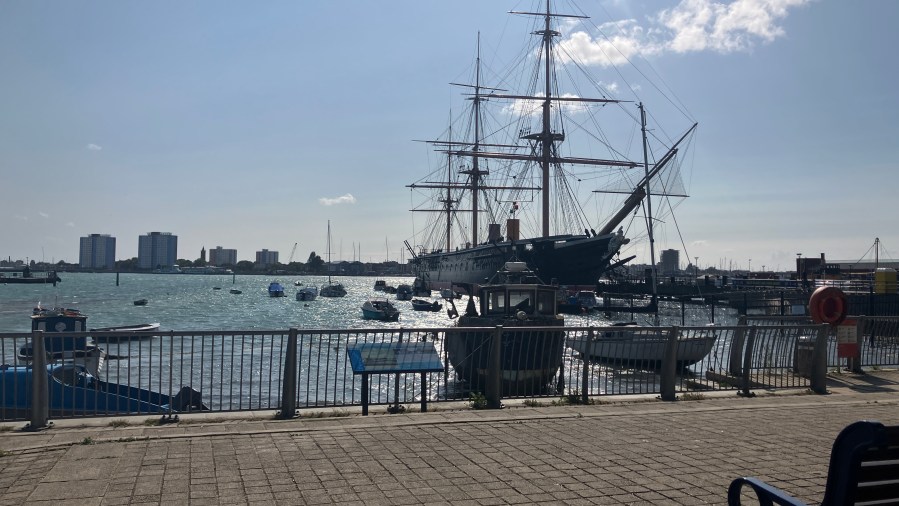
Standing at Portsmouth Historic Dockyard, looking at the towering masts and iron hull of HMS Warrior, I was reminded that maritime traditions do not disappear simply because technology advances. And walking through Portsmouth’s Historic Dockyard is an opportunity to encounter several centuries of British naval history in one remarkable place.
Our visit included three extraordinary vessels.
The Mary Rose, launched in 1511 during the reign of Henry VIII, represents the Tudor navy and an age when England was developing its maritime power.
The ship sank in 1545 during an engagement with a French fleet.
Her recovered remains and the thousands of artifacts preserved within the Mary Rose Museum offer an extraordinary glimpse into the lives of sixteenth century sailors.
We also toured HMS Victory, Admiral Lord Nelson’s flagship at the Battle of Trafalgar in 1805.
Walking aboard Victory brings history into a different perspective.
The decks, guns, and confined working spaces remind visitors that the great naval victories recorded in history books were accomplished by ordinary men living and working under extraordinary conditions.
Then there was HMS Warrior, launched in 1860.
Warrior represented a revolution in naval technology. Her iron hull, steam propulsion, and traditional sailing rig demonstrated how quickly maritime engineering was changing during the nineteenth century. Warrior belonged to an age when steam power was transforming naval warfare, yet sailors still depended upon canvas, rigging, knots, and the practical knowledge passed down through generations.
It seemed an appropriate place to search for a traditional mariner’s cap. The ships around me represented centuries of changing technology, while the cap reminded me of the people who worked upon the water.
Three vessels. Three different centuries. Three chapters in the evolution of seamanship.
As I explored these ships, I found myself thinking about the people who had served aboard vessels like them.
Their lives were shaped by the sea.
Their clothing, tools, customs, and working methods developed from generations of practical experience.
Much of what we now call maritime tradition began as ordinary solutions to everyday problems.
That is something I have always appreciated.
And it was during this visit that I purchased my Breton cap.
The Breton Cap: A Working Sailor’s Tradition
The Breton cap belongs to a broader family of traditional European maritime headwear.
The name Breton refers to Brittany, the historic coastal region of northwestern France.
For centuries, Brittany’s communities depended upon fishing, maritime commerce, and the Atlantic Ocean.
The lives of fishermen and sailors were shaped by weather, tides, seasons, and the practical demands of working aboard vessels.
Clothing was part of that working environment.
The traditional maritime cap, with its rounded crown, short visor, and distinctive band, became associated with sailors and fishermen in several European coastal regions.
Related styles are known today as the Greek fisherman’s cap, fiddler’s cap, and mariner’s cap.
Although these names are sometimes used interchangeably, the designs do not all share precisely the same origins.
Their histories overlap, reflecting the movement of sailors, merchants, and cultural traditions between ports.
The cap’s relatively compact shape made it a recognizable form of maritime headwear.
Its short visor offered some shade without the broad brim of a traditional country hat.
Of course, I would not suggest that a Breton cap is necessarily the best choice for every modern outdoor adventure.
On a long Florida sea kayak expedition, a wide brimmed sun hat may offer better protection from our relentless sunshine.
But practicality is only one reason people continue to wear traditional clothing.
Sometimes we wear something because of the history it represents.
That was certainly true for me.
I was not purchasing a costume.
Nor was I attempting to recreate the appearance of a nineteenth century sailor.
I was choosing something that reflected a lifelong connection to the water.
And I liked the idea that it might encourage someone to ask about its history.
As it turned out, someone did notice the cap.
Just not for the reason I expected.
Life Aboard the Narrowboats
Once I purchased the cap, I began wearing it during our travels.
It was not something I intended to put away until returning home. It became part of my everyday clothing aboard the narrowboats and while exploring England.
There was something particularly satisfying about wearing a traditional maritime cap while handling lines aboard a vessel traveling waterways that had served generations of British boatmen.
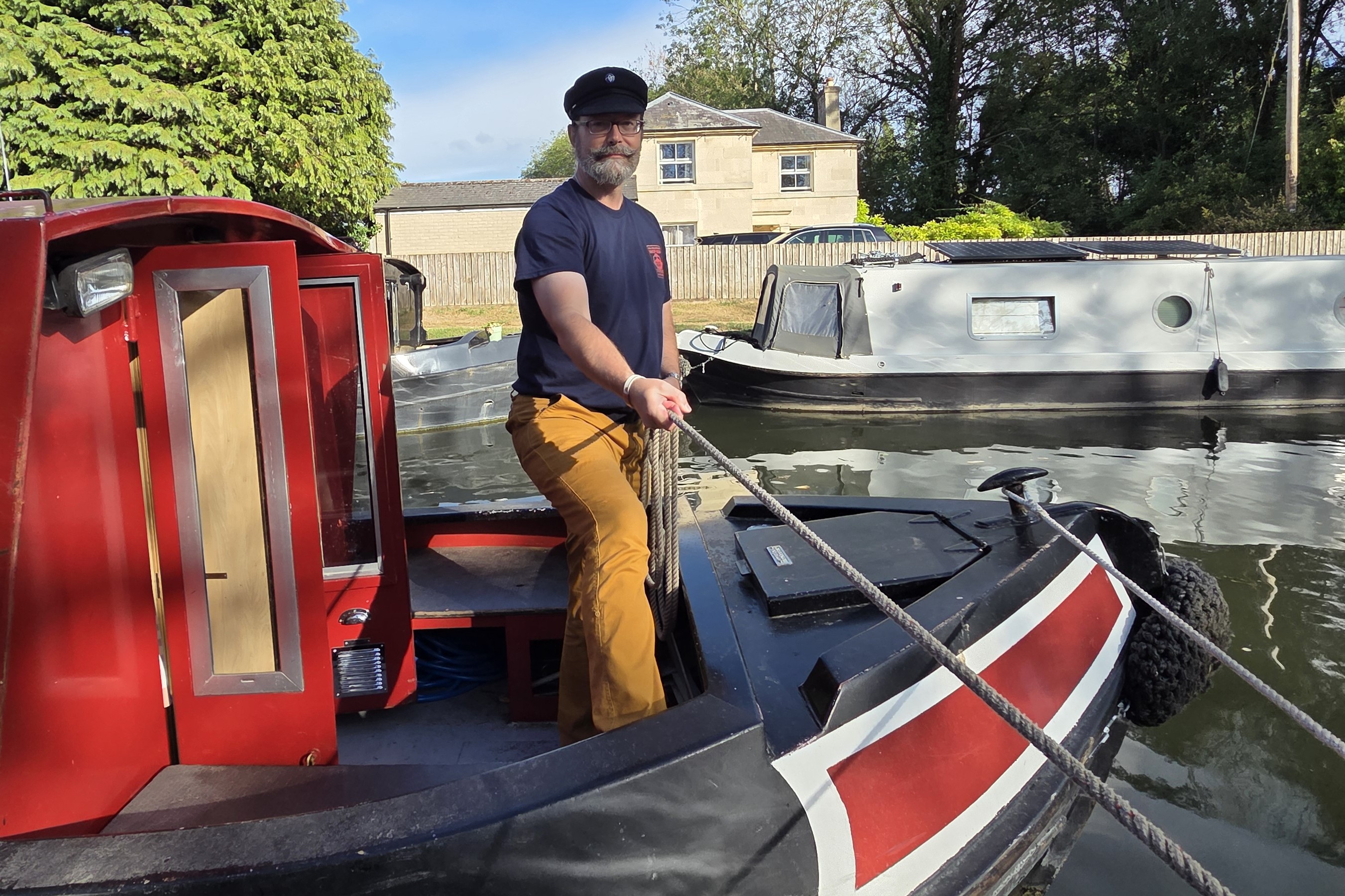
One photograph from our expedition shows me standing aboard a narrowboat, holding a line while wearing my new cap.
It is an ordinary moment.
There is no dramatic sunset, towering wave, or distant wilderness landscape.
Just a boat, a line, and another day on the water.
Yet I appreciate that photograph because it captures something important about the way I approach outdoor adventures.
History is not always something we encounter behind museum glass.
Sometimes we experience it by participating in traditions that continue into the present.
The British canal system was built for a different age, but the fundamentals of handling a vessel remain familiar.
Pay attention to your surroundings.
Understand how your boat responds.
Work together.
Take care of your equipment.
And never forget that water deserves respect, whether you are crossing an ocean or negotiating a narrow canal.
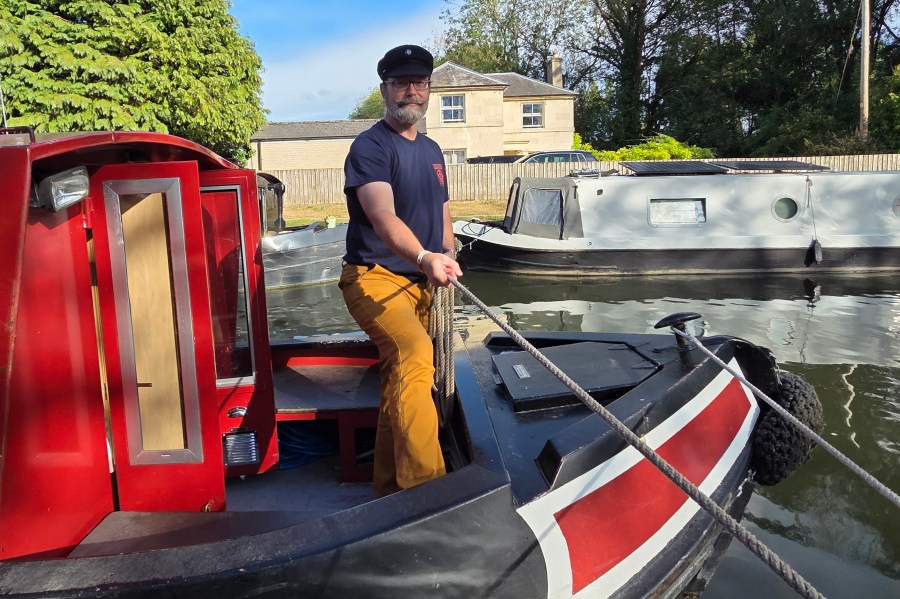
Wearing my newly purchased Breton cap aboard a traditional British narrowboat during our American Sea Scout expedition through England, July 2025. Some pieces of history are meant to be worn, not displayed behind glass.
Gilwell Park: Where Two Traditions Came Together
Later in our expedition, we visited Gilwell Park, the spiritual home of Scout leader training.
Located near Epping Forest on the outskirts of London, Gilwell Park occupies a special place in the history of the worldwide Scouting movement.
The property was acquired for Scouting in 1919, and that September it hosted the first formal Wood Badge course.
The course was conducted under the leadership of Francis Gidney, Gilwell Park’s first Camp Chief, with the involvement of Robert Baden Powell and other early Scouting leaders.
The Wood Badge program grew into an international tradition of adult leadership development.
For generations of Scouters, Gilwell Park has represented a commitment to learning, service, and the responsibility of preparing young people for life.
As an Eagle Scout, Wood Badge trained Scouter, and lifelong volunteer, visiting Gilwell Park was personally meaningful.
I had spent decades participating in a movement whose traditions could be traced to this place.
Walking through the grounds reminded me that Scouting is not simply an organization with a long history.
It is a living tradition.
Each generation inherits something from those who came before it.
We learn the skills.
We practice the methods.
We adapt to changing circumstances.
And then we pass that knowledge along.
For me, that has always been one of the most important responsibilities of an outdoor educator.
The goal is not simply to teach someone how to tie a knot, paddle a kayak, or prepare a meal over a campfire.
It is to help them understand why those skills matter.
A Small Pin with a Larger Meaning
While visiting the Gilwell Park gift shop, I found a small Scouting pin.
It featured the familiar fleur de lis, a symbol recognized by Scouts around the world.
I purchased the pin and attached it to the front of my new Breton cap.
It was a simple addition, but one that made the hat distinctly my own.
The cap represented my connection to maritime traditions.
The pin represented my lifelong connection to Scouting.
Together, they reflected two interests that have shaped much of my life.
I had not planned to create some grand personal symbol.
I simply liked the pin and thought it belonged on the cap.
But looking back, I find the combination rather appropriate.
The sea had brought me to England.
Scouting had brought me to Gilwell Park.
And now I was wearing a small reminder of both.
Standing beneath the entrance to Gilwell Park with our Sea Scouts, I found myself thinking about the generations of Scouters who had passed through these grounds before us.
I had completed my own Wood Badge training years earlier. Now I was standing at the historic home of that tradition, accompanied by young people who represented Scouting’s future.
I was wearing my new maritime cap, complete with its Scouting insignia.
The symbolism was not something I had planned.
But looking back at the photograph, it seems rather appropriate.
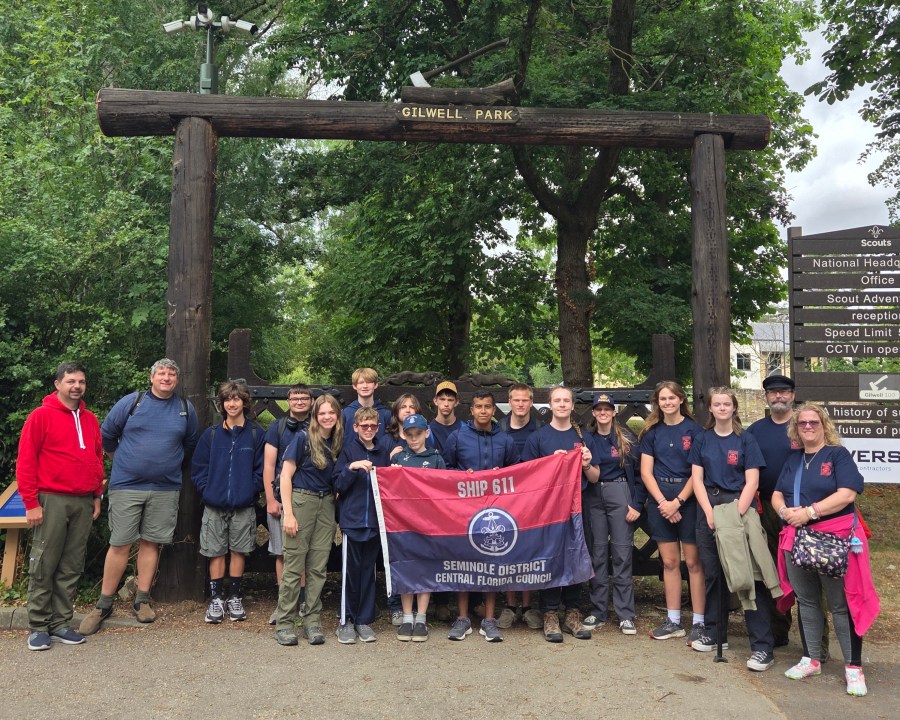
American Sea Scouts from Ship 611 visiting Gilwell Park, England, July 2025. As a Wood Badge trained Scouter, visiting the historic home of Scout leader training was particularly meaningful. I am standing at the right, wearing my Breton cap with the Scouting pin purchased in the Gilwell Park gift shop.
Abbey Road: Apparently, I Was Wearing John Lennon’s Hat
Earlier that day, we had visited Gilwell Park, a place deeply connected with the history of Scouting.
By the time we arrived at Abbey Road, we had moved from the traditions of Robert Baden Powell to those of the Beatles.
The Sea Scouts gathered with their Ship 611 flag, and I found myself taking photographs beneath the London sky, still wearing the Breton cap I had purchased at Portsmouth.
I had no idea that the hat would soon become the subject of an unexpected conversation.
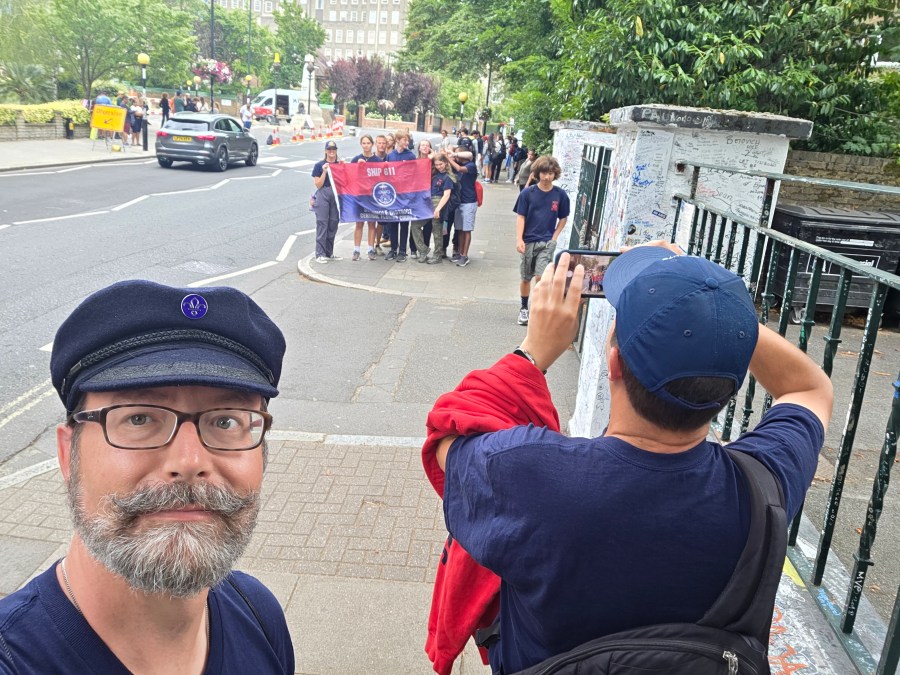
At Abbey Road in London with American Sea Scouts from Ship 611, July 2025. I was wearing the same Breton cap I had purchased at Portsmouth, now decorated with the Scouting pin from Gilwell Park.
Inside the Abbey Road gift shop, something rather unexpected happened.
A woman working there noticed my cap.
She recognized the style immediately and began flirting with me, apparently assuming I had chosen it because of John Lennon.
I had spent the previous days thinking about sailors, historic warships, and the maritime traditions of Europe.
She was thinking about the Beatles.
I suppose there are worse misunderstandings.
What amused me most was that we were both looking at the same cap and seeing two entirely different histories.
I had purchased it because of the sea.
She recognized it because of a musician.
Neither of us was entirely wrong.
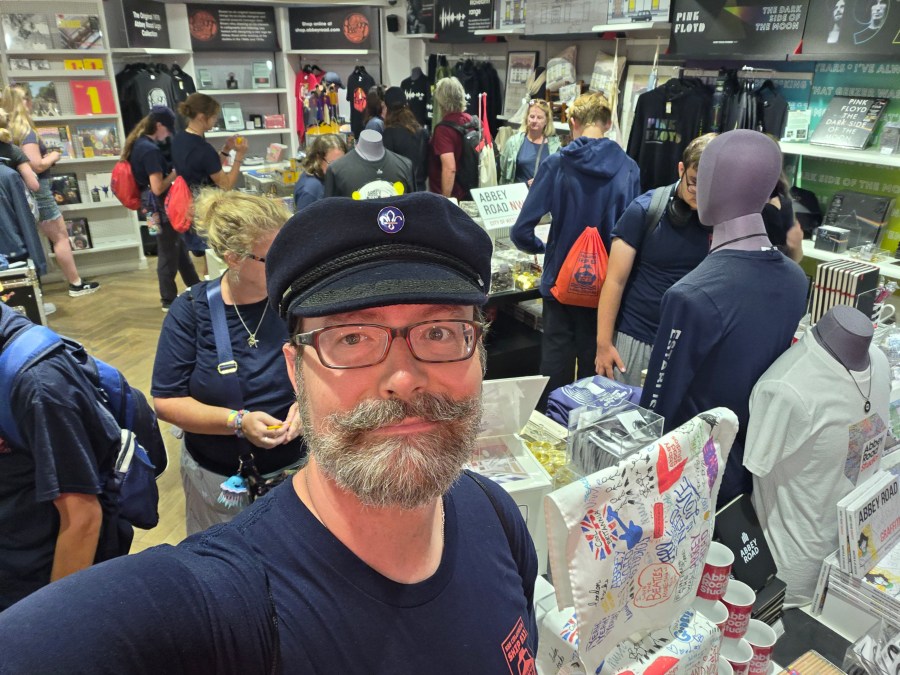
Inside the Abbey Road gift shop, July 2025, wearing the Breton cap I purchased at Portsmouth Historic Dockyard. A shop employee recognized its resemblance to the mariner’s cap made famous by John Lennon. I had purchased it for its connection to the sea.
John Lennon and the Mariner’s Cap
During the Beatles’ rise to international fame in the 1960s, John Lennon became closely associated with a style of cap commonly described as a Greek fisherman’s or mariner’s cap.
Photographs of Lennon wearing this style helped make it part of his recognizable public image during the Beatlemania years.
The cap was not invented for Lennon.
Similar maritime styles had existed in European coastal communities long before the Beatles recorded their first album.
But popular culture has a remarkable ability to give traditional objects new meanings.
Through Lennon’s association with the style, the cap reached an audience far removed from the working waterfront.
For many people, it became part of the visual identity of the Beatles and the cultural changes of the 1960s.
Similar caps are still sometimes marketed as Lennon caps.
That is a fascinating transformation.
An article of clothing associated with sailors and fishermen became a recognizable symbol of popular music.
The design retained its maritime character.
But its cultural meaning expanded.
For someone interested in history and cultural anthropology, this is a wonderful example of how ordinary objects move between communities and acquire new identities.
The same cap can mean different things to different people.
A fisherman might recognize a traditional working garment.
A maritime historian might see a connection to European coastal communities.
A Beatles enthusiast might immediately think of John Lennon.
And an American expedition kayaker might see all those things while remembering the day he purchased it in Portsmouth.
One Hat, Three Chapters of British History
Looking back, I find it remarkable how much history became connected to that simple cap.
At Portsmouth, I encountered Britain’s maritime past.
The Mary Rose represented the Tudor navy.
HMS Victory carried the story of Nelson and the age of fighting sail.
HMS Warrior demonstrated the transformation brought about by industrial technology.
The cap I purchased there reminded me of the ordinary sailors and fishermen whose working traditions were part of that larger maritime world.
At Gilwell Park, I encountered another kind of heritage.
The traditions of Scouting, outdoor education, and leadership that have influenced much of my life.
The small fleur de lis pin I purchased there became a personal addition to my maritime cap.
And at Abbey Road, I discovered that the cap carried an entirely different cultural association.
John Lennon and the Beatles.
Three places.
Three different histories.
One rather ordinary hat.
There is something wonderfully human about that.
We often think of history as something preserved in museums, archives, and monuments.
But history also survives in the objects we use and the traditions we continue.
A sailor’s knot.
A Scout’s neckerchief.
A cast iron cooking pot.
A wooden paddle.
A traditional cap.
These objects connect us with people whose experiences may be separated from our own by generations.
They remind us that much of what we consider ordinary today was inherited from someone who came before us.
Why I Still Wear the Cap
Since returning home to Florida, my Breton cap has become part of my personal style.
I appreciate its distinctive appearance.
I enjoy its historical associations.
But more importantly, I enjoy knowing where I purchased it and the memories connected with it.
When I put it on, I remember our July 2025 Sea Scout expedition.
I remember navigating Britain’s canals aboard the Alvechurch Swan and Little Tern.
I remember the locks, bridges, and historic waterways.
I remember walking aboard HMS Victory and HMS Warrior.
I remember standing among the remarkable remains of the Mary Rose.
I remember visiting Gilwell Park, where generations of Scout leaders have prepared themselves to serve young people.
I remember finding the small Scouting pin that now rests on the front of my cap.
And I remember the woman at Abbey Road who looked at my cap and saw John Lennon.
That is quite a collection of memories for one piece of clothing.
But perhaps that is what makes a meaningful souvenir different from something purchased merely to remember a destination.
It becomes part of your own history.
You continue wearing it.
You take it on new adventures.
And with each journey, another story is added.
The Old Ways Still Have Something to Teach Us
I have spent much of my life encouraging people to look beyond the immediate adventure.
Learning to paddle a kayak is important.
Understanding the history of watercraft and the people who developed them adds another dimension to that knowledge.
Learning traditional outdoor skills is valuable.
Understanding why those skills developed, and how generations of people depended upon them, makes the lessons more meaningful.
The same is true of the clothing we choose to wear.
My Breton cap is not the most technologically advanced piece of outdoor equipment I own.
It does not need to be.
Its value comes from something different.
It reminds me that we are connected to a much larger human story.
The sailors who crossed the Atlantic.
The fishermen who worked the European coastlines.
The Scout leaders who gathered at Gilwell Park.
The musicians who helped shape the culture of the twentieth century.
And the young Sea Scouts who traveled through England with us in July 2025, creating memories and learning traditions that I hope they will someday pass along to others.
I went to Portsmouth and found a piece of maritime history I could wear.
I wore it to Gilwell Park, where I added a small symbol of my Scouting heritage.
Then I wore it to Abbey Road, where someone recognized a history I had not been thinking about when I purchased it.
That unexpected encounter reminded me that the objects we carry often have more stories to tell than we realize.
The cap came home with me to Florida.
The stories came with it.
And I suspect there are still a few more adventures waiting beneath its brim.
The old ways still have something to teach us.
Learn. Preserve. Share.
FloridaOATS

