
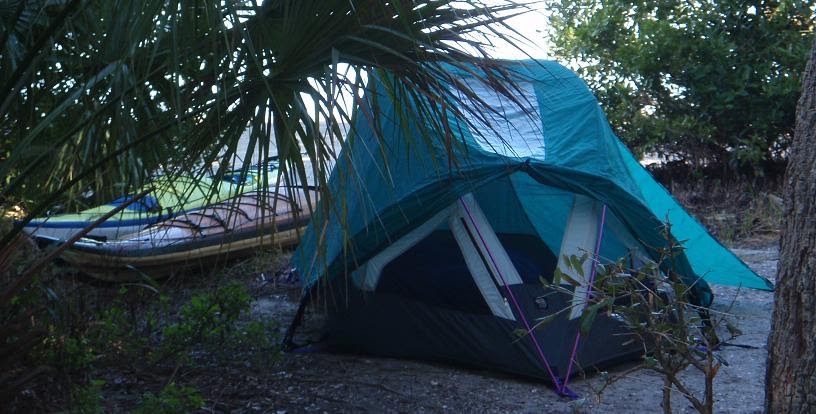
What changes when the boat carries the camp, and what remains our responsibility when we reach shore.
A kayak is a means of travel. So is a paddleboard. Add camping equipment, and the journey begins to include another possibility: we can arrive somewhere by water and make a temporary home.
That prospect has much of the same appeal that first drew me to backpacking. There is work to do before leaving, a landscape to pay attention to along the way, and the pleasure of settling into camp with the things we chose to carry.
The boat changes how we get there. It also changes what we are tempted to bring.
A floating cupboard has its temptations
A backpack makes its objections known through your shoulders. A boat may allow an extra piece of equipment aboard with less immediate complaint. That can be useful. It can also make packing a fine exercise in explaining why nearly everything is necessary.
Comfort matters to me. So does a good meal. I am not interested in proving that an expedition is worthwhile by making everyone hungry and uncomfortable. But the extra room does not relieve us of choosing carefully.
Every item still has to be carried to the launch, packed, kept secure, and dealt with at the landing. The pleasure it offers should justify the work it adds. A generous camp kitchen is less generous if someone else has to move it all.
The camp begins before we land
I think of camp as a small household with a brief tenancy. We need a place to sleep, water, food, sanitation, and a plan for the work. We also need to know whether we are permitted to stay.
An inviting shoreline does not establish permission to land or camp. Check the land manager’s rules, reservations, closures, and local conditions before setting out. The place that looks empty from the water may be private property, protected habitat, or somebody else’s campsite.
The Leave No Trace principles connect preparation with care for the site, wildlife, waste, and other visitors. Those concerns belong in the plan before the boats are loaded.
I want a camp that serves the people traveling with me without asking the place to absorb the cost of our convenience. Sometimes that means choosing another site or changing the trip.
What makes a temporary home
Shelter is part of it. So is the knowledge that the necessary jobs have been considered. Who needs help moving equipment? Where can we prepare food appropriately? How will we deal with waste? Does the group still have a safe way out?
Those questions may sound ordinary. They are. A comfortable camp is often the result of ordinary work done with consideration.
The meal matters especially to me. We have carried food to this place, made time to prepare it, and given one another a reason to sit together. That is hospitality, even when the table is an improvised arrangement and the menu is modest.
I value the tools that help make that possible. I value a companion who notices an unfinished job without needing a formal appointment even more.
The same welcome, different craft
A kayak and a stand up paddleboard offer different ways of carrying an overnight kit. They should not be treated as interchangeable containers. The craft, load, paddler, route, and conditions have to suit one another.
Learning to camp does not establish that a person can safely paddle a loaded craft, recover after a capsize, or manage the proposed water. Those are skills to learn and practice through suitable instruction. Storage volume alone is a poor reason to choose a boat.
For practical lessons and questions about preparing for kayak camping, visit Liquid Rhythm Kayaking’s current instruction page. Ask about the skills and arrangements appropriate to your proposed trip.
Leaving the household behind
At home, we can leave a chore for later. A campsite asks us to finish before departing. Pack out the waste, follow the site’s sanitation requirements, and leave natural objects where they belong. Another party should not have to clear away our visit before beginning its own.
That is part of the satisfaction of carrying a camp by water. We make a place for ourselves briefly, then take the household away again. The shore remains a place for wildlife and for other people, rather than a possession acquired by getting there first.
A boat can carry the shelter and the supper. The care that makes them a home has to come from us.
Jeffrey John Fabiszewski
Related reading
Continue with Suwannee River: What Comes Home With Us for a reflection on traveling with a friend, or Real Meal Plans for Travel Beyond the Grocery Store for provisioning considerations.
A correction to the earlier article: I withdraw the advice to attach long retrieval ropes to dry bags inside a kayak. Loose lines can create entanglement hazards. Use the craft manufacturer’s guidance and qualified instruction for suitable packing and securing methods. This essay is not a loading or rescue tutorial.


Leave a Reply