
From the Allegheny Mountains of Pennsylvania to Florida’s wilderness waterways, discovering that the old outdoor skills still work when the trail disappears beneath the water.
Editor’s note, October 2026: Originally published October 7, 2020. This article has been expanded to explore the outdoor heritage, experiences, and ideas behind the original reflection.
From Mountain Trails to Mangrove Tunnels
I grew up in the Allegheny Mountains of Pennsylvania, where the outdoors was something you experienced with a pair of hiking boots, a backpack, and a willingness to see what was waiting around the next bend in the trail.
The forests were familiar. The mountains provided direction. Streams ran through the valleys, and a well worn footpath could lead to places that seemed a hundred miles removed from the nearest town.
Backpacking taught me to carry what I needed, leave behind what I did not, and appreciate the simple satisfaction of making camp after a long day of traveling under my own power.
Then I moved to Florida.
For anyone familiar with western Pennsylvania, the Tampa Bay region presents a rather obvious geographical problem.
There are no mountains.
At least none worth packing a pair of hiking boots for.
What Florida does have is water. Lots of it.
Rivers, spring runs, tidal creeks, coastal estuaries, mangrove forests, and barrier islands. An enormous landscape of wilderness waiting to be explored, although much of it is not particularly interested in accommodating someone wearing hiking boots.
I had to reconsider how I traveled through the outdoors.
And that is where the kayak entered my life.

The Trail Does Not End at the Water’s Edge
I never stopped being a backpacker. I simply discovered another way to carry my equipment into the wilderness.
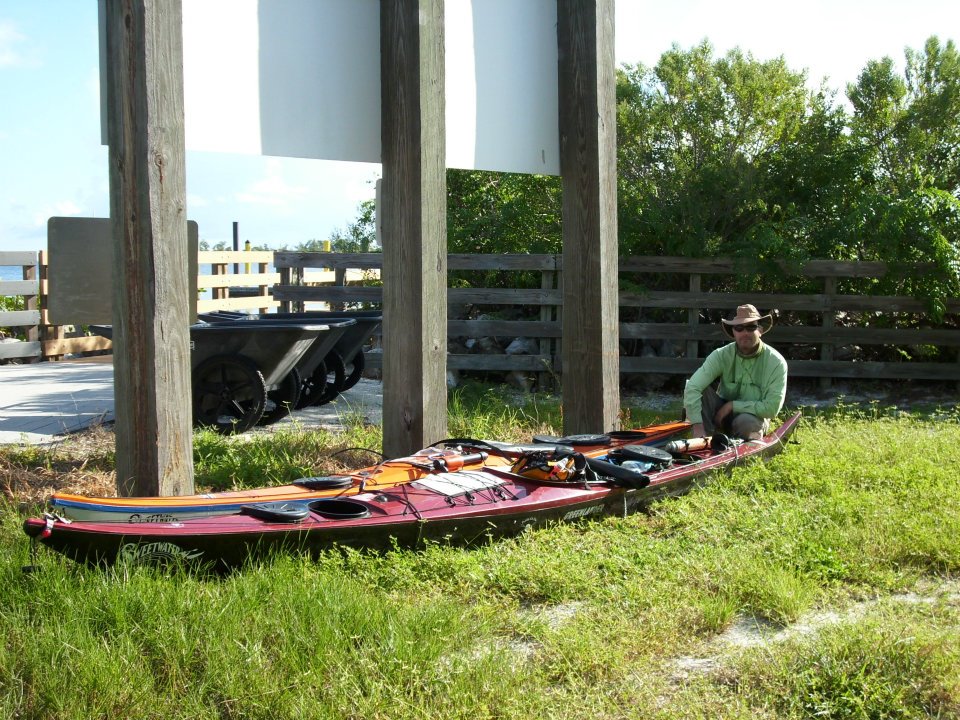
The kayak became my floating backpack.
The woods, rivers, and coastlines of Florida required many of the same skills I had learned in Pennsylvania. I still needed to understand the weather, navigate, prepare my meals, maintain my equipment, and know when conditions were telling me to change my plans.
But Florida added a few new lessons.
Instead of climbing a ridgeline, I learned to study the changing tide.
Instead of watching my footing on a rocky trail, I learned to pay attention to wind, current, and the behavior of a heavily loaded boat.
And instead of following a footpath through the trees, I began navigating through mangrove tunnels, tidal channels, and open stretches of water.
The method of travel had changed. The responsibilities had not.
A poorly planned backpacking trip can leave you cold, hungry, and exhausted. A poorly planned kayaking expedition can accomplish all three, with the added entertainment of getting everything wet.
The wilderness has always been an excellent teacher. It seldom repeats a lesson because we failed to pay attention the first time.
For another perspective on carrying expedition skills from the trail to the water, see my practical guide Your Pack Weighs Nothing… Your Kayak Weighs Everything.
Following Florida’s Older Highways
There is another reason I became fascinated with exploring Florida by kayak.
History.
Long before automobiles, paved highways, and modern bridges connected Florida’s communities, its rivers and coastal waterways served as routes for transportation, fishing, trade, and communication.
Indigenous peoples understood that traveling by water offered access to places difficult to reach on foot. In southwest Florida, the Calusa built a maritime society closely connected to the estuaries, islands, and coastal waters that sustained their communities.
Later generations of fishermen, traders, settlers, and working watermen continued to rely upon boats to move through Florida’s complicated geography.
When I paddle through the mangroves of southwest Florida or follow one of its winding rivers, I am traveling through a landscape shaped by those earlier generations.
That historical connection changes how I experience a place. I explored that connection more directly in Great Calusa Blueways Expedition: Floating on Tribal Tides, where Florida’s paddling routes meet the history of its coastal peoples.
A mangrove shoreline is no longer simply an interesting place to paddle. It becomes part of a larger story about how people adapted to the land and water around them.
Of course, I am not suggesting that paddling a modern expedition kayak recreates the lives of those who came before us. Their vessels, purposes, and circumstances were often very different.
But traveling under human power does give us an opportunity to observe the same geography from a perspective that a highway seldom offers.
And sometimes understanding a place begins with slowing down enough to notice what is around you.

A Backpacker’s Campfire on a Florida Island
One of my favorite parts of backpacking has always been making camp.
After a day on the trail, there is something deeply satisfying about removing your pack, preparing a place to sleep, and sitting down to a good meal.
Kayak camping offers much the same reward. I wrote more about the experience of paddling into camp in Island Time: The Magic of Kayak Camping in Florida’s Backcountry.
Over the years, my paddling adventures with Sean Fitzgibbon and our Liquid Rhythm Kayaking companions have taken us along Florida’s rivers, through coastal estuaries, and into remote island camps.
The Suwannee River, the Withlacoochee, the Ten Thousand Islands, and the Everglades Wilderness Waterway each offer their own character.
Some places invite conversation. Others encourage silence.
Eventually, every good expedition reaches the same important moment.
Dinner.
I have always believed that food is more than fuel for an outdoor adventure.
It is part of the experience.
There is a particular pleasure in preparing a proper meal after a long day’s paddle. The stove comes out, ingredients are unpacked, and the smell of supper begins replacing the salt and sweat of the afternoon.
Sometimes that means a carefully prepared meal. Other evenings, something simple tastes remarkably good because of where we are and who is sitting beside us.
Whether gathered around a campfire where fires are permitted or sharing supper beside a small backpacking stove, the fellowship matters as much as the food.
Those meals become part of the stories we carry home.
We may forget the exact distance paddled on a particular afternoon, but we remember the conversations, the laughter, and the people who shared the table, even when that table was nothing more than a piece of driftwood or a patch of sand.
The Old Skills Still Work
People sometimes imagine that kayaking and backpacking are entirely different outdoor pursuits.
I disagree.
Both require us to understand our surroundings and accept responsibility for our decisions.
The Ten Essentials remain useful. Navigation matters. Weather matters. Clothing, shelter, water, and first aid matter.
So does knowing your own limitations.
A kayak may carry more equipment than a backpack, but additional storage does not excuse poor judgment. An overloaded kayak can become difficult to control, particularly when the wind and current disagree with your plans.
Nor does owning a kayak make someone ready for an extended wilderness expedition.
Paddling technique, rescue skills, sound judgment, and experience must be developed. A calm afternoon close to shore is very different from a loaded crossing in deteriorating weather.
These are lessons I continue to teach through Liquid Rhythm Kayaking.
But the deeper lesson belongs here at FloridaOATS.
The equipment changes. The principles endure.
A compass is still useful. A properly tied knot still matters. A well maintained stove can still turn an uncomfortable evening into a memorable one.
And learning to travel responsibly through wild places remains as valuable today as it was when I first carried a backpack into the Pennsylvania mountains.
Learning to See Florida Differently
The longer I have lived in Florida, the more I have come to appreciate its quieter wilderness.
It does not announce itself with towering peaks.
Sometimes it reveals itself in a narrow tidal creek, where the mangrove canopy closes overhead and the noise of civilization gradually disappears.
Sometimes it appears along a riverbank in the early morning, when the water is still and the first birds begin moving through the trees.
And sometimes it waits beyond the next island, where the Gulf opens toward the horizon and you realize how much of Florida remains inaccessible to anyone unwilling to leave the pavement behind.
I still love the mountains.
I still appreciate the smell of a Pennsylvania forest after the rain, the feel of a familiar trail beneath my boots, and the satisfaction of reaching camp under my own power.
Florida never replaced those experiences.
It expanded them.
The kayak allowed me to take the lessons of my childhood and apply them to an entirely different landscape.
More importantly, it gave me another way to share those lessons with family, friends, students, and the young people I have been privileged to mentor through Scouting.
There is also a personal side to these journeys, beyond miles and equipment. I explored that in Reflections: A Meaningful Life, about the space that paddling and backpacking leave for family, friendship, and reflection.
Keep Your Hiking Boots. Add a Paddle.
Despite the title of this article, I would never suggest that anyone actually give up their hiking boots.
Mine have too many good miles and memories in them.
I would, however, encourage anyone who loves hiking, backpacking, or camping to consider what might be waiting beyond the shoreline.
You may discover that some of the best wilderness trails in Florida are not trails at all.
They are rivers.
They are tidal creeks.
They are the quiet passages between mangrove islands.
And instead of following a worn footpath through the forest, you follow the movement of the water.
Pack responsibly. Learn the skills. Respect the weather and the places you visit.
And remember that exploring the outdoors has never been about collecting equipment or proving how many miles you can travel.
It is about discovering the world beyond your everyday surroundings, sharing the journey with people who matter, and carrying its lessons home.
The old ways still work. Sometimes they just require a paddle instead of a walking stick.
Learn. Preserve. Share.
From the FloridaOATS Journal: For practical instruction on transferring backpacking skills to kayak camping, read Your Pack Weighs Nothing… Your Kayak Weighs Everything at Liquid Rhythm Kayaking.

